• Facebook
  • Pinterest
  • Instagram
  • YouTube
  • LinkedIn
  • Skip to secondary menu
  • Skip to main content
  • Skip to primary sidebar
  • Skip to footer

Tina's Dynamic Homeschool Plus

Activity, Change, Progress

  • HOME
  • How to
    • Preschool
    • Kindergarten
    • Elementary
    • Middle School
    • High School
      • Science 
  • Planner
  • Lapbooks
    • Trioramas
    • History Games
    • LEGO
  • Shop
  • GET STARTED NOW!
    • Learning Styles
  • 7 Step Planner
    • DIY Best Student Planner
    • Free & Easy DIY Home Management Binder
  • Unit Studies
    • Creation to Ancients
    • Middle Ages to Reform
    • Exploring to Revolution
    • World Wars to Today
    • Science
    • Free Art Curriculum Grades 1 – 8
  • Curriculum
    • More Unit Studies
    • Geography
    • Writing PreK to 12th
    • Geronimo Stilton
  • BootCamp
    • Resources
      • Dynamic Subscriber Freebies
      • Exclusive Subscribers Library
      • Ultimate Unit Study Planner

hands-on

Homeschool Lapbooks – Powerful Tools For Mastery Learning

October 4, 2017 | Leave a Comment
This post may contain affiliate links. For more information, please see my full disclosure policy.

There is no comparison of homeschool lapbooks to digital enhanced content today, but there may be competition. Bring it. You’re sure to find a homeschool lapbook here at Tina’s Dynamic Homeschool Plus.

When I started homeschooling, I stuck CDs in the computer and I controlled the digital content that my children were watching.

After being introduced to lapbooks, I knew it was a learning tool that could be a contender to digital content now and in the future. I wasn’t wrong.

My affection for lapbooks, however, was not immediate.

At first glance, I assumed it was a learning tool that was opposite of what I thought learning should look like. The lapbooks seemed more like a crafty project and waste of our learning time with all the cutting and coloring.

First, what is a lapbook?

What is a Lapbook

A most basic definition is that it is a group of small books or minibooks, mostly of different shapes and sizes that contain information about the topic the lapbook is on. It is a hands-on tool which can easily take the place of worksheets, tests, and memorization. Created by the student each one will be different. A lapbook can be as creative or not as the child wants it to be.

What is Lapbooking

Sometimes I get asked what is lapbooking. It just means using a lapbook to cover a subject or theme and it means the process that your child goes through to create one. It can take anywhere from a few days to weeks to complete one.

In addition, your child can used ones with prepared minibooks or he can create the minibooks without any assistance.

Homeschool Lapbooks - Powerful Tools For Mastery Learning

How to make a Lapbook With Paper

And creating a lapbook doesn’t have to be in-depth or can be as you want it to be. This is the best thing about lapbooks. Like any hands-on tool, it bends to the needs of the child.

Look at my two videos on how to make a lapbook and what is a lapbook.

Additionally, we do use worksheets in our lapbook occasionally. However, what can make even a worksheet interactive is how it’s folded to put into a lapbook to store it.

Look at my post How to Turn Boring Worksheets into Fun Minibooks – From Boring to Interactive

Lapbook Materials

Moreover, most of the materials for a diy lapbook you already have in your home.

My top 3 favorite supplies are bright colored letter size file folders, clear packaging tape, and glue acid free. These top materials are important if you’re creating lapbooks to last as memory keepers.

Of course, paper matters too the most.

If you’re creating lapbooks and want to do them as inexpensive as possible, then regular paper works fine.

However, if you want your child to keep them to use another year or for memories, you need cardstock. And you want the lightest weight cardstock that you can get. Anything too thick and your child can’t fold the paper minbooks easily.

However, there are SO MANY things your student can add to his lapbook.

My post 75 AWESOME Things to Add to a Lapbook will get you started.

  • 15 Amazing Lapbook Materials to Use Besides Glue and Paper

Ancient Civilization Lapbooks

Next, look at these fun ancient history lapbooks divided by time period. I have many lapbook ideas for history.

I have history lapbooks organized by time period as close as I can get.

  • Ancient Rome
  • Ancient Babylon
  • Ancient Phoenicia
  • Fun Pharaohs and Queens Ancient Egypt Lapbook and Activities
  • Famous Pharaohs and Queens of Egypt.
  • Ancient Assyria
  • Ancient China (ancient civilizations)
  • Free Ancient China Lapbook for Kids Who Love Hands-on History
  • Meso-America Ancient Maya
  • Pirates
  • Free Ancient Phoenicia Lapbook For Kids Who Love Hands-on History
  • Indus Valley
  • Ancient Civilization Lapbook covering Sumer, Mesopotamia, The Babylonian & Hammurabi, Minoan and Mycenaean , Ancient Egypt,  Greece, Phoenician, Ancient Greece & Rome Pockets, and Celts
  • Ancient Mesopotamia
  • Ancient Greece
  • 18 Colorful and Free Lapbooks for History Unit Studies
  • Free Mesopotamia Lapbook For Kids Who Love Hands-On Learning

Middle Ages to Renaissance Lapbooks

Also, you’ll love these next lapbooks which are topics we covered from the middle ages to the renaissance and reformation time period.

  • Medieval Japan Unit Study and Lapbook
  • Glassblowing
  • Marco Polo Unit Study and Lapbook
  • More Ideas Free Marco Polo Unit Study, Lapbook, and Hands-on Ideas
  • Renaissance 
  • Vikings Lapbook Unit Study
  • The Best Free Viking Lapbook and Hands-on Ideas

Exploration, Colonization, and Industrialization to Revolution Themed Lapbooks

  • Free The World Of Columbus And Sons Lapbook For Kids Who Love Hands-On Learning
  • French and Indian War 1754 -1763
  • Iroquois Lapbook
  • Plains Indians. Unit Study & Lapbook
  • French Revolution 1789 – 1799 Lapbook
  • Lewis and Clark Fun Homeschool Lapbook
  • War Between the States Lapbook
  • Free Lapbook Napoleon Bonaparte for Kids Who Love Hands-on History
  • RMS Titanic Unit Study and Free Lapbook
  • Daniel Boone – North American Explorer
  • Amazing and Free American Revolution Lapbook for Multiple Ages
  • BEST Westward Ho Lapbook!
  • American Revolution Lapbook 1775 – 1783

World Wars to Modern History Geography Lapbooks

  • World War II Lapbook
  • History of the Texas Cowboy, Cattle Drives, and Chisholm Trail
  • Free American History Lapbook – The Old West Through the Life of Wyatt Earp
  • The FBI Lapbook
  • The Trail of Tears 1820 – 1845 Lapbook
  • South America Lapbook
  • Free Native American Plains Indians Fun Lapbook for Kids (& resources)

GEOGRAPHY LAPBOOKS TO LEARN COUNTRIES AND STATES

  • Free Africa Lapbook for Kids Who Love Hands-on History
  • Free Lapbook India for Kids Who Love Hands-on History
  • Free Texas Homeschool Lapbook and Fun Homeschool Unit Study Ideas
  • Free Lapbook Mexico For Kids Who Love Hands-On Learning
  • Free Ireland Lapbook For Kids Who Love Hands-On Learning
  • Free Scotland Lapbook For Kids Who Love Hands-On Learning
  • Free England Lapbook For Kids Who Love Hands-On Learning
  • Free Lapbook Asia For Kids Who Love Hands-On Learning

3 Best Things About Lapbooks

1. If your child wants a whole to pieces or wants a big picture first look at a topic, he’ll love lapbooks.

I love details, but when I teach I also can overwhelm my sons. A lapbook allows us to add minibooks or facts to remind my kids of the major teaching points I want them to remember.

Homeschool Lapbooks - Powerful Tools For Mastery Learning

Information can be arranged in a lapbook to give a child a quick glimpse of a topic. That’s the point. It can be as general or as detailed as you or your child want it to be.

2. If your child does better with a mastery based approach, lapbooks allow him freedom to master the material that piques his interest.

Another lure of lapbooks is that if you have an independent learner, he doesn’t always want a lot of direction when his curiosity has been piqued.

Lapbooks incite an uncontrollable urge to research and add more information that your child wants to learn. It gives an independent learner freedom to learn what he wants to.

One of the best things about this step is that he has to learn to organize that material so it fits compactly into a minibook or chart. That is a higher level skill.

That technique has been one of the things I’ve liked most about lapbooks.

Our kids amass so much knowledge. But instead of using rote memory to tell it back, they need to learn how to connect it to other topics they know.

Understanding comes from manipulating the information and categorizing it.

Because the books are small, a learner has to manipulate and extract key points. In a setting that seems more fun than work he learns to organize his information.

3. No amount of digital content can rival your child’s own work for a masterpiece that lasts into adulthood.

When my older two sons look back at their learning journey, they haven’t mentioned any learning app, but they do remember the hard work put into their lapbooks.

Homeschool Lapbooks - Powerful Tools For Mastery Learning

Not only is it a learning tool that they used for constant review, but it’s a project worth keeping.

SCIENCE, NATURE AND MATH LAPBOOKS

In addition, I have many lapbook ideas for science and nature lapbooks to help bring your topics to life.

  • Arctic and Inuit Free Lapbook
  • Carnivorous Plants
  • Fall Unit 1 {Pumpkins, Leaves, Corn, & More}
  • Amber – Freezing Gold Lapbook
  • Coral Reef Lapbook
  • Fall Unit Study (Includes Apples, Sir Isaac Newton, Art, and Appleseed)
  • North American Robin Lapbook
  • Peregrine Falcon Unit Study and Lapbook
  • Strawberry Lapbook
  • Oceans Unit Lapbook
  • Rain Forest – Amazon
  • Human Body Lapbook
  • Why Bats are Not Bird Lapbook
  • Historic Trees Lapbook
  • Loads of Toads and Frogs
  • Exploring Space and Astronomy
  • Honey Bees Lapbook for Kids
  • Free Wildflowers Lapbook
  • Above & Below A Pond Lapbook
  • From Egg to Sea Turtle Lapbook
  • Colorful Winter Bird: Northern Cardinal Lapbook 
  • Foraging and Feasting Lapbook
  • Free Arctic Ground Squirrel Lapbook
  • Free Earth Science Lapbook
  • Winter Season Lapbook
  • 7 Super Easy and Free Nature Lapbooks Guaranteed to Beat Boredom
  • Free Amazing Winter Unit Study and Winter Lapbook for Kids
  • Super Seashore Watching and Beach Lapbook
  • 27 Amazing Homeschool Lapbook Ideas for Science
  • Fun Apple Lapbook and Hands-on Unit Study for Multiple Ages

  • 20 Free Homeschool Science Lapbooks to Teach Hands-on
  • Free Printable Strawberries Lapbook and Fun Homeschool Unit Study Ideas
  • Free Titanic Lapbook and Fun Homeschool Unit Study Ideas
  • Ancient Rome Lapbook for Kids and Fun Hands-on Ideas
  • 3 Free and Amazing Amazon Rainforest Lapbooks for Kids
  • Free Toad and Frog Lapbook and Fun Homeschool Unit Study Ideas
  • Free Ocean Lapbook and Fun Homeschool Unit Study Ideas
  • Free Bird Unit Study and Lapbook And Fun Edible Bird Nests
  • How to Turn a Pumpkin Lapbook into a Fun Unit Study
  • Free Butterfly Lapbook For Kids Who Love Hands-On Learning
  • Free Reptiles Lapbook for Kids Who Love Hands-on Learning
  • Interesting Facts About The Dragonfly & Free Dragonfly Lapbook
  • The World of Plants: The Educational Value of a Plant Lapbook
  • Free Ladybug Lapbook for Kids Who Love Hands-On Learning
  • Math Lapbook Ideas And Free Time And Money Lapbook
  • Free Lapbook Marie Curie For Kids Who Love Hands-On Learning

3 Worst Things About Lapbooks

I almost stopped doing lapbooks because I fail into traps that most new lapbookers do.

1. Lapbooks can turn crafty project if you allow it to overtake your day.

I admit it. I wasn’t all that much into crafts. I’ve come a long way since I first started using lapbooks.

Now, I realize the value of allowing children creative outlets and try to look past the mess.

If you and your kids love crafts this won’t be a negative for you. For me and my sons, we focused too much on the crafty part of the lapbook instead of the research part of it.

I soon learned that minibooks didn’t have to be all designed by the kids. We could use some premade ones.

2. Lapbooks can be expensive if you choose color pictures and clip art.

If you only use black and white pictures and have your children color them all, you can save some money.

But in the process you may create a lapbook hater if you have kids that don’t really like coloring.

Coloring by younger children for the most part is enjoyable, but as they grow, emphasis needs to be on clip art and pictures that inspire a learner to dig into the information.

Cardstock, printers, and colorful clip art costs money. If you have multiple children, it can cost a bit more.

Although it can get costly, I also remember that we will have a tool that lasts almost a lifetime. And lapbooks can have flips and flaps added to it each year as your child grows.

It costs something to have a portfolio for my children’s work other than a bunch of boring stapled worksheets.

Lapbooks have been worth every penny, nickel, dime, quarter and dollar I spent through the years to have something my children can look back on that they had a hand in creating. What a worthy investment.

3. The prep work can be time consuming.

If coloring is one gripe then right behind that is my gripe for the time it takes to prep the minibooks.

Through the years, I’ve learned a few tips. I don’t have us sit down at one time and do all the minibooks at one time. By doing one or two each day, I can help each child and it doesn’t become too overwhelming to prepare one or two each day.

Also, unless I’m teaching a course in fine motor skills, I’ve learned to cut some of the minibooks on my own time. My kids seemed more impatient than me and having to cut out all the minibooks just seem torture.

Although I still don’t like the prep work, I see the value of having it done before we sit down to work on the lapbook. Emphasis is put on the content instead of cutting.

Now, I will print and cut out some of the minibooks on my time. I kept each of my kids’ books in separate ziploc bags.

By storing each kids’ books in separate ziploc bags each kid can add special things he discovers to his lapbook when he puts it together. One of my sons found a shed snake skin and kept it in his ziploc bag until he put his lapbook together.

Lapbooks are not time wasters but a good use of time. It’s a fun and interactive way for kids to remember information. Whatever digital curriculum comes, it just can’t equal the time each child puts into preparing a lapbook.

A premade book or digital curriculum is no comparison to a handmade interactive tool made by your child.

Homeschool Lapbooks - Powerful Tools For Mastery Learning

The 3 Best and Worst Things About Lapbooks. Lapbooks are not time wasters but worth your time. You'll love the over 30 FREE Lapbooks on this site. Come on over and try one or two.

Leave a CommentFiled Under: How To - - -, Lapbooks Tagged With: hands-on, hands-on activities, handson, handsonhomeschooling, lapbook, lapbookresources

STEM: Build a Da Vinci Parachute Activity

October 3, 2017 | 3 Comments
This post may contain affiliate links. For more information, please see my full disclosure policy.

I have a fun stem build a Da Vinci parachute activity. Also, look at my unit study and lapbook Renaissance 1300 to 1600.

This year I’ve developed a whole year of STEM activities to go along with our science standards.

We study a new inventor each month. This month it was Leonardo Da Vinci!

Studying about Leonardo da Vinci can combine two subjects kids usually don’t consider as similar: art and science.

When you can tie the arts, engineering, math, and science into a project; you’ll have kids who are going to be able to creatively solve problems their whole life.

Combining many different facets of learning keeps kids engaged and focused in their schoolwork.

Physical Science STEM: Build a Da Vinci Parachute Activity. Studying about Leonardo da Vinci can combine two subjects kids usually don’t consider as similar: art and science. Click here to add this fun hands-on science activity to your unit study!

When kids begin to understand there is a creative aspect to science, they become more interested and excited to dive into deeper science concepts.

These activities are perfect to use with a Leonardo da Vinci study. You can combine them with an art study, and have a whole Leonardo da Vinci unit!

I chose to build and test da Vinci’s parachute. After studying his sketches, we used math concepts such as perimeter and isosceles triangle constructions.

This also uses physical science such as gravity, mass, and air resistance.

Da Vinci Parachute STEM Activity

What You’ll Need:

  • 1 piece of graph paper
  • Four ⅛ inch dowel rods; 12 inches long (Don’t pre cut these)
  • Four ⅛ inch dowel rods; 16 inches long (Don’t pre cut these)
  • 4 pieces of string; 18 inches long
  • masking tape
  • thin paper for the covering
  • 5 paper clips per parachute
  • ruler

We began this project by doing a bit of research on Da Vinci as an inventor. We researched his sketches and found out many of his sketches were ideas of inventions that we use today.

Then we began the project.

Making a Hands-On Da Vinci Parachute

The first step was to sketch out the blueprints. To get in a little math, I gave the kids the following problem to solve:

The square base of the pyramid will be 144 sq feet. Each square represents 2 inches. How many inches will each side of the base be? Draw it out on your graph paper.

After checking to see if the kids had drawn a 12 x 12 square, it was time to cut the dowel rods into 4 12” pieces.

Da Vinci Parachute Activity

You may need to use craft scissors to cut through the dowel rods.

Next, we used as little masking tape as possible to connect the 4 dowel rods into a square base.

Make a Da Vinci Parachute

Then it was on to the triangular sides.

By presenting another math problem, the kids were able to find out how long the isosceles triangle had to be. Here’s the math problem:

Renaissance Inventor Da Vinci Parachute

The total perimeter of the isosceles triangular sides is 44”. Since we already know the base is 12”, what will be the length of the other sides?

To solve the problem the kids had to subtract 44 from 12 to get 32.

Then they would divide 32 by 2 to get 16. The triangular sides will be 16” long.

The remaining dowel rods should be cut to provide 4 16” rods. These rods are then carefully taped onto the base of the parachute.

When the triangle pieces are all taped together and lying flat, it’s time to cover the sides of the parachute with very light paper.

To do this, we traced around the outside of the triangles and then used as little tape as possible to attach the paper.

Making a Da Vinci Parachute

Then it was time for the strings. This was the hardest part. You must cut four 18” strings.

To keep them from getting tangled, tie all 4 strings together at one end and then make a little loop and tape up each individual string at the other end.

You will then loop a paper clip through each loop. Use one more paper clip at the top of the strings, to connect all of the strings to the top of the parachute. The strings should be hanging down the middle of the parachute.

Model of Leonardo’s Parachute

Constructing a Paper Parachute

To test out our design, we connected each individual string onto a washer.

We used the school playground castle to drop our parachute and to see how long it would hang in the air. We tested different weights to see how we could achieve the longest hang time.

Launching a Da Vinci Parachute

Here’s a recap of the project:

Step 1: Cut and tape together 4 12” dowel rods to form a square.

Step 2: Cut and tape onto the square 4 16” dowel rods to form 2 isosceles triangles. Lay flat.

Step 3: Trace the triangles with light paper to cover the parachute. Use tape to attach the paper

Step 4: Cut 4 18” pieces of string and tie together at one end. Then make a small loop at the end of each string and use a little tape to keep the loop.

Step 5: Attach a paperclip to each loop and and one at the top where the strings are tied together. Use that paper clip to attach the strings to the middle of the parachute.

Step 6: Attach a washer to the 4 paper clips and then find a spot to test your parachute.

This was a highly engaging activity that my kids loved. They learned a lot about Leonardo Da Vinci, a lot about mass, gravity, and air resistance, balance, and a little about perimeter and shapes.

STEM: Build a Da Vinci Parachute Activity

I’m so glad that we took on the challenge of designing Da Vinci’s parachute!

Share more hands-on history learning below!

  • Middle Ages History: Make a Coat of Arms Activity
  • 10 Westward Expansion Hands-On History Activities
  • Medieval Chemistry and Homeschool History: Fun Hands-On Activity

3 CommentsFiled Under: Hands-On Activities, History Resources, Science Tagged With: da Vinci, hands on history, hands-on, hands-on activities, handson, handsonhomeschooling, history, homeschoolscience, physical science, renaissance, science

Hands-On History: Make a Coat of Arms Activity (Middle Ages History)

October 1, 2017 | Leave a Comment
This post may contain affiliate links. For more information, please see my full disclosure policy.

Written by Selena at Look! We’re Learning!

I’m extremely fascinated by the Middle Ages. I know that the reality of that time was far less romantic than novels and films make it seem, but the castles and the jousting tournaments and the costumes are just wonderful to think of.

In those years (and in the years since), royal and noble families have had a coat of arms to show what they’ve accomplished in their history. And, while the coat of arms is often associated with Medieval Europe, it’s actually been used all over the world – from China to Senegal.

To learn more about how these designs were used and passed down through families, we decided to make our own coat of arms! See how you can do the same for a hands-on history lesson!

Hands-On History: Make a Coat of Arms

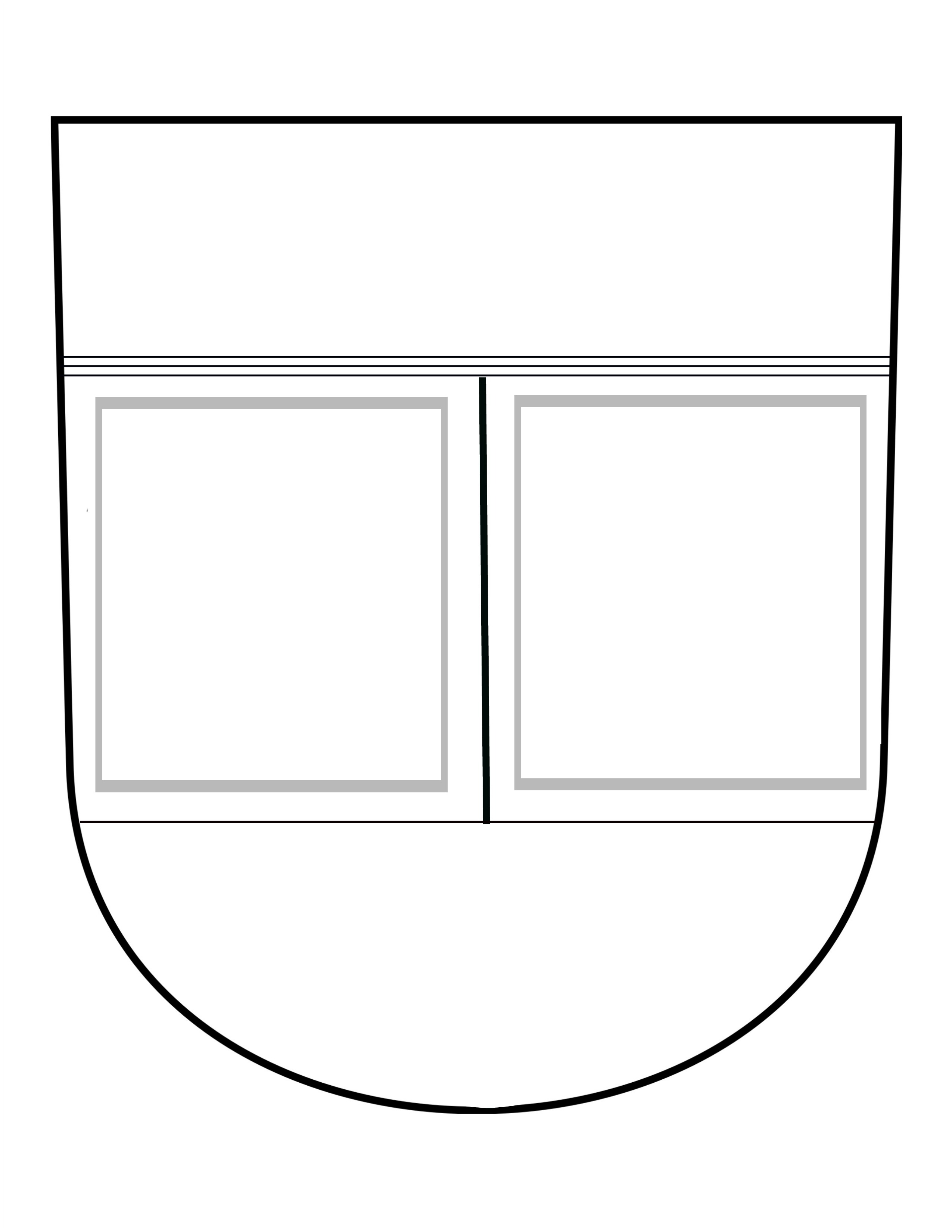
A coat of arms is a special design made for a distinguished person or family. The design varies, depending on the family’s (or person’s) accomplishments, titles, and positions.

Each part of the coat of arms actually has a name. The top third is called the “field” and the bottom two-thirds is called the “escutcheon”, which is actually a small shield within the larger shield.

Everything on a coat of arms is significant and meaningful. The colors, symbols, choice of animals, patterns, and designs can all denote something different.

The design of a coat of arms can vary greatly, according to family or country. For example, this is the coat of arms of the country of Botswana.

Coat of arms of Botswana

Now compare that one to this one that belongs to the Duke of Westminster.

Coat of Arms of the Duke of Westminster without Order of Garter

There’s a lot going on there, right?

For our coat of arms, we went with a much, much simpler design, but it incorporates some of the significant colors, symbols, and patterns we read about.

To do the activity yourself, you’ll need the following:

  • Printer paper
  • Cardstock
  • Scissors
  • Glue
  • Blank coat of arms printable
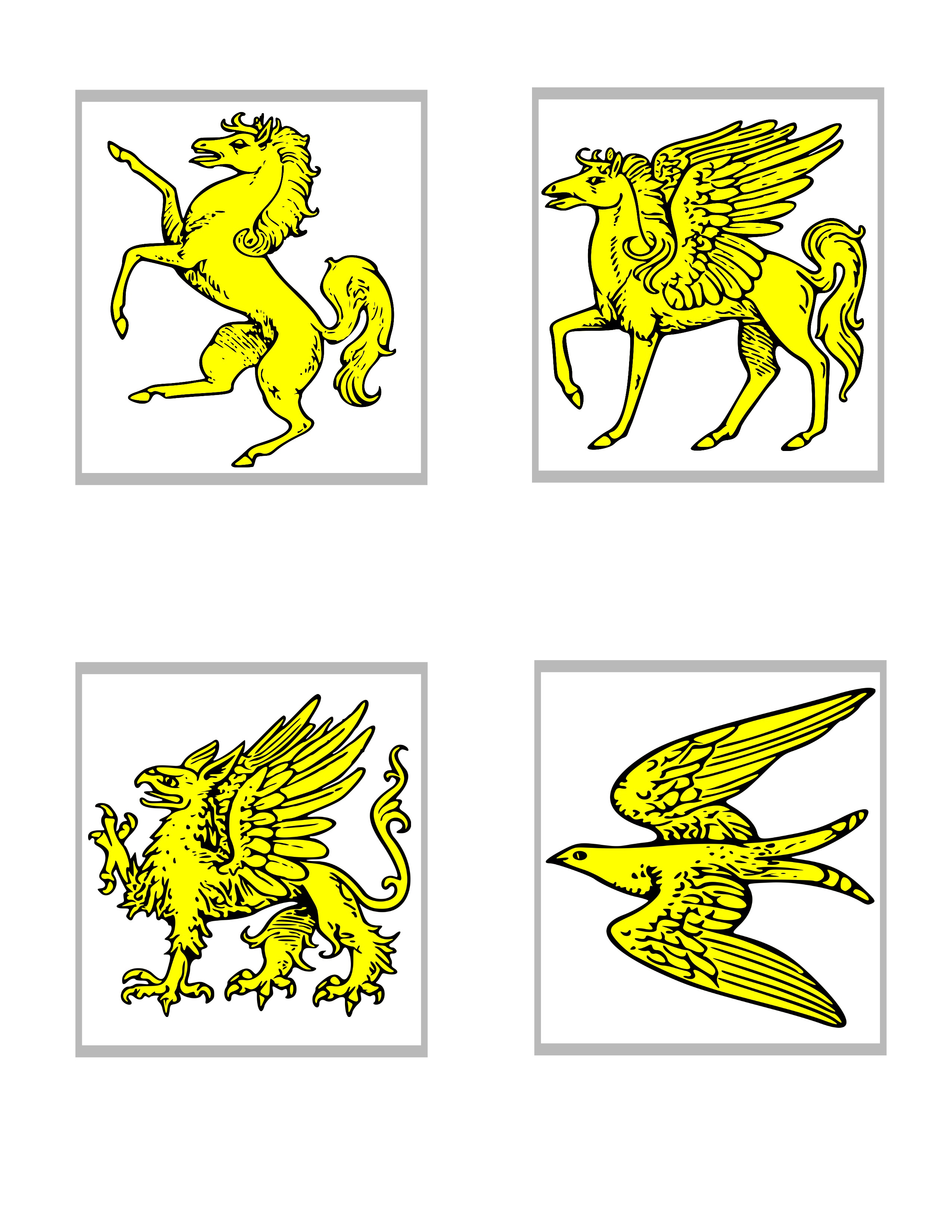
  • Coat of arms animal symbols printable
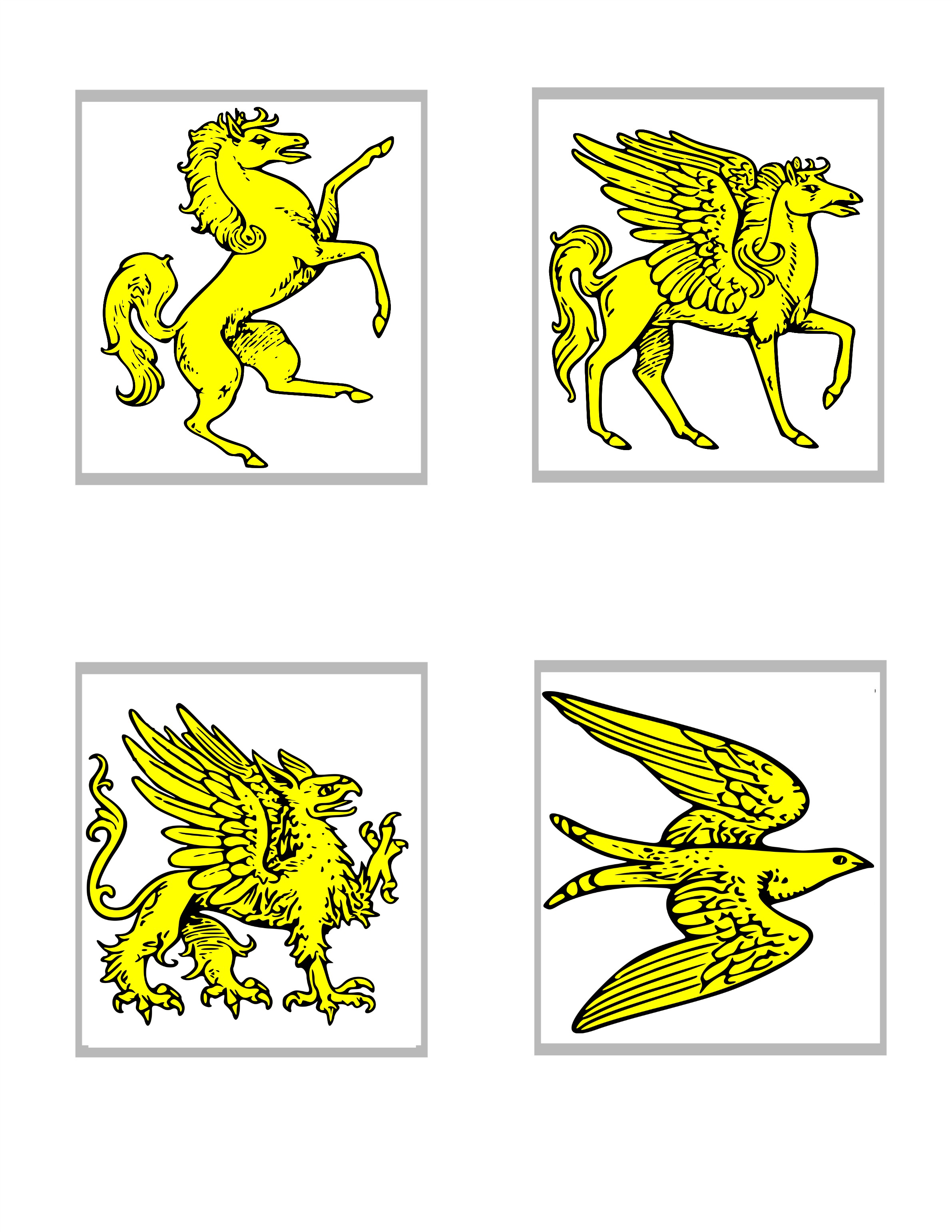
  • Mirror facing coat of arms animal symbols printable
Simple Coat of Arms Activity

Start by printing out the coat of arms and the animal symbols.

Coat of Arms Printable Craft

I didn’t have white cardstock, so I printed ours on a white piece of printer paper and then glued it on the grey cardstock we had. Then we cut it out.

If you have white cardstock, you can skip that step and just print the coat of arms directly on that.

Making a Coat of Arms

Now, it’s time to choose your animal symbols! I only included four in this printable, but there are truly scores of different animals that have been used on coats of arms through the years. And they all have a different meaning.

The animals in the printable mean the following:

  • Griffin – means valor & bravery
  • Pegasus – means poetic genius (as an English major, I had to include that one)
  • Horse – means ready for battle
  • Bird – means peace & affection
Creating a Coat of Arms

Then it was time to choose our coat of arms colors! As we learned, blue means truth & loyalty, so we colored the “field” blue.

Choosing Animals for a Coat of Arms

Then we added our animals.

Choosing Colors for a Coat of Arms

And we surrounded them with orange, which means “worthy ambition & work”. Also because it looked cool.

DIY Coat of Arms Craft

Finally, we learned that furs denoted nobility, so you could add a fur-like pattern to your coat of arms to show that you were of the upper class of society. One of those fur patterns was white with black spots – like a Dalmatian. We went with that.

As I kept looking at it, though, it just didn’t look right. Then it hit me! The animals are supposed to be facing each other!

Finished Coat of Arms Craft

Ahhhh….that’s better! Be sure to print both pages of the animal symbols so that you can choose two animals that will face one another on the coat of arms.

This was so neat to do! We didn’t know that the coat of arms was so full of meaning, so this was a great hands-on lesson to learn about that.

Looking for an easy hands-on middles ages history activity? Your kids will love making their own coat of arms. Scoot by and download the activity at Tina's Dynamic Homeschool Plus!

Check out these other hands-on history projects kids can do!

  • Hands-On History: Make an Egyptian Collar Craft
  • Ancient Rome (Hands-On History): Paint a Jester
  • Free Ancient Egypt Mehen Printable Board Game

Leave a CommentFiled Under: Hands-On Activities, History Based, History Resources Tagged With: hands on history, hands-on, hands-on activities, handson, handsonhomeschooling, history, history resources, medieval homeschool history, middle ages history

Hands-On Geography Activity: Make a Pangaea Puzzle

September 29, 2017 | 2 Comments
This post may contain affiliate links. For more information, please see my full disclosure policy.

Today, I have a hands on geography activity which is a pangaea puzzle printable.Too, look at my page Homeschool Geography for hands-on and simple ideas and tips.

When you look at a map of the world, what do you see?

Probably the continents and the ocean, right? But historians think that a long, long time ago (millions of years ago, in fact), the continents didn’t exist. Instead, there was one super continent of land on Earth.

Hands-On Geography Activity: Make a Pangaea Puzzle

They’ve even given that supercontinent a name – Pangaea.

Looking at a world map, you can see why their theory makes sense. South America’s east coast does look like it could have fit up against the continent of Africa.

And Europe does look like it could have fit up against the eastern coast of North America at some time in the past.

To help the kids visualize this idea, we decided to make a simple Pangaea puzzle activity. That way, we could move the pieces of this supercontinent around to see how they would have fit together all those years ago.

Hands-On Geography: Make a Pangaea Puzzle

See how to make this activity with your kids!

Pangaea continents.png

To get a picture of how the continents we know today may have originally fit together, take a look at this illustration of Pangaea.

Pangaea Puzzle Activity

Of course, the actual borders of these continents are different in real life, but as the supercontinent broke up.

Hands-On Geography Activity: Make a Pangaea Puzzle

Historians think that some of the land in between formed the islands that dot the oceans in our day. Neat!

To make the Pangaea puzzle activity, you’ll need the following supplies:

  • Printer
  • Printer paper
  • Scissors
  • Glue stick
  • Printable Pangaea Puzzle (print two copies) Grab the template below by putting in your email. You get it instantly.
Making a Pangaea Puzzle
Making a Pangaea Puzzle Activity
Cutting Out Pieces of a Pangaea Puzzle

Glue one copy of the Pangaea map to a piece of construction paper.

Assembling a Pangaea Puzzle

This will serve as your puzzle template.

Piecing Together a Pangaea Puzzle

From the second copy of the map, cut out the land as one whole piece.

Then cut the pieces apart.

Homeschool Geography

I used the black lines as general guides, but you could really cut them into whatever shapes you choose. No one is really sure how they looked as they separated, anyway.

Then, let the kids practice putting the pieces together to form the complete supercontinent!

This was such a cool lesson! You can laminate the puzzle pieces if you want them to last longer or you can print them on cardstock. Just store them in a plastic resealable bag when you’re not using them.

If you love hands-on geography, your kids will love some of my favorite hands-on geography programs:

North Star Geography is a love of mine for teaching geography at the middle and high school levels to keep learning hands-on. I prefer the digital format so that we can take it with us.

And if you love learning geography through literature, look at another one of my favorites from Beautiful Feet books which is Geography through Literature.

As the kids become more familiar with the parts of Pangaea, you can challenge them to try to trace the modern continents as they appear today on the puzzle pieces.

Then see if they can cut those out to form a current world map, complete with all the continents and a few islands!

When you look at a map of the world, what do you see? Probably the continents and the ocean, right? But historians think that a long, long time ago (millions of years ago, in fact), the continents didn't exist. Instead, there was one supercontinent of land on Earth. They've even given that supercontinent a name - Pangaea.

See more fun ways to teach geography with hands-on projects below!

  • Hands-On Longitude and Latitude Activity
  • Five Best Books to Create an Around the World Unit Study
  • 35 Hands-On Geography Activities to Do In 15 Minutes or Less
  • STEM and Geography: How to Build an Ancient Viking Ship
  • Hands-on Geography Mesopotamia: Fun Salt Dough Map
  • 100 BEST Books for Kids from all 50 States (Easy Geography)
  • 5 Ways to Raise a Natural Geography-Lover

HOW TO GET THE FREE PANGAEA PUZZLE

Now, how to grab the freebie. It’s a subscriber freebie.

1) CLICK HERE ON THIS LINK TO SIGN UP ON MY EMAIL LIST & TO GET THIS FREEBIE.

2) Grab the freebie instantly.

3) Last, look for all my emails in your inbox. Glad to have you following me!

2 CommentsFiled Under: Geography, Hands-On Activities, History Resources Tagged With: geography, hands on history, hands-on, hands-on activities, handson, handsonhomeschooling, homeschoolgeography

Fall Y’all:Pumpkin Pie in a Bag (Easy Homeschool Co-op Idea)

September 27, 2017 | 2 Comments
This post may contain affiliate links. For more information, please see my full disclosure policy.

Fall is always one of our favorite times of the years. With the falling temperature and days getting shorter, I just had to show you another fun and easy activity we’ve done.

This pumpkin pie in a bag is not only a hit with the kids, it’s delicious, and is so easy to make.

You can just hand it over to your kids. And it’s a great activity to do with a fall unit study. Most of the ingredients you probably already have on hand.

EASY HOMESCHOOL COOP IDEA

But why in a bag? I originally had this recipe so that we could do this with a crowd of kids in a co-op setting.

The bags used in this recipe are thrown away to make clean up easy and that means you only need minimal supplies to take to the co-op.

Too, because it makes a lot, you can easily line up 10 to 20 paper cups and build the pie in the cups.

If you’re at home, you can use bowls to mix it.

We didn’t want to clean any bowls, so we stuck to the easy ziploc bags.

Look at this list of ingredients:

  • 1 big can of pumpkin.
  • 2 2/3 cold milk. We poured some in a measuring cup and stuck it in the freezer while we got the rest of the ingredients ready.
  • 2 boxes of instant vanilla pudding mix. This is the secret to making it sweet.
  • 2 gallon ziploc bags.
  • Graham crackers.
  • Butter.
  • 1 teaspoon cinnamon.
  • Then your choice to add ginger, cloves, and nutmeg.
  • We used 4 glass ramekins to have big individual pies.
  • whipped topping of course.

The list is really short and it doesn’t take too long to whip this together.

Empty the pudding mix and cold milk in the gallon size Ziploc bag.

Let your kids work out their frustration for the day by mixing and kneading the mixture in the bag until combined.

Next, add the pumpkin.

We also added a teaspoon of cinnamon and some nutmeg.

We’re not too crazy over here about ginger, but you can add about 1/2 teaspoon of it too. Just add whatever your family likes.

Just keep combining until the pudding, pumpkin, and spices are combined.

Next, grab a package of graham crackers to make the pie base. We just rolled it out until it was crushed pretty well.

We decided to add some melted butter to bind it and add some moisture.

Besides a bit of butter doesn’t hurt anything. We combined the butter with the crumbs right in the bag.

PUMPKIN IN A BAG

After the pumpkin pie mixture and crumb crust are combined, you’re ready to begin building your pumpkin pie.

Using a 1/4 cup plastic measuring cup, we divided out the mixture for the 4 ramekins.

Using the back of the plastic measuring cup, we pressed the crumbs down and packed it well.

Next, cut off one corner of the bag and squeeze it into each ramekin.

Smooth the top with a plastic knife, add just delicious whip cream and it’s ready!

We put ours in the refrigerator for a bit, but either way, it’s just delicious and fun to make.

Fall Y'all. This is a fun activity for a homeschool co-op. Make pumpkin pie in a bag. Scoot by and see how to make this EASY activity. Your kids will love it. Click here! #pumpkin #homeschool

This is a fun way to welcome fall. And I know your kids will love it.Also, you may like to read these other fun fall posts!

  • Fall Homeschool Learning Resources For Middle School 
  • Fall Unit 1 {Pumpkins, Leaves, Corn, & More}
  • Free Fall Unit Study Ideas– For Older Kids Too

Hugs and love ya,

2 CommentsFiled Under: Hands-On Activities Tagged With: fall, hands-on, hands-on activities, handson, handsonhomeschooling, pumpkin

  • « Go to Previous Page
  • Page 1
  • Interim pages omitted …
  • Page 189
  • Page 190
  • Page 191
  • Page 192
  • Page 193
  • Interim pages omitted …
  • Page 215
  • Go to Next Page »

Primary Sidebar

Footer

Privacy Policy | About Me | Reviews | Contact | Advertise

Categories

Archives

Tina Robertson is a participant in the Amazon Services LLC Associates Program, an affiliate advertising program designed to provide a means for sites to earn advertising fees by advertising and linking to amazon.com. As an Amazon Associate, I earn from qualifying purchases.

Copyright © 2026 · 5 TNT LLC · Log in · Privacy Policy