• Facebook
  • Pinterest
  • Instagram
  • YouTube
  • LinkedIn
  • Skip to secondary menu
  • Skip to main content
  • Skip to primary sidebar
  • Skip to footer

Tina's Dynamic Homeschool Plus

Activity, Change, Progress

  • HOME
  • How to
    • Preschool
    • Kindergarten
    • Elementary
      • Geronimo Stilton Books
    • Middle School
    • High School
      • Science 
  • Planner
  • Lapbooks
    • Trioramas
    • History Games
    • LEGO
  • Shop
  • GET STARTED NOW!
    • Learning Styles
  • 7 Step Planner
    • Free Student Planner
    • Free Home Binder
  • Unit Studies
    • Creation to Ancients
      • Mesopotamia
    • Middle Ages to Reform
    • Exploring to Revolution
    • World Wars to Today
    • Science
  • Curriculum
    • More Unit Studies
    • Geography
    • Writing PreK to 12th
    • Free Art Curriculum
  • BootCamp
    • Resources
      • Ultimate Unit Study Planner

How To - - -

Homeschool High School–How to Log Hours for High School

May 2, 2014 | 8 Comments
This post may contain affiliate links. For more information, please see my full disclosure policy.

I answered a question today, homeschool high school how to log hours for high school. Also look at my page How to Homeschool High School.

I luv your questions.

Ad always try to make time to put them in my blogging calendar. You are one of the reasons I blog.  Look at the one I want to help you with today. 

I can never answer questions like this with just a short answer. Why? I want you to always be in the know. 

I’m giving you a heads up now that I got long winded have many details today.

“Hi there Tina!!

Good Morning to you. Can you give any advice on how to log or track hours for high school/ high school credits? What was your system?  Laura”

How to Log or Track Hours for High School? Click here to grab tips for a no fear homeschool high school year.

Homeschool High School–How to Log Hours for High School

This is a very important question. Because you don’t want to be cheating your teen.

Or over complimenting him either when you log hours or assign credit.

Before you can log hours though there are two things to determine.

1.) How to determine time? You think this is easy enough.

But not so fast because even the professionals in college didn’t give me the same answer.

2.) And based on what criteria will you assign credit?

I will break both of these down.

There is no need to feel overwhelmed and not get a simple answer. 

The answer though will depend on what courses you want your teen to do in high school.  You have a lot of flexible so be sure to remember that too.

High School Hour Basics

For most courses, you count either 1.0 credit or 0.5 credit.  Some special occasions you can count 2.00 credits, but that is another post.  All of my courses were the standard 1.0 or 0.5 credit.

A very basic rule of thumb and easier to remember without all the educationalese is that one high school textbook or course equals to about 1 credit.

Think about that and it makes sense.

If you take either Algebra I or II for example, it takes normally about one school year to finish.

A high school publisher knows it will take that long to finish math.

If your child studied it every weekday for 1 hour in a 5 day week for a normal school year.

A normal year can run anywhere from a 120 to 180 days.

{Side point here, but remember I use 180 days in my lesson planner to give you a boost in helping you to remember a school year.}

Fast forward to the end of the freshman year.

If your child took about 6 courses to use as an example, then that would equal about 6 credits.

That is for their freshman year. Or 6 1/2 if you added a fun course that only took 1/2 as many hours like ballroom dance, or speech or maybe art.

Then 6 times 4 which is the number of years for high school if you do a 4 year plan would equal about 24.05 credits. 

That is a pretty good number of credits for high school.  It can be higher for a college bound student.

But again anything between about 21 to 24 credits is good for high school completion.

Eazy peazy and you don’t have to track actual minutes and hours.  This was by far the easiest method for me to determine credit for Mr. Senior 2013.

Determine to Avoid Time Keeping Confusion

Where I went wrong in the beginning was when I was reading too much about high school.

Ad giving myself one big giganto headache.

I was tracking every waking minute or thing he did. 

For example, he did ballroom dancing for a fine art elective and if we missed a week for some reason I freaked out got a headache recalculating.

If only I realized sooner that we did this year round and so he had so many more hours than the 0.5 credit I assigned for that type of elective.  I gave up tracking the actual hours because we were way above it and just assigned the 0.5 hr for the year and did not worry about counting the actual hours.

A history program I love to revive the love of learning for a teen because it covers history in broad strokes.
Read Why I Love and Use BrimWood Press History Here

You can see how quickly I realized that it was more easier to track the core subjects by completing the book or course than it was at times the electives or other projects I assigned.

Just to summarize to this point and not lose you, 1.0 credit is normally given for doing 1 hour per day of school each week day based on 120-180 hours which is a school year.

Credits for Completion or Passing

While not wanting to split hairs or overwhelm you either, I do want you to be aware of a very fine point and it is the difference in how you assign credit.

Using only the “completing a course or book equals 1.0 credit” mentality can have a slight hiccup if your student does not pass the course. 

So you can see this topic dovetails on setting a standard about how you grade and expecting a passing grade before you assign that credit too.

  I have some examples of a grading system you will want to adopt too on my page Step 5a. Choose Unique Forms JUST for You

Balancing this thinking for you, I want to throw in one more counter weight and that is about how I counted Bible study. 

It is not a subject he will ever complete and never come back to like say Algebra I.

  So I had to come up with some way of tracking it though and I did that by covering certain topics each year that I assigned. 

However, I did keep up with hours, but more than that my standard for him was one of my very own that had nothing to do with a grade. 

My standard was more about how his heart was moved as we had Bible discussions.  I simply marked it passed on that study. 

So even though Bible study is an going life time habit, you will still want to put some measurable system in place for the sake of counting it in high school.

As you  can see, you have a variety of ways to assign credit which are the core subjects, electives and things that you specifically assign which are important to your family.

Outside of the Textbook Credit Counts too

High school is about the time in your teen’s life that he needs to explore, investigate and well grow up.  So there will be some things that you will want to assign as projects for the year. 

This is perfectly normal. Both public and private schools have these options too.

For example, I assigned a 10 page essay for Mr. Senior 2013 as his final exam on the topic “What is Love?” where I expected him to break down verse by verse First Corinthians 13: 1-13. 

Out of all the subjects I assigned him to write about, I couldn’t think of a topic more worthy to his heart and his eternal benefit to remember than the true meaning of love. 

I won’t try to go teary eyed on you, but it was my last official writing assignment to him in high school.

homeschool geography quest

{Geography Quest where Mr. Senior 2013 prepared a majority of notes and visual presentation on Turkey and directed his younger siblings on what to say too.  He was graded on all 3 aspects.}

So look at some of these other ways to assign 1.0 or 0.5 credit.

  • It could be some kind of apprenticeship.
  • It could be  some kind of community project.
  • It could be any area that he demonstrated what I call a went “far and beyond” attitude to learning something.
  • It could be an essay or other long-term project that goes to the very heart of why you homeschooled.
  • It could be for helping you to keep up with his records, learning about the computer and doing self-learning, which is called orientation in some distance learning programs. (more on that below)

All families are different and their goals in their courses and projects should reflect that. 

Some families are sports minded, others have children who want to be professional dancers or music players, others are scientific minded or want college academics in high school too. 

So you can see that beyond the 3 R’s you have room to tailor your high school program to fit your family’s values or goals.

Praise for the Paper/Pen Method Despite Digital World

The best way I kept up with what we did the first year was simply to journal it in  Microsoft Word. 

At the end of the year was a better time to assess his credit based on what I kept up with during the year. 

As I sat down each time whether it was daily or if I skipped a few days because of life, I simply typed up what I thought was important to know about that day or week if it was something beyond the 3 R’s.

Now, I use part of Evernote with Mr. Awesome too because I can access it with any device, but a simple method is best. 

All the fancy forms can’t substitute for plain old journaling your journey. 

I probably made way more notes than I needed to, but I also had it all. 

I did eventually put it on the forms I made on Step 5a. Choose Unique Forms JUST for You.

Too, having helped lots of homeschool families prior I knew that many of the high school distance learning programs give a 0.5 credit called orientation as they introduced the students to using a computer and learning about high school when they enrolled. 

Since Mr. Senior 2013 could help me too by keeping up with his student planner, and my curriculum planner and typing down some of what he did as he learned the parts of the computer, I could at least give him that credit too.

Though it may seem a lot to keep up with, it can be pretty straightforward if you will remember to not worry about counting actual hours if your child is using a high school course or textbook and it equals about a year. 

Tracking Time Easily

If he passes, then that part is already done for you and you only have to keep up with the hours he worked on electives or other projects you assigned.

Beginning_woodworkHome_economics_i_lu_setLIFEPAC® Windows® 7 Set

{Elective courses like woodworking and home economics from Christian Light Publication and learning about computers from Alpha Omega.}

Even some of the electives can be easy to figure out too like the one we used by Christian Light Publication called Beginning Woodworking. 

It flat out said it was one credit. 

Easy enough to figure it out by choosing from publishers like Christian Light Publication, Alpha Omega Publications and Bob Jones because they specifically state the credit hours for the elective.

I hope this helps you some and don’t be too rigid about counting hours.  As you can see sometimes it is hard to put a “time or hour” on reading lists. 

Your teen needs to be worried about earning his grade instead of you worrying about getting it exactly right. 

Just use the same grading system and way of determining credit throughout all of high school and it will be consistent.

Hang in there as you homeschool high school. 

It really is a huge achievement and one well worth all the information you glean along the way.  I hope I added to your empowerment today.

  • 3 Ways to Homeschool the BIGS (a.k.a. Older Kids),
  • 10 Days of Planning a Homeschool High School Graduation and
  • Should I be Teaching Spelling to my Homeschooled Highschooler?

Hugs and love ya,
8 CommentsFiled Under: Dynamic Reader Question, Homeschool Teens _ From Teen to Graduation Tagged With: high school, high school electives, high school literature, homeschool grades, homeschool graduation, homeschool highschool, homeschoolhighschool, teens

When You Don’t Know Where to Begin in Homeschooling The 3 R’s for New Homeschoolers Part 1

April 28, 2014 | 5 Comments
This post may contain affiliate links. For more information, please see my full disclosure policy.

When you begin to homeschool, you wouldn’t think of leaving out one of the 3 R’s which are essential to teaching your child.  Everything else is built on the foundation that you lay in those subjects.  The 3 R’s of beginning to homeschool are equally important and essential to you maintaining the course when times are tough.

Whether you begin to homeschool in the toddler years, middle school or high school, each season holds it own tests of your new conviction.

Today, I want to share one of the essential R’s to building a strong foundation when you begin to homeschool.

What are the reasons you want to homeschool?

Right now is the time to write down all the reasons when they are so vivid and new in your mind and heart.  It may sound way out there, but draw them, paint them, or add them to your newest techie device that you love because when your love for homeschooling wanes and it will happen, you will want to be reminded of why you made the best choice for your family.

Don’t be discouraged from your conviction so early on by avoiding the mind-set that is easy to get caught up in which is “I’ll give it a try for a year”.

3 Rs of Homeschooling Part 1-1Sometimes we have no control over how long we can homeschool and I too homeschooled each year with the question looming over my head if I had to return to work.  I never had to and I am ever so thankful, but I didn’t stop there.  Each year I worked hard to stay within our means and budgeted when I needed to because homeschooling was a lifestyle choice for us and I was determined to make it work for us by sacrificing.  Certainly it is not martyrdom, but motherhood that keeps me going.

From my experience, I can tell you that budget sometimes never really enters into why a new homeschool mom wants to return her child back to public school.   I am hoping you will address those fears now and avoid any setbacks.

When You Don’t Know Where to Begin in Homeschooling The 3 R’s for New Homeschoolers Part 1

Whether your reasons are strictly academic, faith based or a combination of both like me, they are the very thread of your journey.  Make them strong now by deciding not to waver when you may feel weak.

Painting them clearly like I mentioned whether you write them or journal them is the way to make them real.

Visualization is a powerful tool because your children will grow up, your homeschool journey will fly by and you want to visualize your end result.

Visualize what type of children you want your children to be when they are grown.   It means to ponder the possibilities of your choices.

Looking back now with my oldest son graduated I can truthfully say that I didn’t even come close to pondering the blessings that I have received.  When I held him in my arms at three years old wrapped up with a blanket as I helped him sound out words and helped him with his first pencil grip,  I fell way short of imagining my end result.  I should have imagined and dreamed with a lot more effort.  It is hard to picture something real with weak conviction.

Take time to list your reasons to homeschool and cherish them and renew your love for them each year.

When you have been sleep deprived by a precious newborn for many nights with no end in sight and your not sweet oldest child has hit raging hormone level and he can’t say one thing out of his mouth that is less than fighting words each day and your house looks like mini-bombs have gone off in it, know you are not alone.  It is part of the down side to the journey and it is not even realistic to say you can avoid the stresses of homeschooling.

However, more than anything your attitude and outlook at the lifestyle you have chosen affects the way you deal with it when it comes up.  Falling back on the reasons you homeschool strengthens your resolve.

Don’t give up something that is precious to the very core of your family without a fight anyway.  From those tests that you live through comes a conviction and dogged determination for homeschooling.

How many reasons do you have on your list? Want to share some of them with me?

Hugs and love ya,

2012Tinasignature Free

Look at some of mine on my list, though I do feel it might be time to update it too.

40 Reasons I Homeschool


5 CommentsFiled Under: Be an Exceptional Homeschool Teacher, Begin Homeschooling, Homeschooling, How To - - - Tagged With: essentialstohomeschooling, new homeschooler

Homeschooling Through the Summer with My Highschooler

April 13, 2014 | 1 Comment
This post may contain affiliate links. For more information, please see my full disclosure policy.

Homeschooling through the summer with my highschooler was always fun.

I have shared before how we enjoy schooling year round. Last year was the first year in a long time that I followed a more traditional public school schedule, i.e. beginning August and ending May-ish or so because I knew it was Mr. Senior 2013’s last year.

Homeschooling Through the Summer with My Highschooler

Now that its spring and will be summer soon, I have been waffling about what we want to cover in high school for Mr. Awesome.

Making the decision to homeschool year round here in Texas is not hard to do because you don’t want to be outside too much during the heat of the day.

It just makes sense to me to school during the hot summer days and enjoy more relaxed days in spring and fall and we do.

I have two things I know for sure I will tackle with my highschooler this summer.

  • We have signed up for an online writing class with Fortuigence. I really love the fact that Mr. Awesome will receive feedback from somebody else at the high school level.

When my kids were very young, I didn’t want the outside help because I wanted to form and develop their character and study habits. 

As they have grown older and especially when they enter the high school years, it is a nice bonus to receive positive feedback from others because it really mimics real life.

Your child receives feedback from others, whether in a college setting or a work environment and it helps them to learn now how to accept that feedback, positive or otherwise.

  • The second thing I know we are going to scoot along on and focus on is our study of North Star Geography.  Because we are going to work on this through the summer we are going to savor it and plod along on it.
Homeschooling Through the Summer with My Highschooler

Talking about North Star Geography, the planned release date is close.

I do have a few more snapshots though of what the highschool level hands-on geography program will look like.

Here is the front cover and

Homeschooling Through the Summer with My Highschooler

here is the back cover.  They are so smokin’ hot, I love them.

back cover homeschool higschool geography north star geography

For now, we are still using our notebooks and moving along on it.  I will be sharing more as the boys put the finishing touches on their DIY Atlas Covers.

I plan on starting our next unit study too so no rest for us though I will slow down a bit.

Finishing Strong Link Up Tina's Dynamic Homeschool Plus-1

I

What about you? Have you started making plans for the summer yet?

Hugs and love ya,

Want to read some more.  Look at these posts for year round homeschooling.

  • How to Use Summertime to Put a Foot in Homeschooling
  • 30+ Summer Activities for Middle School Kids
  • A to Z List: 100 Fun Summer Homeschool Unit Study Ideas
  • What is Year Around Homeschooling? Part 1
  • What is Year Around Homeschooling? Part 2

1 CommentFiled Under: How To - - -, Plan For & School Year Around Tagged With: summerschool

What is a Lapbook? Video

April 8, 2014 | 1 Comment
This post may contain affiliate links. For more information, please see my full disclosure policy.

Lapbooking is a way to communicate ideas and learning through a hands-on visual tool.  I have seen many definitions of lapbooking because educators use them for a variety of reasons.

A most basic definition is that it is a group of small books or minibooks, mostly of different shapes and sizes that contain information about the topic the lapbook is on.

Lapbooking is Not Just for Young Children

And no I don’t feel lapbooking is just for young children. You can certainly make the process of creating lapbooks about the crafty part of it, but for us it has always been about enjoying the process of information gathering

.  But it doesn’t stop there because it becomes a way for my sons to use it as a tool to recall what we learned.

What is a Lapbook

Too, a visually appealing tool like a lapbook grabs the attention of any learner regardless of the age.

So the best way to explain how we use them in our homeschool is to show you.  I hope you enjoy the video of where I share some about how we use our lapbooks.

We won’t give them up in our journey, but adjust each one to suit our needs.

I hope you find some inspiration from the video!

Hugs and love ya,

2012Tinasignature The Ultimate Guide for New Homeschoolers
Check out some of these resources that make lapbooking easy


Want to read more? Look at

Beware of the 3 C’s of Lapbooking

1 CommentFiled Under: Lapbook Tagged With: lapbook

The Ultimate Guide for New Homeschoolers – An Easy Beginning!

April 7, 2014 | 20 Comments
This post may contain affiliate links. For more information, please see my full disclosure policy.

In preparing the ultimate guide for new homeschoolers a lot of things affected what I selected to include and not include.

My over 20+ years of homeschooling experience influenced this list, but my unique experiences in mentoring new homeschoolers in person for 10 years had an equal weight. You’re getting a two-pher.

Based on years of experience I have unique one of a kind resources for new homeschoolers.

I not only have a self-paced, instant access, online boot camp, but an awesome book. They stand alone in the homeschool world because like I mentioned earlier, they’re not just based on personal experience.

My experience alone may or may not be of value to you, but one-to-one coaching for newbees gives me a one-of-a-kind perspective.

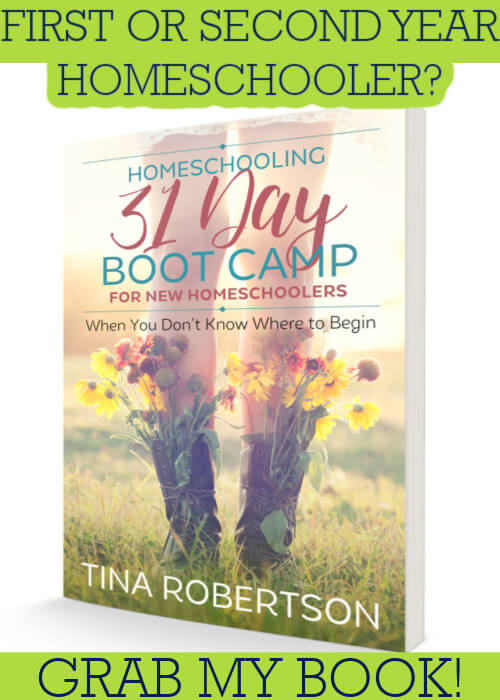
Homeschooling 31 Day Boot Camp is a companion to the online, instant access, self-paced Boot Camp Course. You don’t need my book to do the boot camp. You’ll get tons of value from either product.

New Homeschoolers Who Want to Avoid Rookie Mistakes

I know you’re interested in purchasing curriculum right now. 

There is a time to purchase curriculum, but go through these resources first so that you make a well-informed choice. I’d like to save you hundreds if not thousands of dollars.

STEP 1. Homeschooling Begins with Education for the New Educator


It is important to get the help and education you need like just like any new teacher would. Avoid the rookie mistake of jumping in and purchasing curriculum.

What IS and What IS NOT Homeschooling

Deschooling is the MOST important beginning step. Look at Deschooling: Step One for the New Homeschooler (the Definitions, the Dangers, and the Delight)

Video: How to Deschool – Are You Doomed If You’ve Never Deschooled?

Homeschooling works well for ANY child because EVERY child deserves an individualized education, but that doesn’t mean everyone can do it. 

In addition, homeschooling looks different for each family.

Some families have both parents that work, have one full time working breadwinner, or one family could be a single mom. Homeschooling is flexible for ALL those families.

Arming yourself with pros and cons, you can decide how you will handle the naysayers.

Homeschool Stats & Facts NOW Equals Deep Roots

We’re going to talk heart to heart, but we need to go beyond the warm and fuzzy part of homeschooling.

Look at the success of the homeschool approach by reading the stats at NHERI (NATIONAL HOME EDUCATION RESEARCH INSTITUTE ).

What IS Homeschooling

  • biggest difference – parent controlled
  • you can choose all online curriculum, part physical books or mix and match
  • testing becomes the right of the parent who knows the child best and understands that a test is nothing more than a tool
  • conferences are not needed because as the tutor of your children you know what they’re learning. Even if you just begin to homeschool, it doesn’t take long for you to know exactly which subjects your child excels in and which subjects he will need support for.
  • your schedule is adopted based on your family’s needs and not based on an outdated school schedule, which was set up based on a society that was much more agricultural than our society is today. 
  • Being in control doesn’t mean you can’t use something laid out by another company, but then that is your choice.
  • accreditation is no longer a term which homeschoolers fear because they know it doesn’t have anything to do with the value of an education. Be sure to read my article, Accreditation – Removing the Shroud of Mystery.

What is NOT Homeschooling

Homeschooling is NOT school at home. If the public school system is not working now, why repeat it?

  • You don’t have to have a chalkboard, dry erase board or even a school room.
  • Some families prefer a schoolroom, others don’t and still others just don’t have the space for one.
  • A school room or lack of it does not make a true homeschooler.
  • Don’t confuse not doing public school at home with not being able to use an online school if you need one.

Look at my post The Great Homeschool Hoax – Public School At Home?

Choosing curriculum is NOT the first step.
(Veteran Tip: Look at Why Buying Curriculum Won’t Make You a Homeschooler – But What Will)

Step 2. Know Local Homeschool Law AND How-to Meet It


Determining what type of curriculum you will be using is affected by the laws of your land. Most homeschool state laws are relaxed meaning you have a good amount of control over the type of curriculum.

Why is that important?

If you have stringent records to keep, then for your first or second year get something boxed or laid out because it eases homeschool stress or record keeping in the beginning when you don’t what to keep and what to throw away.

Go to HSLDA {It’s short for Home School Legal Defense Association} to know the laws of where you live. It has a clickable Map. It’s that important to know BEFORE jumping into purchasing expensive curriculum.

I’m not a lawyer, but having helped new homeschoolers in many different states, I have a good handle on understanding quite a few laws in different states.

Tip: Of course, your local state group is the best resource, but I will help if you’re lost. I want you to get the help you need.

Look at my Big Ol’ List of All-In-One Homeschool Curriculum (a.k.a Boxed) .

Next, instead of choosing only curriculum that public school uses, you want to use curriculum which supports the way your children learn best.

Step 3. Veteran Tip: Curriculum is Organized by Homeschool Approach.

Learn the homeschool approaches first!


Look at the top 5 Homeschool Approaches.
(Veteran Tip: Expand your view of what is curriculum.) Look at 45 Ways to Define Homeschool Curriculum – Is Your Definition Holding You Back?

I am not going to overwhelm you with all of the approaches that have come and gone; the ones below are the most popular approaches in homeschooling. 

First, I have defined the approach and then I give you a link/s as homeschoolers share about the choices that fit their family or to help understand the approach better.

1.
Eclectic/Relaxed/Unschooling Approach
(Veteran Tip: This is really 3 different approaches, but they share some similarities. In the spirit of simplifying your start I grouped them together.)

Though I think that unschooling has received a bum rap in the past, it is more common for this approach to mean more of a relaxed approach and somewhat eclectic. But each family defines what unschooling means for them.

Unschoolers use a real life approach and child-led approach meaning they simply follow the interests of their children to decide what will be learned for the day.

They trust a child’s natural desire to learn and feed that from infancy. A lot of them do not use formal curriculum.

Although it is child-led, many unschoolers use some curriculum. I prefer to use Sandra Dodd’s definition found here at What’s the Difference between Relaxed Homeschooling and Unschooling?

Look at A day in the life of radical unschoolers

In recent years, eclectic homeschoolers have also emerged separate from unschoolers.

Eclectic homeschoolers are homeschoolers who mix and match the characteristics of the different approaches explained here and don’t really hail to one homeschool approach over the other.

Look at I’m an Eclectic Homeschooler. What Exactly Does That Mean?
Look at What is Delight-Directed Schooling.
Look at Relaxed Homeschooling and what it looks like years later.

2.
Charlotte Mason Approach

I prefer the definition at Simply Charlotte Mason: “The Charlotte Mason method is based on Charlotte‘s firm belief that the child is a person and we must educate that whole person, not just his mind. So a Charlotte Mason education is three-pronged: in her words, “Education is an Atmosphere, a Discipline, a Life.”

Look at Our Journey Westward for a Charlotte Mason schedule.
Look at What Drew Me to a Charlotte Mason Education.

3.
Classical Approach

Susan Wise Bauer is the modern model of classical education and I prefer her definition: “Classical education depends on a three-part process of training the mind. The early years of school are spent in absorbing facts, systematically laying the foundations for advanced study. In the middle grades, students learn to think through arguments. In the high school years, they learn to express themselves. This classical pattern is called the trivium.”

Look at the introduction to classical education.

4.
Unit Studies

I also prefer Susan Wise Bauer’s definition of a unit study. “A unit study integrates disciplines together, rather than dividing them into separate “subjects” to be pursued at different times during the school day. Literature, history, science, mathematics, art, music, history, and so on are all studied through their relationship to a core organizing principle.”

Look at Homeschooling Styles: Unit Studies
Look at Unit Studies: Multi-Age, Multi-Subject Approach to Learning.

5.
Workbook, Textbook, also called Boxed and All-in-One in the homeschool world
.
(Veteran Tip:This is the approach you’re probably most familiar with since it’s used in public schools.)

I like the definition at Education Today. “This traditional approach uses graded textbooks or workbooks that follow a scope and sequence. Each subject is covered in 180 daily increments per school year for a span of 12 years. Teacher’s manuals, tests and record keeping materials are usually available.”

Look at the Textbook Approach To Education.
Look at the Traditional Approach to Homeschooling.

Why You Should Start with Inexpensive or an All-in-One Curriculum


 During my many years of mentoring new homeschoolers, I’ve seen them spend thousands of dollars on a curriculum. That is so needless.

Choosing inexpensive curriculum in the beginning gives you financial room to understand what grade level each of your children are truly on and not just choosing the next grade level. Your money goes further because you made a more informed choice.

(Veteran Tip: Another HUGE rookie mistake is choosing the next grade level without truly understanding what your children know or don’t know on his or her grade level.)

Avoid the mind-set that if your children repeat a subject on a grade level or reviews it that they will be behind. Some children jump several grade levels in one year because they repeated material previously not mastered.

A well-defined goal in the beginning should be that your children become masters of their material which means slowing down or going down a grade level when he needs to and skipping a grade level when he has it.

And guess what? In homeschool, we don’t really keep up with grades. 

Oh we do pay attention to grade levels/grades (sometimes) as we move our children on their courses, but the point of it is that children do not develop evenly. They are ahead in some subjects and struggle with others.

Look at my 7 Budget-Friendly Language Arts Curriculum to Pair with Unit Studies (with printable). Look at BEST Curriculum by Homeschoolers for Homeschoolers, Digital Homeschool Curriculum – Big Ol’ List, and Is Homeschooling Expensive.

A boxed curriculum gives you a pattern to follow which a lot of new homeschoolers need. 

From using a boxed curriculum, you determine what you like and don’t like about one homeschool approache over another and that helps to save you money in the long run from too much trial and error.

Don’t make another huge rookie mistake while using boxed curriculum which is to do it ALL.

Do not be a slave to boxed curriculum meaning you need to avoid the thinking that you have to complete the whole thing. Use the parts that you need while you are reading all you can in your first or second year. 

No wow factor happens when you complete curriculum. Completing curriculum does not mean a child understood it. Understanding and completing curriculum are not synonymous.

The end goal during the first year or second year is to find the approach that fits your family best and it takes time.

Homeschool Curriculum Organized by Homeschool Approach – Ewww so Fantastic!

To give you a head start, I’ve taken a few curriculum providers and organized it below by approach so I help you conquer the curriculum conundrum.

Look at the candy store homeschool curriculum providers below that stand ready to help you succeed.

Textbook Approach/All-in-One
  • Easy Peasy All in One
  • A Beka Book
  • BookShark
Classical Approach
  • Classical Academic Press
  • Classical Conversations
  • Veritas Press
Charlotte Mason Approach
  • Queens Homeschooling
  • Ambleside On Line
  • The Good and the Beautiful
Unit Studies Approach
  • Konos Character Curriculum
  • Tapestry of Grace
  • Trail Guide to Learning

Step 4. Homeschool Schedule, Organization, and Lesson Planning


Awww, yes NOW the part that most new homeschoolers have the hardest time achieving and that is how to add in school to an already busy day.

I have had MANY schedules through the years and they were based on the needs and ages of my children and whether I had to work or not.

Look at these tips.

  • Should You Switch to a 4-Day Homeschool Schedule?
  • The Sticking Power of a Homeschool Schedule
  • Lesson Planning Backwards! Part 1 of 2.
  • Homeschool Lesson Planning Backwards Part 2 of 2.
  • 100 BEST Ideas to Organize Your Homeschool Area – Storage, Spaces, and Learning Places
  • Homeschooling Year Round – Chaos Or Calm?
  • How To Create a Homeschool Schedule That You Can Stick To
  • Top 10 Tips for Maximizing Space in (Really) Tiny Homeschool Spaces
  • How Far Out to Homeschool Lesson Plan?
  • Homeschool High School The Must Cover Subjects Part 1
  • Homeschool High School The Must Cover Subjects Part 2
  • 7 Advantages to Starting Your Homeschool Year in the Summer

Video: How to Homeschool Lesson Plan EZ by Tina Robertson

I have one of the BEST organizing tools in the homeschool world and it is the 7 Step Homeschool Planner. You build it yourself using my beautiful forms.

Video: Scheduled & Lesson Plans A Bit Like Chemistry New Homeschooler Boot Camp by Tina Robertson

And yes, I am going there next and that is homeschool socialization.

Step 5. Homeschool Socialization


We do crawl out from under our rocks.

Okay, seriously the homeschooling world is brimming with activities. Albeit, they vary from area to area. The point is your children can be involved in as much or in as little you want them to be.

If you haven’t already heard from the homeschool critics, you will. Some new homeschoolers get hit pretty hard early on in their journey by well wishing family members with questions and then sometimes you will receive plain down right criticism. 

It can be hard if you have tender feelings on top of being antsy about succeeding. 

Look at these links to grab some gracious and quick replies!

  • Socialization – A Homeschool Hallucination?
  • 100 Reasons Why Homeschooling is a SUPERIOR Education
  • Is Homeschooling Making the Grade? It’s in and the Grade is ALL Fs!
  • How Do I Socialize My Homeschooled Kids? Are We Really Talking About this AGAIN?
  • What to Expect When You Expect to Homeschool (25 Silliest Questions Ever)
  • 100 Ways to Silence the Homeschool Naysayers (Maybe!)
  • 12 Easy Ways Homeschooled Teens and Tweens Socialize

How-to Extinguish Any Possible Spark for the Love of the Learning


I know you can’t wait to dig into curriculum because you may feel it is the very proof that you need that you are now an official homeschooler. 

I admit that I love the stuff myself too and curriculum buying can be pretty addicting.  It is something that I still look forward to each year as if it was my very first time.

How can you determine if the curriculum you choose will make a good fit for your family?  True, some of it is trial and error, but some of it is not. 

I have you covered with some tips on how to not extinguish the love of learning.

  • What If I Choose the Wrong Homeschool Curriculum
  • A to Z List: Middle and High School Homeschool Electives
  • You’ve Pitched the Homeschool Curriculum – Now What?
  • 10 Signs. Know When to Walk Away from “Perfect” Curriculum.
  • Mixing It Up: How to Combine Homeschool Approaches (Without Losing Your Mind)
  • Stop Switching Your Curriculum, Switch Your Course of Study
  • How to Know What A Homeschooled Child Should Learn Yearly?
  • How to Teach Homeschool Preschool From the Inside Out (And Preschool Skills)
  • Homeschool High School The Must Cover Subjects Part 1
  • Homeschool High School The Must Cover Subjects Part 2

Keep in mind that if you use a text book approach now because you feel comfortable with it, it is okay. 

The Ultimate Guide for New Homeschoolers by Tina Robertson. A homeschool mom of 20 years experience AND who taught workshops for years to new homeschoolers. Don't Miss this!

However, if you have a child that is extremely burned out on this method used in public schools, you will want to implement some other approach from the beginning because you don’t want to turn your child off to homeschooling in the first few months.

So your teaching style and homeschool style will change as you meet the needs of your kids and utilize your strengths to be the best teacher for your children.

remember you’re not teaching curriculum, you’re teaching a child.

AND I have OH SO MUCH MORE for you!!! Here is my category on my site Tina’s Dynamic Homeschool Plus with tons more tips for newbies.

Can I help you with something now?

Hugs and enjoy this plethora of information intended to set your feet firmly on the road of new homeschool beginnings.

This blog hop is organized by iHomeschool Network, a collaboration of outstanding homeschool bloggers who connect with each other and with family-friendly companies in mutual beneficial projects.

20 CommentsFiled Under: Begin Homeschooling, Choose Curriculum, Homeschooling, Kick Off Your Homeschool Year Tagged With: homeschool anxiety, homeschool challenges, new homeschool year, new homeschooler, new homeschooler homeschool organization, newbeehomeschooler, newhomeschoolyear, ultimate guide

  • « Go to Previous Page
  • Page 1
  • Interim pages omitted …
  • Page 117
  • Page 118
  • Page 119
  • Page 120
  • Page 121
  • Interim pages omitted …
  • Page 128
  • Go to Next Page »

Primary Sidebar

Footer

Privacy Policy | About Me | Reviews | Contact | Advertise

Categories

Archives

Tina Robertson is a participant in the Amazon Services LLC Associates Program, an affiliate advertising program designed to provide a means for sites to earn advertising fees by advertising and linking to amazon.com. As an Amazon Associate, I earn from qualifying purchases.

Copyright © 2026 · 5 TNT LLC · Log in · Privacy Policy