• Facebook
  • Pinterest
  • Instagram
  • YouTube
  • LinkedIn
  • Skip to secondary menu
  • Skip to main content
  • Skip to primary sidebar
  • Skip to footer

Tina's Dynamic Homeschool Plus

Activity, Change, Progress

  • HOME
  • How to
    • Preschool
    • Kindergarten
    • Elementary
      • Geronimo Stilton Books
    • Middle School
    • High School
      • Science 
  • Planner
  • Lapbooks
    • Trioramas
    • History Games
    • LEGO
  • Shop
  • GET STARTED NOW!
    • Learning Styles
  • 7 Step Planner
    • Free Student Planner
    • Free Home Binder
  • Unit Studies
    • Creation to Ancients
      • Mesopotamia
    • Middle Ages to Reform
    • Exploring to Revolution
    • World Wars to Today
    • Science
  • Curriculum
    • More Unit Studies
    • Geography
    • Writing PreK to 12th
    • Free Art Curriculum
  • BootCamp
    • Resources
      • Ultimate Unit Study Planner

How To - - -

Homeschool High School The Must Cover Subjects Part 1

May 13, 2014 | 6 Comments
This post may contain affiliate links. For more information, please see my full disclosure policy.

Many of you have asked me what are the must cover subjects in high school.  Guess what? There are not any.  Okay, I just wanted to get that over with so you can be released from all the stress of high school planning and all those rules you have set up for yourself.

Instead of giving you the must cover subjects, I want to give you some must know basic tips that will help you to sail through high school planning.

And okay yes, I’m giving you a guide to what you want to know which is what are some of the basics that you don’t want to overlook.

Homeschool High School The Must Cover Subjects Part 1

I assure you this is easier than some books about planning high school make it sound.  Bathe in the thought for a minute that there is so much freedom in high school when it comes to planning.  Free yourself from any predisposed thoughts about what you think you need to cover in high school.

From that freedom, comes the very unique way you want to build your high school courses.  Don’t start high school with fear, stress, and rigid rules about planning.

Homeschool High School The Must Cover Subjects

I don’t want to oversimplify planning high school either. Your fears about high school can be valid if you don’t get the heads up about a few very significant details.

You know I’m a stickler for details.  And I always want my followers to be just a notch above when it comes to understanding homeschooling know how.

Core Subjects Are Key

Most veterans might answer the question about what subjects to cover by saying it depends on your future plans.  Though this statement is very true, it does not give you a specific answer and direction.  I don’t really like that answer either.

Giving you one foundational point to build on will be of much more help and here is the nitty-gritty: stick to the core subjects in your most basic planning.

You have heard me say it before and it’s true.  The 3 R’s are at the very heart of high school planning and they keep every future opportunity opened for your teen.

Follow me on this thought or scenario for a minute.  I don’t care what teen experts say, not all teens know exactly what they want to do at the high school age.  I know many adults who are still not sure what they want to do whether in college or not.  And if they do, they can change their mind on a dime too.  Don’t make my mistake and put extra pressure on your teen to decide now while he is still investigating his options for the future.

This is not the time for our teens to know exactly what they want to do, but it is the time for them to bask in the wealth of opportunities opened up to them.  Diligently investigate the opportunities while they are a teen.

On the other hand too, the teen years are about exerting some positive pressure on your teen.  They need to taste the weight of adult decisions, but you are the only one to know how much positive pressure to exert.  It truly is a balancing act in high school not just about planning subjects, but because you are dealing now with a pre-adult.

There is not another time in their life that they will be free of financial responsibility and not responsible for taking care of a family yet.  High school is about preparation for adulthood and they are not quite there yet.

Some teens have an idea of what they think they want to do and others do not.  It is all in the realm of normal.  Do not think you are the lone homeschool mom who has a teen that does not know what he wants to do yet.

How does all of this help when planning subjects?

Because high school courses reflect the direction your teen wants to take.  Sharing that fine, but significant point with you helps you to see that they are inextricably link, which is why it can seem like talking about muddy water when talking subjects in high school.  A set of courses or subjects that works for one family might not work for another family with different goals.

Again, the backbone of your planning, whether you are planning for the known or unknown future is to be sure the foundation of their high school is built on the basic or core subjects.  From there,  you can add specific subjects to it.

You want your teen to have every option available to him when he finally decides on a route.

A Teen With No Plan While You Plan

Whether your teen goes to college, joins the workforce right away, takes up a gap year, goes to missionary service, or don’t know what they are doing the next day, lay a good foundation by sticking to the basic subjects like math, language arts, history and science.

These courses will give them the edge they need for any future options.

My basic high school plan looked like this:

  • 1 Math each year = 4 years or 4 credits.
  • 1 Language Arts each year = 4 years or 4 credits.
  • 1 Science for 3 years= 3 years or 3 credits.
  • 1 History each year= 4 years or 4 credits.

Bam, 15 solid credits were planned immediately for Mr. Senior 2013.

Now, I said this was my plan.  I realized soon enough that planning for a young teen prior to high school is quite a different thing than when he inched closer to adulthood in his junior and senior years.  Now, he wanted to make more of his own educational choices too.  And rightly so.

Plodding along throughout the high school years with the basic core subjects is a solid plan because it keeps all your teen’s options open.

But, what else do you want to add to his high school courses?  Well, next comes the glam part of planning as I call it.  I will share in Part 2 how to round out the rest of your high school subjects.

Does this sound like a plan? Click on Homeschool High School The Must Cover Subjects Part 2 if you’re ready for the next part.

Hugs and love ya,

Did you miss these posts?

  • Homeschool High School–How to Log Hours for High School
  • Homeschool High School Readiness
  • Homeschool High School How to Prepare THE Transcript + Editable High School Transcript
  • Online Homeschool High School Poetry (No Teaching Involved)
  • Get It Over and Done: How Do Homeschoolers Graduate Early

6 CommentsFiled Under: Graduate a Homeschooler, Homeschool Teens _ From Teen to Graduation, Teach/Which Subjects to Teach/Cover EVERYTHING Tagged With: homeschoolhighschool

20 Fun Summer Ideas for a Teen

May 10, 2014 | 1 Comment
This post may contain affiliate links. For more information, please see my full disclosure policy.

I may have a bit more than 20 fun summer ideas for a teen, but having some ideas to help out during the summer when hormones boredom hits will hopefully keep you and your teen getting along.

I really think most of the ideas could be done by either a teen boy or girl.

20 Fun Summer Ideas For A Teen

Schooling year around, we have kept a heavier school load until Mr. Senior 2013 and Mr. Awesome hit their high school years and then we have switched over the last few years to following a more traditional public school schedule.  It really is in the middle to high school grades that I feel the tug at being a bit more creative to beat summer boredom.

You may have some more ideas to add to this growing list, but here are a few of our own that helps preserve sanity with a teen.  Well I can hope, can’t I?

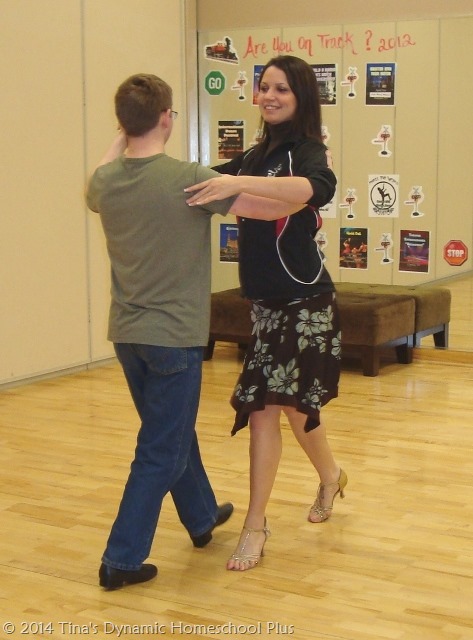
ball room dancing for a teen
  • We kept on ball room dancing during the summer. You know I told you my boys refused to do this until Dad put his foot down (no pun intended) and then they fell absolutely in love with the manly art of dancing.  I think having cool dance instructors helped.  So if you have either boys or girls, it is a must to have cool instructors.  This translates to instructors that are younger and not old like me.
  • Square dancing works too.  We have a large homeschool group here that keeps on dancing and even does competitions in the summers.  Teens love to compete.
  • My oldest also had looked into volunteering at the local fire station.  I think his enthusiasm was dampened a bit when they said they would start him off on washing the fire trucks instead of fighting fires.  But again, he would be getting a lot of valuable training for other careers like an investigator and realized too that you have to begin at the bottom.  What does his dad and mom know anyway about starting off on jobs?
  • I  was part of 4-H group too where both boys and girls started gardens if they had a green thumb.  My oldest wasn’t a teen yet, but one of the 10th grade boys even had an interest in becoming a chef.  He and his mom were hosting parties and selling Pampered Chef where he could make some money and cook too.  Brilliant.

  • There are a whole host of places to volunteer at too that would be delighted to have a teen like the local animal shelter, teen helpers at the library, and any kind of rescue.  Living close to the coast and to marshes, we have groups that are looking for teens to help either count birds or help out at their facilities.  It really is a matter of asking around and being assertive.
  • One year, Mr. Senior 2013 did woodworking and there is leather working too.
  • Our local newspaper host summer shops for high school students who are interested in journalism. The classes are conducted by reporters, editors, photographers and graphic artists.  It is free.
  • I know a lady in town that puts on several beginner photography workshops during the summer specifically geared toward teens.  She had asked me if I knew of any high school girls who were homeschooled and that could accompany here at weddings and parties as an assistant and learn photography.  It was nice to know she knew of the reputation of our teens, which is that they are pretty responsible.

dodgeball for a ten

{Pic. Attribution}

  • We have a couple of indoor rock climbing/trampoline/dodge boy throwing place that allows your teen to let off some steam.
  • Our local college offers a certificate program for an EMT helper that one of my sons was looking into.  This actually seemed like the adventure a teen would be looking for, but probably geared more for a high school senior.  The program included training to assist an EMT and basically would help the EMT with any emergencies he or she would be called to.
  • Kelley’s daughter started volunteering working at a vet’s office because of her love for animals and it has turned into a paying job.
  • The boys have a friend who joined a bowling league.  He and his father go together and they get out of the house each week.

  • Dare I even need to mention that you could use the time to get in some more drive practice with your teen? They probably won’t let you forget.  But then I was trying to list things less stressful and less prone to aging you.
  • When I was a teen, I had signed up to help out at the hospital.  If you have a girl or boy who are interested in the medical field, I don’t know of any place that turns down volunteer help.
  • My oldest had signed up too for indoor tennis lessons.  It’s too hot here in Texas to be outdoors past mid-morning, but there are many places with indoor courts and swimming pools too.
  • If they are a water lover like my boys, they are always accepting volunteers at the swimming pools.  I would caution you to check into this though because some of our local pools had no supervising adult and the teen boys and girls were left alone.  So I did not approve of that for my boys.

  • Also, pretty close to us is a State park and they have canoeing activities on the river for a  small group.  You know how much teens like to be with other teens and it’s not hard to gather a group.
  • If they want to earn a few bucks and they know friends who have pets, then a pet setting business is great too.  A lot of people are traveling during the summer and need a place for those pets.  This is a good idea too for a younger teen because you don’t have to deal with age restrictions like businesses have for teens.
  • The summer before last Mr. Senior 2013 worked with my husband and then I helped him prepare a resume.  We spent a week learning about resumes and the importance of skills in a workplace.
hands on models
  • I also have some hands on building projects called  Da Vinci Machine Series if they hit the mood and want to build.  I don’t think I have showed these to you before.  But its something else I have in my arsenal and pull out when I need to.  These projects are for ages 14 years and up.  So they are not babyish, which I like and they can go with history or science.  I have one more kit left and probably need to grab some more before we move.

These are just a few ideas that pop in my head and that we have done.  I do think if you are going to take a break or have a change in your routine, then make it just that.  Don’t try to keep the same routine that we expect of our teens during the year for school.

There is only one time to be a teenager and before you know it the demands of adulthood are upon them.  Let them linger at being a teenager and soak up the hum drum days of summer.

What does your teen enjoy doing during the summer?

Hugs and love ya,

1 CommentFiled Under: Hands-On Activities, Homeschool Teens _ From Teen to Graduation Tagged With: summerideas

When You Don’t Know Where to Begin in Homeschooling. The 3 R’s for New Homeschoolers. Part 2

May 6, 2014 | Leave a Comment
This post may contain affiliate links. For more information, please see my full disclosure policy.

When you begin to homeschool, you want to drink in every nugget of homeschool information and rightly so.

But did you know that another common mistake of new homeschoolers is to put their needs as a new home educator secondary to their children’s needs?

Separate Teacher Mom from Mommy

In between stalking perusing veteran’s websites to see which curriculum they use with their children, homeschool forums and reading reviews about curriculum very little brain power is left over for teacher mom.

From the beginning it is important to understand a paramount difference between your needs as mother that most of us do make secondary to our children and your needs as a new educator which most of us also put secondary to our child’s needs.

Understanding that we have to separate the two hats that we wear will motivate us to adopt the second ‘R in our essentials of homeschooling, which is research.

Often times I hear mothers explain how guilty they feel to leave their kids with grandma to attend a homeschool meeting, or attend a homeschool convention, or put them in front a good movie while they grab some information about homeschooling from a live Google hangout.  But what could more beneficial to our children in the long run than to have not only a mother that is taking care of herself physically, but is also at the top of her class in understanding about how to teach?

3 Rs of Homeschooling Part 2 Research

Not having a public school teacher background though I have helped hundreds of them through my New Bee program, I can tell you my jaw still drops at the amount of time public school teachers are required to put into their work whether by attending an official workshop or through an apprenticeship.  You wouldn’t even think twice to look over a teacher’s resume and credentials with a scrutinizing eye if you were hiring her to educate your child?  Are you doing the same for yourself?

Homeschool Research Warrior

Being concerned with our children’s needs goes to the very heart of our reasons to homeschool.  But if don’t allow enough time to research topics that will come up in our journey, then a lack of conviction or really knowledge could snuff out any spark we have for teaching.  Worse yet instead of helping our children to become life long learners, we could possibly impede their love for learning because we did not take time to be educated about homeschooling.

When You Don’t Know Where to Begin in Homeschooling The 3 R’s for New Homeschoolers Part 2

I am not telling you this because I want you to start off your journey more nervous than you are now, but I want you to place a high price on obtaining answers to your questions that will make you be the BEST homeschool teacher for your children.

What topics should we be researching anyway?

  • Research about the different types of curriculum approach.  Why research about one type of curriculum approach if you know it does not work for your child? You do not have to be an expert in EVERY approach to curriculum, just the ones that work best for your family.  Avoid the rest.  Skim them at first, then hone in on one that you think will work for your family.
  • If homeschoolers spent as much time learning about learning styles as they did curriculum, it would be the first go to topic instead of curriculum.  Why research about curriculum that fits a textbook approach if your child learns best through hands-on?  Sometimes you have to start first with learning differences.
  • Choosing a schedule is another struggle of not just new, but seasoned homeschoolers.  Seasoned homeschoolers sometimes never took the time to research homeschool schedules.  Assuming you have to school 5 days in a week is well – just assumed.

Those topics top my top 3 list if I had to make one.  There are several other  topics, but research in these three areas of homeschool curriculum, learning style differences and the variety of homeschool schedules will help you to avoid many common mistakes.

Your reasons for homeschool will then be well founded on exhaustive research.  Can it be said that your homeschool foundation is solid and firm?  Take time now to build it up.

Hugs and you know I love ya,

2012Tinasignature When You Dont Know Where to Begin in Homeschooling The 3 Rs for New Homeschoolers Part 1

Check out these other posts to help you build the 3 R’s of Homeschooling:

Discovering Learning Styles

Homeschool Learning Styles – What’s the Difference Anyway?

Grocery Shopping, Cooking & Laundry Oh My!

Leave a CommentFiled Under: Begin Homeschooling Tagged With: essentialstohomeschooling, new homeschooler

Homeschool High School–How to Log Hours for High School

May 2, 2014 | 8 Comments
This post may contain affiliate links. For more information, please see my full disclosure policy.

I answered a question today, homeschool high school how to log hours for high school. Also look at my page How to Homeschool High School.

I luv your questions.

Ad always try to make time to put them in my blogging calendar. You are one of the reasons I blog.  Look at the one I want to help you with today. 

I can never answer questions like this with just a short answer. Why? I want you to always be in the know. 

I’m giving you a heads up now that I got long winded have many details today.

“Hi there Tina!!

Good Morning to you. Can you give any advice on how to log or track hours for high school/ high school credits? What was your system?  Laura”

How to Log or Track Hours for High School? Click here to grab tips for a no fear homeschool high school year.

Homeschool High School–How to Log Hours for High School

This is a very important question. Because you don’t want to be cheating your teen.

Or over complimenting him either when you log hours or assign credit.

Before you can log hours though there are two things to determine.

1.) How to determine time? You think this is easy enough.

But not so fast because even the professionals in college didn’t give me the same answer.

2.) And based on what criteria will you assign credit?

I will break both of these down.

There is no need to feel overwhelmed and not get a simple answer. 

The answer though will depend on what courses you want your teen to do in high school.  You have a lot of flexible so be sure to remember that too.

High School Hour Basics

For most courses, you count either 1.0 credit or 0.5 credit.  Some special occasions you can count 2.00 credits, but that is another post.  All of my courses were the standard 1.0 or 0.5 credit.

A very basic rule of thumb and easier to remember without all the educationalese is that one high school textbook or course equals to about 1 credit.

Think about that and it makes sense.

If you take either Algebra I or II for example, it takes normally about one school year to finish.

A high school publisher knows it will take that long to finish math.

If your child studied it every weekday for 1 hour in a 5 day week for a normal school year.

A normal year can run anywhere from a 120 to 180 days.

{Side point here, but remember I use 180 days in my lesson planner to give you a boost in helping you to remember a school year.}

Fast forward to the end of the freshman year.

If your child took about 6 courses to use as an example, then that would equal about 6 credits.

That is for their freshman year. Or 6 1/2 if you added a fun course that only took 1/2 as many hours like ballroom dance, or speech or maybe art.

Then 6 times 4 which is the number of years for high school if you do a 4 year plan would equal about 24.05 credits. 

That is a pretty good number of credits for high school.  It can be higher for a college bound student.

But again anything between about 21 to 24 credits is good for high school completion.

Eazy peazy and you don’t have to track actual minutes and hours.  This was by far the easiest method for me to determine credit for Mr. Senior 2013.

Determine to Avoid Time Keeping Confusion

Where I went wrong in the beginning was when I was reading too much about high school.

Ad giving myself one big giganto headache.

I was tracking every waking minute or thing he did. 

For example, he did ballroom dancing for a fine art elective and if we missed a week for some reason I freaked out got a headache recalculating.

If only I realized sooner that we did this year round and so he had so many more hours than the 0.5 credit I assigned for that type of elective.  I gave up tracking the actual hours because we were way above it and just assigned the 0.5 hr for the year and did not worry about counting the actual hours.

A history program I love to revive the love of learning for a teen because it covers history in broad strokes.
Read Why I Love and Use BrimWood Press History Here

You can see how quickly I realized that it was more easier to track the core subjects by completing the book or course than it was at times the electives or other projects I assigned.

Just to summarize to this point and not lose you, 1.0 credit is normally given for doing 1 hour per day of school each week day based on 120-180 hours which is a school year.

Credits for Completion or Passing

While not wanting to split hairs or overwhelm you either, I do want you to be aware of a very fine point and it is the difference in how you assign credit.

Using only the “completing a course or book equals 1.0 credit” mentality can have a slight hiccup if your student does not pass the course. 

So you can see this topic dovetails on setting a standard about how you grade and expecting a passing grade before you assign that credit too.

  I have some examples of a grading system you will want to adopt too on my page Step 5a. Choose Unique Forms JUST for You

Balancing this thinking for you, I want to throw in one more counter weight and that is about how I counted Bible study. 

It is not a subject he will ever complete and never come back to like say Algebra I.

  So I had to come up with some way of tracking it though and I did that by covering certain topics each year that I assigned. 

However, I did keep up with hours, but more than that my standard for him was one of my very own that had nothing to do with a grade. 

My standard was more about how his heart was moved as we had Bible discussions.  I simply marked it passed on that study. 

So even though Bible study is an going life time habit, you will still want to put some measurable system in place for the sake of counting it in high school.

As you  can see, you have a variety of ways to assign credit which are the core subjects, electives and things that you specifically assign which are important to your family.

Outside of the Textbook Credit Counts too

High school is about the time in your teen’s life that he needs to explore, investigate and well grow up.  So there will be some things that you will want to assign as projects for the year. 

This is perfectly normal. Both public and private schools have these options too.

For example, I assigned a 10 page essay for Mr. Senior 2013 as his final exam on the topic “What is Love?” where I expected him to break down verse by verse First Corinthians 13: 1-13. 

Out of all the subjects I assigned him to write about, I couldn’t think of a topic more worthy to his heart and his eternal benefit to remember than the true meaning of love. 

I won’t try to go teary eyed on you, but it was my last official writing assignment to him in high school.

homeschool geography quest

{Geography Quest where Mr. Senior 2013 prepared a majority of notes and visual presentation on Turkey and directed his younger siblings on what to say too.  He was graded on all 3 aspects.}

So look at some of these other ways to assign 1.0 or 0.5 credit.

  • It could be some kind of apprenticeship.
  • It could be  some kind of community project.
  • It could be any area that he demonstrated what I call a went “far and beyond” attitude to learning something.
  • It could be an essay or other long-term project that goes to the very heart of why you homeschooled.
  • It could be for helping you to keep up with his records, learning about the computer and doing self-learning, which is called orientation in some distance learning programs. (more on that below)

All families are different and their goals in their courses and projects should reflect that. 

Some families are sports minded, others have children who want to be professional dancers or music players, others are scientific minded or want college academics in high school too. 

So you can see that beyond the 3 R’s you have room to tailor your high school program to fit your family’s values or goals.

Praise for the Paper/Pen Method Despite Digital World

The best way I kept up with what we did the first year was simply to journal it in  Microsoft Word. 

At the end of the year was a better time to assess his credit based on what I kept up with during the year. 

As I sat down each time whether it was daily or if I skipped a few days because of life, I simply typed up what I thought was important to know about that day or week if it was something beyond the 3 R’s.

Now, I use part of Evernote with Mr. Awesome too because I can access it with any device, but a simple method is best. 

All the fancy forms can’t substitute for plain old journaling your journey. 

I probably made way more notes than I needed to, but I also had it all. 

I did eventually put it on the forms I made on Step 5a. Choose Unique Forms JUST for You.

Too, having helped lots of homeschool families prior I knew that many of the high school distance learning programs give a 0.5 credit called orientation as they introduced the students to using a computer and learning about high school when they enrolled. 

Since Mr. Senior 2013 could help me too by keeping up with his student planner, and my curriculum planner and typing down some of what he did as he learned the parts of the computer, I could at least give him that credit too.

Though it may seem a lot to keep up with, it can be pretty straightforward if you will remember to not worry about counting actual hours if your child is using a high school course or textbook and it equals about a year. 

Tracking Time Easily

If he passes, then that part is already done for you and you only have to keep up with the hours he worked on electives or other projects you assigned.

Beginning_woodworkHome_economics_i_lu_setLIFEPAC® Windows® 7 Set

{Elective courses like woodworking and home economics from Christian Light Publication and learning about computers from Alpha Omega.}

Even some of the electives can be easy to figure out too like the one we used by Christian Light Publication called Beginning Woodworking. 

It flat out said it was one credit. 

Easy enough to figure it out by choosing from publishers like Christian Light Publication, Alpha Omega Publications and Bob Jones because they specifically state the credit hours for the elective.

I hope this helps you some and don’t be too rigid about counting hours.  As you can see sometimes it is hard to put a “time or hour” on reading lists. 

Your teen needs to be worried about earning his grade instead of you worrying about getting it exactly right. 

Just use the same grading system and way of determining credit throughout all of high school and it will be consistent.

Hang in there as you homeschool high school. 

It really is a huge achievement and one well worth all the information you glean along the way.  I hope I added to your empowerment today.

  • 3 Ways to Homeschool the BIGS (a.k.a. Older Kids),
  • 10 Days of Planning a Homeschool High School Graduation and
  • Should I be Teaching Spelling to my Homeschooled Highschooler?

Hugs and love ya,

8 CommentsFiled Under: Dynamic Reader Question, Homeschool Teens _ From Teen to Graduation Tagged With: high school, high school electives, high school literature, homeschool grades, homeschool graduation, homeschool highschool, homeschoolhighschool, teens

When You Don’t Know Where to Begin in Homeschooling The 3 R’s for New Homeschoolers Part 1

April 28, 2014 | 5 Comments
This post may contain affiliate links. For more information, please see my full disclosure policy.

When you begin to homeschool, you wouldn’t think of leaving out one of the 3 R’s which are essential to teaching your child.  Everything else is built on the foundation that you lay in those subjects.  The 3 R’s of beginning to homeschool are equally important and essential to you maintaining the course when times are tough.

Whether you begin to homeschool in the toddler years, middle school or high school, each season holds it own tests of your new conviction.

Today, I want to share one of the essential R’s to building a strong foundation when you begin to homeschool.

What are the reasons you want to homeschool?

Right now is the time to write down all the reasons when they are so vivid and new in your mind and heart.  It may sound way out there, but draw them, paint them, or add them to your newest techie device that you love because when your love for homeschooling wanes and it will happen, you will want to be reminded of why you made the best choice for your family.

Don’t be discouraged from your conviction so early on by avoiding the mind-set that is easy to get caught up in which is “I’ll give it a try for a year”.

3 Rs of Homeschooling Part 1-1Sometimes we have no control over how long we can homeschool and I too homeschooled each year with the question looming over my head if I had to return to work.  I never had to and I am ever so thankful, but I didn’t stop there.  Each year I worked hard to stay within our means and budgeted when I needed to because homeschooling was a lifestyle choice for us and I was determined to make it work for us by sacrificing.  Certainly it is not martyrdom, but motherhood that keeps me going.

From my experience, I can tell you that budget sometimes never really enters into why a new homeschool mom wants to return her child back to public school.   I am hoping you will address those fears now and avoid any setbacks.

When You Don’t Know Where to Begin in Homeschooling The 3 R’s for New Homeschoolers Part 1

Whether your reasons are strictly academic, faith based or a combination of both like me, they are the very thread of your journey.  Make them strong now by deciding not to waver when you may feel weak.

Painting them clearly like I mentioned whether you write them or journal them is the way to make them real.

Visualization is a powerful tool because your children will grow up, your homeschool journey will fly by and you want to visualize your end result.

Visualize what type of children you want your children to be when they are grown.   It means to ponder the possibilities of your choices.

Looking back now with my oldest son graduated I can truthfully say that I didn’t even come close to pondering the blessings that I have received.  When I held him in my arms at three years old wrapped up with a blanket as I helped him sound out words and helped him with his first pencil grip,  I fell way short of imagining my end result.  I should have imagined and dreamed with a lot more effort.  It is hard to picture something real with weak conviction.

Take time to list your reasons to homeschool and cherish them and renew your love for them each year.

When you have been sleep deprived by a precious newborn for many nights with no end in sight and your not sweet oldest child has hit raging hormone level and he can’t say one thing out of his mouth that is less than fighting words each day and your house looks like mini-bombs have gone off in it, know you are not alone.  It is part of the down side to the journey and it is not even realistic to say you can avoid the stresses of homeschooling.

However, more than anything your attitude and outlook at the lifestyle you have chosen affects the way you deal with it when it comes up.  Falling back on the reasons you homeschool strengthens your resolve.

Don’t give up something that is precious to the very core of your family without a fight anyway.  From those tests that you live through comes a conviction and dogged determination for homeschooling.

How many reasons do you have on your list? Want to share some of them with me?

Hugs and love ya,

2012Tinasignature Free

Look at some of mine on my list, though I do feel it might be time to update it too.

40 Reasons I Homeschool


5 CommentsFiled Under: Be an Exceptional Homeschool Teacher, Begin Homeschooling, Homeschooling, How To - - - Tagged With: essentialstohomeschooling, new homeschooler

  • « Go to Previous Page
  • Page 1
  • Interim pages omitted …
  • Page 116
  • Page 117
  • Page 118
  • Page 119
  • Page 120
  • Interim pages omitted …
  • Page 128
  • Go to Next Page »

Primary Sidebar

Footer

Privacy Policy | About Me | Reviews | Contact | Advertise

Categories

Archives

Tina Robertson is a participant in the Amazon Services LLC Associates Program, an affiliate advertising program designed to provide a means for sites to earn advertising fees by advertising and linking to amazon.com. As an Amazon Associate, I earn from qualifying purchases.

Copyright © 2026 · 5 TNT LLC · Log in · Privacy Policy