• Facebook
  • Pinterest
  • Instagram
  • YouTube
  • LinkedIn
  • Skip to secondary menu
  • Skip to main content
  • Skip to primary sidebar
  • Skip to footer

Tina's Dynamic Homeschool Plus

Activity, Change, Progress

  • HOME
  • How to
    • Preschool
    • Kindergarten
    • Elementary
      • Geronimo Stilton Books
    • Middle School
    • High School
      • Science 
  • Planner
  • Lapbooks
    • Trioramas
    • History Games
    • LEGO
  • Shop
  • GET STARTED NOW!
    • Learning Styles
  • 7 Step Planner
    • Free Student Planner
    • Free Home Binder
  • Unit Studies
    • Creation to Ancients
      • Mesopotamia
    • Middle Ages to Reform
    • Exploring to Revolution
    • World Wars to Today
    • Science
  • Curriculum
    • More Unit Studies
    • Geography
    • Writing PreK to 12th
    • Free Art Curriculum
  • BootCamp
    • Resources
      • Ultimate Unit Study Planner

Homeschool Simply

How to Choose the Best Middle School Literature And Favorite Resources

October 18, 2026 | 2 Comments
This post may contain affiliate links. For more information, please see my full disclosure policy.

Today in how to choose the best middle school literature I want to help you conquer the overwhelm by giving you a few seasoned homeschooler secrets. Also, look at my page How to Successfully Homeschool Middle School for more ideas.

With so many wonderful books, literature guides, and reading programs available, how do you decide which ones are right for your middle school student?

How to Choose the Best Middle School Literature And Favorite Resources

When I approached the middle school years, there was no lack of middle school literature lists.

BEST MIDDLE SCHOOL LITERATURE

I loved having the lists, but I quickly learned that having tips on how to choose literature for my teen was better.

So first, look at these four questions asked and answered full of tips to help you decide which books are best for your family.

FOUR MIDDLE SCHOOL LITERATURE QUESTIONS ASKED AND ANSWERED

Question 1.
Should I Read Every Book My Child Reads?

The answer is complicated. It’s both yes and no. The way you determine if it’s a yes or no is your purpose.

For example, if you’re wanting to use literature for analysis and to engage your child with understanding an author’s purpose it’s hard to do that unless you read the book.

Middle school is the time that most kids can do some introductory analysis. If you’re wanting to fill the literature requirement for just reading or for enjoyment, the answer is no.

How to Choose the Best Middle School Literature And Favorite Resources

I couldn’t read every book my kids chose, but focused on reading the few we would used for analysis. That secret tip helped me conquer the literature overwhelm in middle school.

In addition, this site for Banned and Challenged Books gives you an idea of the theme or worldview behind some books.

Question 2.
How many books should my kid read each year?

That is another subjective answer. Some kids are voracious readers others not so much.

But if you’re using the literature to fill a credit (yes you can get high school credit in middle school), you’ll want to set your goal for a realistic amount.

Looking over some literature lists for middle schooled kids, I’ve seen some unreachable numbers.

Whatever the number of books you come up with lower it. It’s so much better to get through a handful of books with meaningful discussions than to overestimate and rush through them.

That is disheartening for both teacher and kid. Remember you can always add more literature for analysis anytime during the year.

I’ve had different requirements with each kid as my circumstances were different each year, but a good rule of thumb at this age was to analyze between 4 to 6 books or less.

Some years we did more, other years I struggled to get through three books, but it was still solid language arts.

The other books were pure pleasure and met my reading requirement.

READING FOR MIDDLE SCHOOL

Again, this is NOT all your child will read, but it’s the amount you want him to read to help him with the critical thinking part of literature.

Question 3.
Do I want my child to integrate other subjects or skills or to use literature as stand-alone?

My answer is to integrate as much as possible. My preference from the time I learned about how to integrate was to use this method for all literature.

Integrate means to combine several skills or to combine subjects. By integrating skills or subjects,

  • your child learns the practical application of grammar, vocabulary, or writing in a way that makes sense;
  • the areas of language arts that your child is weak at can be strengthened. For example, he sees the correct spelling of a word in literature and applies it to his writing;
  • your child can choose literature choices based on his interests or to cover a subject he may not like as well. Unlike public school, your child doesn’t have to follow arbitrary lists. Too, if he is not passionate about history, then well-written fiction prose can help him to fill a history credit. Literature can make a history time period come alive while filling both a literature and history requirement in a more fun way; and
  • one unexpected benefit was that my kids learned study skills and research skills.

LITERATURE ANALYSIS FOR MIDDLE SCHOOL

Question 4.
Should I require my child to write book reports?

Although it’s not necessary for kids to write book reports, understanding the purpose of a book report lets you decide if it’s for your family.

Book reports, oral or written, are the blueprints for high school literary analysis.

The point is not whether you assign a book report or not, it’s that your child understands things like elements of fiction, genre, and figures of speech.

Whether you choose to do this orally, through a book report, a lapbook, or reading journal, it’s your choice. I have only one kid that loved book reports, but I orally reviewed with each kid the assigned books.

Next, look at this list of questions to include in a written book report or to go over them orally:

  • Was it better that . . . ?
  • What do you think . . . ?
  • In your opinion . . . ?
  • How would you change the character to . . . ?
  • How is ____ tied in or related to ____?
  • What choice would you have made ____?

Now that you have a quick overview of some of the general tips about how to choose middle school literature, look at this list of books.

Remember that you can choose classics, follow a history theme, favorite author or do a balance of genres. There are many genres to choose from.

Of course, if your child is college bound you will want to do a variety of genre even in junior high.

READING FOR MIDDLE SCHOOL HOMESCHOOL

And one final thought there is a huge difference in maturity between sixth grade and eighth grade.

Keep that in mind in looking over this literature list as I provided options for different reading levels. This list below is a mix of literature that works well for this age, but you can always add to it.

  • The Hatchet by Gary Paulsen
  • The Giver by Lois Lowry
  • The Old Man and the Sea by Ernest Hemingway
  • Anne Frank: The Diary of a Young Girl by Ann Frank
  • Hitty Her First Hundred Years by Rachel Field
  • Black Ships Before Troy by Rosemary Sutcliff
  • The Bridge to Terabithia by Katherine Paterson
  • Sounder by William H. Armstrong
  • Johnny Tremain by Esther Hoskins Forbes
  • The Adventures of Tom Sawyer by Mark Twain
  • My Side of the Mountain by Jean Craighead George
  • Across Five Aprils by Irene Hunt
  • To Kill a Mockingbird by Harper Lee
  • All Creatures Great and Small: The Warm and Joyful Memoirs of the World’s Most Beloved Animal Doctor by James Herriot
  • Redwall by Brian Jacques
  • Roll of Thunder, Hear My Cry by Mildred D. Taylor
  • Treasure Island by Robert Louis Stevenson
  • Carry On, Mr. Bowditch by Jean Lee Latham
  • The Outlaws of Sherwood by Robin McKinley
  • The Call of the Wild by Jack London
  • The Secret Garden by Frances Hodgson Burnett
  • Julie of the Wolves by Jean Craighead George

Books for Middle School Kids

  • The Island of the Blue Dolphins by Scott O’Dell
  • A Wrinkle in Time by Madeleine L’Engle
  • Frankenstein by Mary Shelley
  • Lord of the Rings Trilogy by J. R. R. Tolkien
  • America’s Paul Revere by Esther Hoskins Forbes
  • Fahrenheit 451 by Ray Bradbury
  • Alice’s Adventures in Wonderland by Lewis Carroll
  • Holes by Louis Sachar
  • Little House on the Prairie by Laura Ingalls Wilder
  • Mrs. Frisby and the Rats of NIHM by Robert C O’Brien
  • Number the Stars by Lois Lowery
  • Little Women by Louisa May Alcott
  • Shiloh by Phyllis Reynolds
  • Where the Red Fern Grows by Wilson Rawls
  • The Indian in the Cupboard by Lynne Reid Banks
  • The Tale of Despereaux by Kate DiCamillo
  • Peter Pan by J.M. Barrie
  • The Yearling by Marjorie Kinnan Rawlings
  • Chronicles of Narnia by C. S. Lewis
  • The Borrowers by Mary Norton
  • Anne of Green Gables by L.M. Montgomery 
  • Tales from Shakespeare by Charles Lamb
  • The Swiss Family Robinson by Johann D. Wyss

Alternatively, you may want to use something besides just a reader or the literature.

TEACHER GUIDES, THEMED GUIDES AND ALL-IN-ONE CURRICULUM

For my first time teaching literature at the middle school level I loved using teacher helps and many times I used them as life happened. Why reinvent the wheel?

You can choose a book along with a teacher guide to help you teach the important parts of the book or use an all-in-one guide or curriculum.

How to Choose the Best Middle School Literature And Favorite Resources

Look at some of your options below.

I love Lightning Literature and they’re perfect for the older grades because they have a schedule which helps when you’re first beginning to teach literature.

Still, I had the tendency to over teach literary analysis, but key to keeping it fun is to do a bit each day.

Then, Language Arts Through Literature series is timeless. Their middle and high school grades are solid.

It is a Charlotte Mason gentle approach to literature and fits a lot of my likes; it takes an integrated approach which aligns with how I feel beautiful literature should be learned.

However, one of my VERY favorite resources for middle school kids was created by another homeschool mom.

You’ll love Literary Adventures for Kids which is online and self-paced.

You choose the books and course and your child goes at his own pace. All the stress and prep for learning about literature was taken out.

If you’re looking for something that your child can do on his own, or you don’t have time to read every book, you’ll love Literary Adventures for Kids.

Also, Progeny Press Study Guides have been timeless.

My kids can pick the book they want to read and we find the accompanying study guide. The guides cover background information, vocabulary, literary analysis, and more.

MORE RESOURCES FOR MIDDLE SCHOOL TIPS

  • How to Transition a Child From Reading to Literature
  • Modern U.S. and World History High School Literature
  • 3 Beginner’s Tips: Homeschool High School Literature
  • Homeschool High School Literature Guides
  • How to Choose the BEST Homeschool Middle and High School Language Arts Curriculum & Options
  • 20 Nature-Inspired Kids’ Novels to Nurture Interest In the Outdoors
  • 6 Boy Approved Books Which Spark the Love of Reading
  • 8 World War II Historical Fiction Books for Middle School
  • 5 BEST Books to Create an Around the World Unit Study (and Hands-on Activities)

HOMESCHOOL HELPS FOR MIDDLE SCHOOL

Another favorite has been the literature unit guides by Teacher Created Resources. Although they are created for a classroom, I’ve been able to get many ideas to flesh out with my kids.

Additionally, Memoria Press literature guides are grade level literature units which also have helped me at this age.

Next, Beautiful Feet literature are some of my favorite themed literature units.

Covering history and literature simultaneously helped us to learn how to utilize our time and widen our reading diet.

If your child loves history, then integrating history and literature together makes practical use of your child’s time.

Did I mention that reading doesn’t become a chore, but becomes a time you and your child look forward to during the day?

Finally, paying attention to detail looks different for each book with each child, but that is the purpose of literature analysis. Too, our children can come to view each book loved as an artistic expression. It’s quite possible.

What books are you using for literature analysis for middle school kids?

Hugs and love ya,
2 CommentsFiled Under: Choose Curriculum, Graduate a Homeschooler, Homeschool Multiple Ages of Children, Homeschool Simply, Homeschool Teens _ From Teen to Graduation, Middle School Homeschool, Teach Homeschool Language Arts Tagged With: book lists, books, homeschool, homeschoolanguagearts, homeschoolcurriculum, homeschoolreading, language arts, languagearts, middleschool, reading, teaching multiple children, teens

100 Reasons Why Homeschooling is a SUPERIOR Education

September 23, 2026 | Leave a Comment
This post may contain affiliate links. For more information, please see my full disclosure policy.

I have 100 reasons why homeschooling is a superior education. Also, you’ll love more tips on my page The Dynamics of How to Homeschool Easily and Smarter.

In the early 1980s, my mom homeschooled my youngest sister. Then, folks thought homeschooling was illegal. It wasn’t, but it felt that way.

100 Reasons Why Homeschooling is a SUPERIOR Education

As my mom researched about homeschooling, I read the same research as meager as it was, but I came to appreciate that homeschoooling is a superior education for many reasons.

I was in public high school and close to graduating when my mom began her homeschool journey.

Later, I started my family and now I have 3 homeschool grads. I’ve seen many changes – big and small.

One thing which has exploded is my BIG list of reasons why homeschooling is better than school.

Too, we have stats now for you to analyze, but the hundreds and hundreds of personal success stories are of greater value to me.

I don’t think homeschooling is for everyone.
There are valid reasons why folks can’t homeschool, but not having favorable circumstances doesn’t negate the superior value of the homeschool approach.

I wished EVERY family could give their kids one-to-one tutoring. Those odds are hard to beat.

100 REASONS WHY TO HOMESCHOOL IS A SUPERIOR APPROACH

Look at these 100 reasons why the homeschool approach is better than a public school education.

100 Reasons Why Homeschooling is a SUPERIOR Education. I don't think homeschooling is for everyone.  

There are valid reasons why folks can't homeschool, but not having favorable circumstances doesn't negate the superior value of the homeschool approach. CLICK HERE to read this long list of how homeschooling is a superior education.
#homeschool #homeschooling #newhomeschooler
  1. Education is different than schooling. ALL children can be educated, but if a child doesn’t step in sync to public standards in a school he is failed. The public standard is put ahead of the child. The self-confidence that a child has is undermined.
  2. Bullying by students and teachers isn’t tolerated in the homeschool world.
  3. Education at home is in sync with how a child develops and as he masters concepts.
  4. More time is spent outdoors and nature becomes the child’s schoolmaster.
  5. Sleep, diet, and wellness of the child is superior at home because of the ability to adapt to the needs of each child.
  6. Passions are intensely pursued which turns to mastery of topics by children.
  7. Children will read well on their timetable which sets them up for lifelong success. Waiting on a child to read sets them up for loving to read instead of having to read. One is a delight the other is drudgery.
  8. The parents are hands-on with their children and children flourish with personal and loving attention.
  9. Freedom. It’s the true meaning of a superior education when you’re not told what to learn each day.
  10. Open-ended questions become the segue to mastery of material, not being spoon-fed.
100 Reasons Why Homeschooling is a SUPERIOR Education

WHY CHOOSE TO HOMESCHOOL

  1. Learning is not looked at as grade levels, but for longer periods of time. Did you know that a lot of homeschooled kids don’t care what grade they’re in until they get older? Grade levels compartmentalize learning.
  2. We trust the fact the children have a natural curiosity to learn and it shouldn’t be contained in workbooks.
  3. Homeschooled kids learn excellence without the two Ws that public school enforces – walls and workbooks.
  4. Education happens while you travel and see the world. Even a child’s own backyard is his science lab.
  5. Customized learning is the BEST.
  6. Children are not exposed to active shooter drills. Children focus on celebrating childhood not being in fear of it.
  7. By not being up at 5 a.m. to walk in the dark and catch a school bus, children wake up later rested and go for a nature walk. Playing piano or practicing art before the formal part of their day begins is the norm.
  8. Instead of constantly cutting or washing their children’s hair because they’re exposed to lice, they are outside playing in a leaf pile or making snow angels.
  9. Instead of focusing on how vaccines are harmful to children, the family is focusing on a vacation to learn about caves or the beach.
  10. Sex education is the parent’s right to teach their children at a time he is ready. A parent protects the innocence of her children because she knows the exact time to expose her children to sensitive matters.

WHY PARENTS HOMESCHOOL THEIR KIDS

  1. Fear of gangs does not have to be present.
  2. Parents and not peers are the best to influence their children.
  3. The family chooses ideals they want their children rooted in instead of society deciding what is accepted and not accepted.
  4. Education is not forced-fed.
  5. When it comes to what our children are learning, most families want more.
100 Reasons Why Homeschooling is a SUPERIOR Education
  1. Gifted children can move ahead and not get in trouble because they became bored in a traditional classroom.
  2. We want our children to learn how to read proficiently and to be a lifelong reader.
  3. Our children are exposed to more topics and are not learning to just pass state required tests.
  4. We teach our kids skills that will be practical for them in life.
  5. Does anybody else find it bizarre to turn their children over to a complete stranger and who spends most of their day with them?
  6. Children are not constantly sick and missing out on learning opportunities.
  7. You can teach in a relaxed way without jumping through hoops to meet rules.
  8. Learning at home is more exploratory and not workbook driven.
  9. It’s unhealthy for children of any age to sit for six hours a day.
  10. Home fosters a love for learning.

WHAT IS A SUPERIOR EDUCATION

  1. We teach things that public school can’t teach like how to budget, how to save, and how to not get in debt.
  2. As parents we ARE the experts. An expert is one who has an authoritative knowledge of a skill. Parents are the experts for their children.
  3. We change curriculum instantly when it’s not working. We don’t wait on red tape or even the start of a new school year to make changes.
  4. Adjusting the hours and days to suit our family’s life keeps learning a privilege and something children look forward to each day.
  5. Pushing our children out of their comfort zone, but in a secure environment elevates their learning to another level.
  6. We want our children to pursue learning as a lifestyle and not a list to check off.
  7. It takes less time to learn at home. There are no unnatural interruptions at home. Children are used to natural interruptions like younger siblings or a change in a parent’s schedule.
  8. We have the choice to put our children in front of a computer for school, crack open a physical book, or both.
  9. We do not need to answer to the government. It’s been my experience that most parents exceed any government standard.
  10. Tests should have a purpose, not be meaningless. Parents are the ones to best determine if a tests suits their needs.

HOW TO START HOMESCHOOLING

  1. Face to face discussions everyday with your children gives you a window into their heart and what is on their mind. Channeling children to do good is part of a superior education.
  2. Academics can be delayed for young children so they have more time to play and be little boys and girls.
  3. Children learn from experiences and not just from children their same age.
  4. Children can be ready for higher level courses on their timetable. Sometimes that is earlier than what is considered the high school years.
  5. Instead of reading about science in a boring textbooks, children get their hands dirty doing science.
  6. Homework is a nightmare. While at home, children learn at times that are good for them. What are they doing all day in public school?
  7. Parents don’t want to feel disconnected from their children because children get up at dark:30 and are exhausted when they come home.
  8. Free public school doesn’t mean better. Parents decide which curriculum is free and which curriculum is paid.
  9. Children learn at home what is a true entrepreneur.
  10. Children learn cursive at home which always been the standard of a well-educated man. Learning to read cursive is a skill that many children are losing.
  11. There is no mind numbing busy work at home.
  12. Public school suffers budget cuts, but at home even the most modest budget is ample for children.
  13. No one gets left behind at home because the pace is set to each child.
  14. The learning style of each child is important and learning is tailored to strengths.
  15. There is not constant focus on what a child cannot do, but how to pursue what he can do.
100 Reasons Why Homeschooling is a SUPERIOR Education

WHY YOU HOMESCHOOL

  1. Home is the best place to prepare children for adulthood which is the true meaning of education.
  2. Special needs children can learn in a safe environment instead of being made fun of by both teachers and children.
  3. Extracurricular activities can be increased or limited to the needs of each family.
  4. Common sense is used as a measure of what to teach and not common core.
  5. There is less pressure on young children at an early age.
  6. Parents want the say over what to teach their children.
  7. One approach or curriculum can be used for one child and a completely different curriculum and approach for another child.
  8. Teens don’t have to spend four years in high school and waste time on subjects they’ve mastered. They can move on to college level work in high school or sooner if they’re ready.
  9. Mistakes by a child are viewed as learning experiences. Failure is a good teacher. Learning that early on teaches a child to try again and critical thinking skills.
  10. Getting children out of their comfort zone teaches them to take charge of their learning.
  11. Unless you plan to homeschool under a rock, children have frequent socialization with adults and children. They learn the true meaning of socialization which is how to behave in a mixed aged group.
  12. Children learn compassion and kindness when they take care of family members who have become sick. Waiting to teach children how to be kind when they’re adults could be turning out self-centered people. Children learn early to put their needs on the back burner while caring for those hit with sickness.
  13. Religion or lack of it is the SOLE responsibility of the parent.
  14. Being at home allows children to dig deeper and not have to move on until their curiosity has piqued.
  15. Parents are the ones enjoying the best times with their children instead of someone else. That love fosters a strong desire to learn because children know they’re in a secure and safe environment.

INDIVIDUALIZED HOMESCHOOL EDUCATION

  1. When a child has medical issues, his learning is not delayed.
  2. Children do have to have a substitute teacher who may care little to none about a child.
  3. Parents want their children to enjoy learning as long as possible.
  4. While being educated, children have the flexibility to run a family-based business.
  5. Time spent with children is superior quality.
  6. Field trips in the homeschool world can happen every week if the family chooses to and not just while children are in Kindergarten.
  7. It’s just a better education tailored to each child.
  8. Parents don’t want their children away from them for so many hours.
  9. Families aren’t locked into school calendars of when children should learn.
  10. Children want to be outside a lot and play.
100 Reasons Why Homeschooling is a SUPERIOR Education

Top Reasons to Homeschool

  1. Some children choose a career or college track and can pursue their objectives better at home with the freedom they need.
  2. The pace in Kindergarten has gone to ridiculous for little kids. Standardized tests in Kindergarten is becoming the norm.
  3. Children can travel the world and learn about it instead of inside a crowded classroom.
  4. Families teach children about being a member of society by being in it and getting children involved it.
  5. There are not tons of useless meetings with teachers or administrators who may care little about the success of your children.
  6. Families can address immediately any perceived gaps in a child’s education.
  7. Testing is not used as the gauge of what children know and do not know.
  8. A school setting is arbitrary and unnatural.
  9. Families can allow humor and grace to meet in the day which aids children to be emotionally sound.
  10. More time is spent reading together as a family.
  11. Children are valued instead of demeaned by being told to raise their hand to go to the bathroom, eat, or drink. That is very opposite of the real world.
  12. It is the right of a parent to pick associates or peers instead of children being poorly influenced in a classroom.
  13. Nobody knows children better than the parents. Nobody.
  14. College tuition is overpriced and homeschool parents have options like CLEP and dual credit.
  15. Public schools cannot simply meet the needs of all children.

MORE RESOURCES TO SUPPORT YOUR LIFESTYLE CHANGE

  • Must-Have Best Homeschooling Materials for The New Homeschooler
  • Free Boot Camp Online Self Paced New Homeschooler Course
  • Transitioning from Public School to Homeschool For a Relaxed Lifestyle
  • How to Cope Successfully With Homeschool Mental Stress
  • Socialization – A Homeschool Hallucination?
  • How Do I Socialize My Homeschooled Kids?
  • 12 Easy Ways Homeschooled Teens and Tweens Socialize
  • It’s a New Homeschool Year and My Child Wants to Go Back to Public School
  • Deschool – Get off the Public School Treadmill!
  • Why My Homeschooled Kids Are Not Given the Choice to Go to Public School
100 Reasons Why Homeschooling is a SUPERIOR Education. I don't think homeschooling is for everyone.  

There are valid reasons why folks can't homeschool, but not having favorable circumstances doesn't negate the superior value of the homeschool approach. CLICK HERE! #homeschool #homeschooling #newhomeschooler

I don’t EVER talk folks into homeschooling because some days are flat out hard, but in the end it’s been worth every bit of stress.

Nothing beats the unique journey which each of my children have had. They’ve all had a private and elite education with less then half the cost of public education.

In the process, they have formed lifelong friends; we constantly have had to cut back on time spent in 4 H club, art classes, foreign language classes and ballroom dance classes to name a few so we could be at home.

What else will I add to my list in the next 10 years?

What questions do you have about homeschooling?

Leave a CommentFiled Under: Begin Homeschooling, Homeschool Simply, Homeschooling, Kick Off Your Homeschool Year Tagged With: deschooling, homeschool, homeschool challenges, homeschool joy, homeschool lifestyle, homeschoolplanning, newbeehomeschooler, reasonstohomeschool

7 Best Budget-Friendly Homeschool Language Arts Curriculum

May 30, 2026 | Leave a Comment
This post may contain affiliate links. For more information, please see my full disclosure policy.

I have 7 best budget-friendly homeschool language arts ideas to pair with your unit studies.

Through the years, I’ve given the same long-standing advice. Spend first what money you have budgeted for curriculum on the core subjects. They are essential to a well-rounded education.

7 Best Budget-Friendly Homeschool Language Arts Curriculum

This is a sponsored post for Homeschool Buyers Co-op and I was paid for my time. However, paid for my time does not mean paid off. All opinions are my own and for sure I will always tell you what is on my mind. Read my full disclosure here.

And its reading in the younger grades and literature in the older grades. Too, grammar and writing are vital pieces of a homeschool language arts program.

And it can become expensive quickly when you’re implementing the unit study approach using an all-in-one language arts program.

So, I was excited to share some budget-friendly homeschool language arts curriculum options.


Breaking down the language arts components worked best for me because like most kids, they are ahead in one subject and may need more time on another.

Mapping Out the Components of Language Arts

Picking and choosing the individual parts of a homeschool language arts program gives you a customized curriculum.

It’s a better match for your child’s learning style and a better value when you have a limited dollar amount to get exactly what you need.

►VOCABULARY

For vocabulary, I always try to pull words from what we’re reading about in our unit studies. Reading words in that context and using them in everyday speech is the best way to master them.

But I used the printed version of Wordly Wise 3000 with Mr. Senior to be sure I exposed him to word study as a way to enhance our unit studies. Kids can master more words than we think they can, and to cripple their vocabulary with limited vocabulary instruction can be detrimental.

Lessons don’t have to be long, but they should be comprehensive. Using Wordly Wise 3000, I can expand lessons or cut back according to each son’s need.

    1. WORDLY WISE

    Although I know Wordly Wise 3000 touts that the audio feature is great for struggling readers, I think it’s great for independent learners. I don’t have to supervise my sons to see if they are correctly pronouncing a word.

    I know you’ll love it if you’re looking for an interactive vocabulary program that is not boring.

    2. LITERATURE ADVENTURES FOR KIDS

    Then, literature adventures for kids is my VERY favorite stand-alone self-paced online language arts program. Pair a great book with your unit study.

    Are you a busy, sweet, overwhelmed homeschooler craving a consistent, dependable language arts curriculum that adds a little enchantment to your homeschool? We help homeschoolers just like you reclaim their time and reduce stress with our open-and-go courses that turn every lesson into an adventure

    ►READING OR LITERATURE

    When I started making my own unit studies, I would get a gallon size ziploc bag and put the book and literature guide together in one bag.

    3. PROGENY PRESS LITERATURE GUIDES

    Then, I would mark the reading level on the bag and organize them for the year, and I started off using printed versions of Progeny Press Literature Guides.

    7 Best Budget-Friendly Homeschool Language Arts Curriculum

    Too, I would even unfasten the literature guide so I could add just the pages that my boys needed to do for that year.

    HOMESCHOOL LANGUAGE ARTS

    I printed what I needed that year with one son, and printed a different page or pages needed for another year.

    Now, the guides are interactive which means you don’t have to print; a child can type his answers directly into the document. That is a nifty time-saving tip for a high school teen with a rigorous academic load or a reluctant writer. But sometimes we like to hold our paper in hand so we print. And I still like pairing specific lessons on pages to themes in my unit studies.

    Look at a few things they offer:

    • FOUR LEVELS – Lower Elementary for Grades K-4, Upper Elementary for Grades 3-5, Middle School for Grades 5-8, and High School for Grades 9-12
    • 100+ TITLE CHOICES – We’ve put together SIX different 5-pack bundle choices for you! YOU CHOOSE your wish list from OVER 100 TITLE CHOICES! Choose from excellent reading titles such as Beowulf (*NEW*), The Eagle of the Ninth (*NEW*), Charlotte’s Web, Anne of Green Gables, The Island of the Blue Dolphins, The Secret Garden, The Hobbit, Julius Caesar, Macbeth, Pride and Prejudice, The Screwtape Letters, To Kill A Mockingbird, and MANY, MANY MORE!

    ►GRAMMAR

    Grammar is a tool to best apply while writing so I’ve always kept it a separate subject. But grammar is also just the rules of any language. Teaching rules shouldn’t be complicated. Short lessons are best, which is why Analytical Grammar works.

    4. ANALYTICAL GRAMMAR

    In my beginning years, I used a grammar program which combined complex writing assignments with grammar.

    After homeschooling another 5 years, I realized that a grammar program should focus only on explaining grammar rules without time-consuming composition assignments as the only way to learn them.

    Yes, writing assignments are a great way to illustrate grammar rules, but shorter is better.

    Besides, I needed a grammar curriculum which would give me the flexibility to pull writing themes from topics that piqued my boys’ interest in our current unit study. More important, I wanted a program that helped us to use words in a way that conformed to the rules of grammar. I wished I would have used Analytical Grammar, for grades 4-12 earlier, but I’m glad I hopped on board when I did.

    ►WRITING OR COMPOSITION

    Next, identifying a writing program which was engaging for my sons and took them incrementally through the writing process was not easy. Institute for Excellence in Writing, for grades K-12 was our answer.

    Melding Homeschool Language Arts and Unit Studies

    It was a huge load of stress off after separating grammar and composition when I started using Institute for Excellence in Writing, grades K-12.

    7 Best Budget-Friendly Homeschool Language Arts Curriculum

    As you can see in the picture above, the boys were working on our FBI unit study. Dad was helping the boys make a crystal radio after they wrote about it.

    However, their essay followed the writing model learned in Institute for Excellence in Writing or (IEW). IEW makes it easy to choose your own topics to write about or they have writing topics for your children to choose.

    What I liked the most is that although grammar and writing are inextricably linked, it’s important to not overwhelm beginner writers.

    5. INSTITUTE FOR EXCELLENCE IN WRITING (IEW)

    The veteran teaching tip is to make one skill or the other the focus at different times. IEW explained grammar while keeping the focus on writing and modeling to my sons how to compose their ideas.

    7 Best Budget-Friendly Homeschool Language Arts Curriculum

    Here is how IEW works: It takes a unique approach provides the structure that students need to develop confidence in the writing process, while gradually guiding them toward greater independence and creativity.

    They will learn nine structural models (note taking, writing paragraphs, stories, simple reports, writing from pictures, research reports, creative writing, essays, and critiques) to help them organize any type of composition.

    ►READING OR LITERATURE

    Then, buying living history literature guides gives me a two for one deal.

    Not only do I use living literature in my unit studies as a topic or theme, but it counts as the reading or literature aspect of the three Rs. Buying living history literature helps me to keep homeschooling affordable.

    6. BEAUTIFUL FEET BOOKS (HISTORY & LITERATURE)

    With living history literature by Beautiful Feet Books.

    Remember, since this is living literature, the vocabulary is not simplified, and it may be harder for some kids.

    Though I school for Biblical reasons, I don’t think you have to teach about it in every book.

    I do try to choose living history books which have a good story line, are intriguing, have a challenging reading level, include details about the time period, and can be easily implemented in a unit study which builds character without feeling preachy.

    It’s a lot to ask for in a book. I’m selective, but I love starting with Beautiful Feet Books.

    ►REVIEW AND ENRICHMENT

    Then I hear about the fear of gaps when doing unit studies. Having a way to fill in gaps or shore up weaknesses is a great feature of IXL Language Arts Practice, which is for grades K-12.

    You probably heard of their math, but their language arts is equally practical.

    7. IXL LANGUAGE ARTS PRACTICE

    Look at what they offer: IXL makes the world of words come alive with fun visuals and interactive questions. Build great writers through playful skills that pique students’ curiosity about language!  

    Then this next deal, which is Discovery Education, for grades K-12 is the one I’m about to pull the trigger on because we love media with our unit studies.

    8. DISCOVERY EDUCATION

    But did you know it’s so much more? It covers every content area.

    Look at what you get:

    It’s easy to see why homeschoolers rave about Discovery Education Streaming Plus and probably the most extensive and feature-rich educational video streaming service in the world.

    But it’s not just a collection of videos that you can watch from beginning to end. This library has been organized into useable video clips, organized and categorized, close-captioned, and supplemented with lesson plans, teaching guides, interactive simulations, images, audio resources, and other resources and materials that you can incorporate into virtually every aspect of your homeschool curriculum.

    What a comprehensive way to enrich a unit study with so many features like audio books, self-paced training, images, games and the ability to customize lessons at your fingertips.

    When you’ve chosen curriculum which gives your child a solid foundation in language arts and covers the significant areas, you can spend more time planning the fun part of unit studies.

    MORE HOMESCHOOL LANGUAGE ARTS RESOURCES

    • Enhance Your Language Arts Kindergarten Curriculum with Free Flip Books
    • How to Easily Add Language Arts to Homeschool Unit Studies (& Resources)
    • 24 Borderline Genius Ways To Relieve Language Arts Boredom 
    • 20 Ideas for Bringing Writing Alive through Unit Studies
    • How to Choose the BEST Homeschool Middle and High School Language Arts Curriculum & Options
    • Free Middle and High School Homeschool Language Arts
    • Letting Go of the Homeschool Language Arts Stranglehold

    How to Buy It

    Products:

    ►Grammar: Analytical Grammar for grades 4-12.

    ► Self-Paced Language Arts for all grades: Literature Adventures for Kids

    ►Literature Guides: Progeny Press Literature Guides, pdf format, grades K-12

    ►
    Vocabulary: Wordly Wise 3000

    ►Composition or Writing: Institute for Excellence in Writing, grades K-12

    ►
    Review and Enrichment:

    Video Streaming: Discovery Education grades K-12

    Language Arts Review: IXL Language Arts Practice, grades K-12

    ►Reading or Literature:

    Living History Literature: Living History literature by Beautiful Feet Books


    Also, look at these other homeschool articles to help you.

    5 Best Resources to Start a Homeschool Unit Study in a Few Hours, 24 Borderline Genius Ways To Relieve Language Arts Boredom and Unfolding of a Homeschool Unit Study – An Easy Mnemonic { I-SIP}.

    Don’t forget to follow BOTH of my Pinterest accounts for AWESOME pins.

    Visit Tina Robertson’s profile on Pinterest.


    Visit Tinas Dynamic Homeschool ‘s profile on Pinterest.

    Leave a CommentFiled Under: Choose Curriculum, Homeschool Curriculum Review, Homeschool Simply, Homeschool Teens _ From Teen to Graduation, Homeschooling, Middle School Homeschool, Product Review, Sponsored Posts, Teach Homeschool Language Arts, Teach/Which Subjects to Teach/Cover EVERYTHING Tagged With: language arts, languagearts, reading, reasonstohomeschool, spelling, writing

    Transitioning from Public School to Homeschool For a Relaxed Lifestyle

    November 10, 2024 | 2 Comments
    This post may contain affiliate links. For more information, please see my full disclosure policy.

    It’s not easy transitioning from public school to homeschool. Also, look at my page The Dynamics of How to Homeschool Easily and Smarter for more tips and resources.

    Afraid of messing up their child for life, new homeschoolers feel that having a strict schedule and having school from 8:00 a.m. to 3:00 p.m. is the road to homeschooling success. 

    Transitioning from Public School to Homeschool For a Relaxed Lifestyle

    New homeschoolers transitioning from a public school mindset to a relaxed homeschooling lifestyle have a hard time wrapping their minds around the concept of relaxed homeschooling.

    I admit I was one of those homeschoolers. Relaxed was one shade off from lazy. I was quite judgmental. It was ugly and I admit it!

    Unless I kept my boys busy with a schedule every part of their learning day, we would not be meeting my standards for success so I thought.

    From Relaxed to Rejuvenated Homeschooling

    First, look at some of these books about homeschooling.

    5 BEST How to Homeschool Books

    I've rounded up some of the best books to help you get started homeschooling.

    Image for Homeschooling for New Homeschoolers: When You Don't Know Where to Begin

    Homeschooling for New Homeschoolers: When You Don't Know Where to Begin

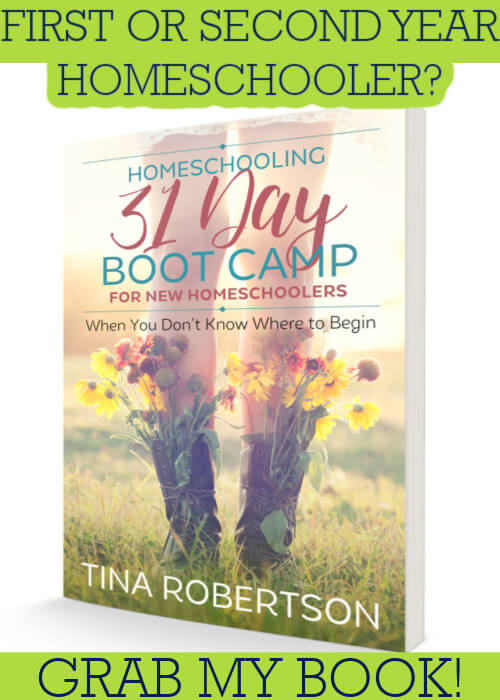
    Homeschooling 31 Day Boot Camp for New Homeschoolers is a real eye-opener on homeschooling. It will alleviate a lot of the anxieties about getting started homeschooling. Reading each chapter’s highlights will give you encouragement, knowledge, guidance, and peace of mind to homeschool with confidence. The best part is that you’ll be educating the person who loves your kids the most in this world--YOU! Armed with the knowledge to make better choices in curriculum will empower you to continue the path of home education. Unlike many books based on one family’s experience, Homeschooling 31 Day Boot Camp for New Homeschoolers is also based on Tina’s many years of mentoring hundreds and hundreds of new homeschoolers at live workshops. When you don’t know where to begin Homeschooling 31 Day Boot Camp for New Homeschoolers equips you to successfully homeschool your children.

    Image for The Unhurried Homeschooler

    The Unhurried Homeschooler

    Homeschooling is a wonderful, worthwhile pursuit, but many homeschool parents struggle with feelings of burnout and frustration. If you have ever felt this way, you’re not alone! Most of us need to be reminded of the “why” of homeschooling from time to time—but "The Unhurried homeschooler" takes parents a step further and lifts the unnecessary burdens that many parents place on themselves.

    Image for Teaching from Rest: A Homeschooler's Guide to Unshakable Peace

    Teaching from Rest: A Homeschooler's Guide to Unshakable Peace

    Those who have made the decision to homeschool their children have done so out of great love for their children and a desire to provide them an excellent education in the context of a warm, enriching home.

    Image for The Brave Learner: Finding Everyday Magic in Homeschool, Learning, and Life

    The Brave Learner: Finding Everyday Magic in Homeschool, Learning, and Life

    Parents who are deeply invested in their children's education can be hard on themselves and their kids. When exhausted parents are living the day-to-day grind, it can seem impossible to muster enough energy to make learning fun or interesting. How do parents nurture a love of learning amid childhood chaos, parental self-doubt, the flu, and state academic standards?

    Image for Unschooled: Raising Curious, Well-Educated Children Outside the Conventional Classroom

    Unschooled: Raising Curious, Well-Educated Children Outside the Conventional Classroom

    Education has become synonymous with schooling, but it doesn’t have to be. As schooling becomes increasingly standardized and test driven, occupying more of childhood than ever before, parents and educators are questioning the role of schooling in society. Many are now exploring and creating alternatives.

    It can take years to embody the definition of relaxed homeschooling.

    Some homeschoolers even confuse relaxed with unschooling. Because they may want to follow more structure, they’re hesitant about adopting relaxed homeschooling.

    Transitioning from Public School to Homeschool For a Relaxed Lifestyle

    Don’t wait years and miss out on adding the vital element of relaxation to your day.

    Take a look at some of these points that will help to hone the definition of relaxed homeschooling.

    Relaxed homeschooling works with every approach.

    Relaxed homeschooling is not an approach, but it is a lifestyle.

    This means that you don’t have to give up your homeschooling approach, but it does mean that whatever homeschool approach you follow, it needs to be examined.

    For example, determine how you can make your approach more relaxed and less rigid.

    Transitioning from a Public School Mindset

    If you follow a unit study approach, can you make it more relaxed by doing math all together one day?

    Normally, math is not a subject that can be done with multiple ages, but you want to find a way to step back. Relaxed means to rejuvenate your day. Choose one day and read a living math book to all your children.

    Instead of focusing on the math worksheet you missed for the day, focus on the feeling that math becomes a subject that a child can love instead of dread.

    If you follow the classical method of homeschooling, can your language arts one day be about each child narrating back a story he loves?

    Transitioning from a Public School Mind-Set to a Relaxed Homeschooling Lifestyle @ Tina's Dynamic Homeschool Plus

    Forget the physical act of writing one day and encourage your children to use their vocabulary building skills by using new vocabulary in an oral story telling setting.

    If you follow the Charlotte Mason method of homeschooling, can music involvement for the day be a physical act of interpretation like dancing?

    Some of this will obviously depend on the ages of your children. Anytime kids can act out something to be learned, it was more memorable and captivating.

    Define what is education for your family.

    One of the first things you want to do when starting is to define what is education for your family. Does it include art, living books, textbooks, hands-on learning, life skills or all of them?

    Beyond thinking about worksheets, most new homeschoolers don’t give pause for even a moment to look clearly beyond the present to the future.

    The importance of this cannot be stressed enough.

    Learning should not be just about filling a child’s head with knowledge, but it should be a part of living that is delightful and pursued lifelong. It’s about equipping a child for adulthood.

    How will your family do that in a relaxed atmosphere?

    Look beyond how things are presently done either in public school or in your present homeschooling journey to see what YOU want to change to make it better for your children.

    Jump headfirst into understanding your child’s learning style.

    No matter how much I talked to one homeschool mom whose present homeschooling approach was not working with her son, she was not going to change.

    Transitioning from Public School to Homeschool For a Relaxed Lifestyle

    She was just sure there was something wrong with her child.

    There was — he didn’t learn how she thought he should. Really, the problem was her.

    Tears and fighting followed and she made her homeschooling journey one miserable day after the other because she refused to change her teaching style.

    Transitioning from Public School to Homeschool For a Relaxed Lifestyle

    When our child’s learning style doesn’t mesh with our predetermined way of teaching, are we willing to change our teaching style?

    How to Kill Boring Homeschooling Days

    Relaxed homeschooling means to change the way we think homeschooling should be and make it fit our child.

    I had one son who loved textbooks and workbooks because some subjects he preferred to learn that way.

    I have another son who cried in agony when he glanced at a textbook.

    Transitioning from Public School to Homeschool For a Relaxed Lifestyle

    Should I think that I had less rigorous standards with my second son because I added in living books and more hands-on? Was that just fun or was it relaxed for him?

    Brow beating our children to make them accept our teaching style instead of accepting them as they come, pre-wired to learn in a certain way, never worked.

    Finding what is best for your child is relaxed homeschooling.

    Relaxed homeschooling means that we accept when changes have to be made in our homeschooling.

    Changing our homeschool approach and giving up curriculum when it’s not obviously working for our family while not stressing out over the price we paid for it are signs that we have softened in our homeschool journey.

    Can you think of other ways where you can introduce a more relaxed attitude into your every day?

    More Transitioning From Public School to Homeschool Tips

    • Transitioning from Public School to Homeschool For a Relaxed Lifestyle
    • When Homeschooling is Sucking the Life Out of You
    • Why My Homeschooled Kids Are Not Given the Choice to Go to Public School
    • 26 of the BIGGEST Gripes about the Homeschooling Lifestyle!
    • The NOT To Do List: 32 Things New Homeschoolers Should Avoid
    • How to Mesh Your Personality With Homeschooling When They Collide
    • What is REAL Homeschooling? Homebound, Co-op or Public School at Home
    • Big Ol’ List of All-In-One Homeschool Curriculum (a.k.a Boxed)
    • How to Get Homeschooled Kids to WANT to Learn?
    • Is Homeschooling Making the Grade? It’s in and the Grade is ALL Fs!
    • Is Homeschooling Right for Your Family? Hear From the Kids!
    • Homeschooling Book for New Homeschoolers – When You Don’t Know Where to Begin
    • Homeschool Critics: How Do You Know You’re on Track?
    • How to Use Summertime to Put a Foot in Homeschooling
    • How to Cope Successfully With Homeschool Mental Stress
    • How to Begin Homeschooling A Teen Lagging Behind
    • How Early Should I Begin Homeschooling My First Child & Free Checklist
    • 5 Ideas to Kick-Start Your New Homeschool Year By Including Others

    2 CommentsFiled Under: Homeschool Simply Tagged With: homeschool, homeschool challenges, homeschool lifestyle, homeschoolchallenges, new homeschooler, newbeehomeschooler, relaxedhomeschooling

    6 Boy Approved Books Which Spark the Love of Reading

    May 5, 2024 | 5 Comments
    This post may contain affiliate links. For more information, please see my full disclosure policy.

    I have six boy approved books today. Also, look at my page The Dynamics of How to Homeschool Easily and Smarter for more tips.

    Not wanting my boys to be among the boys-who-hate-to-read statistics, it was a challenge in the beginning to keep my boys’ enjoying reading.

    I had a LOT to learn about how boys learn.

    Sharing these 6 boy approved books which spark the love of learning, I’m hoping that one or more of them will flame that ember to read in your boys.

    3 Boy Mom Reading Tips

    Now that I have lifelong adult son readers, I know you’ll benefit from these three simple, easy, and tried and true reading tips.

    1. Quit thinking like female teachers.

    I know, it sounds crazy because homeschool stats reveal that a majority of the teaching is done by moms.

    It’s hard to not think like a woman when you are one.

    Where am I going with this?

    The point is we add to our son’s dislike for reading when we try to use the books we loved as a girl to spark a boy’s interest.

    My boys didn’t connect with a lot of the books I loved as a girl.

    When I started homeschooling, I felt like I had a diversified reading diet growing up, but it didn’t include a lot of topics boys liked.

    6 Boy Approved Books Which SPARK the Love of Reading!! Sharing these 6 boy approved books which spark the love of learning, I'm hoping that one or more of them will flame that ember to read in your boys. CLICK here to look at this short but TRIED and TRUE List!!

    Sure, some of the books were the same ones I loved like Where the Red Fern Grows and The Adventures of Robinson Crusoe.

    But I had to expand what I thought were appropriate topics to read about.

    2. The Hero or Heroine Matters.

    Although boys love to get lost in a world of fiction too, relating to the hero matters.

    It’s hard for boys who are struggling to read to relate to a sentimental girl.

    At the time my first son was struggling with a love of reading, unless the girl was mischievous or a tomboy, it wasn’t easy for my boys to understand the sentiment.

    Too, a lot of boys, including mine, develop slower.

    Their maturity rate is different than girls.

    They don’t necessarily see themselves in a place through the eyes of the character, so you have to be sure they do.

    Instead of trying to read between the lines, my boys needed to understand the why of a point directly.

    Finding a solution to the problem was more paramount than understanding exactly how a character felt.

    A story line with male role models no matter the age was a good starting point in helping my sons identify with people who are like them.

    3. Boys LOVE Pictures.

    Boys are not ready to move away from pictures as fast as girls may be.

    Realizing that significant fact, I was so grateful for the Great Illustrated Classics series.

    True, some of the pictures are not like the comic books that boys love, but pictures are still pictures to boys.

    The size of the print mattered to my first reader too.

    The bigger the better in the beginning.

    Until he felt comfortable and was hooked on reading, we just kept on reading most of the books from the Great Illustrated Classics series.

    I never worried whether the books were abridged or unabridged until I hooked my reader.

    Out of all the books I used for my boys to hook them on reading they narrowed down their favorites to these 6 choices to nurture a love for reading.

    1. Where the Red Fern Grows
    2. The Adventures of Robinson Crusoe (Great Illustrated Classics)
    3. Invisible Man (Great Illustrated Classics)
    4. Carry On, Mr. Bowditch
    5. Shiloh
    6. Stone Fox

    One or more of these books or series should give your boys a taste of boy approved books, but more important they’ll nurture a love of reading.

    A book list doesn’t have to be long to work; the book list needs to be focused on what boys can relate to.

    I’ll be sharing more book lists that have worked for us through the years.

    Does your son have a favorite book or series that worked to fan that tiny ember to a raging love for reading?

    6 Boy Approved Books Which SPARK the Love of Reading!! Sharing these 6 boy approved books which spark the love of learning, I'm hoping that one or more of them will flame that ember to read in your boys. CLICK here to look at this short but TRIED and TRUE List!!

    You’ll love these other tips:

    • 6 Tricks for the Kid That’s NOT in Love with Reading!
    • How to Transition a Child From Reading to Literature
    • Teaching Homeschooled Boys How to Read – When to Panic!

    5 CommentsFiled Under: Homeschool Boys, Homeschool Simply, Reading Lists, Teach Homeschool Language Arts, Teach the Rebel Homeschooler Tagged With: book lists, books, boys, homeschoolreading, livingbooks, reading, teens

    • Page 1
    • Page 2
    • Page 3
    • Interim pages omitted …
    • Page 15
    • Go to Next Page »

    Primary Sidebar

    Footer

    Privacy Policy | About Me | Reviews | Contact | Advertise

    Categories

    Archives

    Tina Robertson is a participant in the Amazon Services LLC Associates Program, an affiliate advertising program designed to provide a means for sites to earn advertising fees by advertising and linking to amazon.com. As an Amazon Associate, I earn from qualifying purchases.

    Copyright © 2026 · 5 TNT LLC · Log in · Privacy Policy