• Facebook
  • Pinterest
  • Instagram
  • YouTube
  • LinkedIn
  • Skip to secondary menu
  • Skip to main content
  • Skip to primary sidebar
  • Skip to footer

Tina's Dynamic Homeschool Plus

Activity, Change, Progress

  • HOME
  • How to
    • Preschool
    • Kindergarten
    • Elementary
      • Geronimo Stilton Books
    • Middle School
    • High School
      • Science 
  • Planner
  • Lapbooks
    • Trioramas
    • History Games
    • LEGO
  • Shop
  • GET STARTED NOW!
    • Learning Styles
  • 7 Step Planner
    • Free Student Planner
    • Free Home Binder
  • Unit Studies
    • Creation to Ancients
      • Mesopotamia
    • Middle Ages to Reform
    • Exploring to Revolution
    • World Wars to Today
    • Science
  • Curriculum
    • More Unit Studies
    • Geography
    • Writing PreK to 12th
    • Free Art Curriculum
  • BootCamp
    • Resources
      • Ultimate Unit Study Planner

history resources

7 Educational Movies for Kids About Westward Expansion

December 8, 2017 | 2 Comments
This post may contain affiliate links. For more information, please see my full disclosure policy.

Whether you have visual learners like I do or just want to add a fun twist to your day while learning about westward expansion, your kids will love these 7 movies about westward expansion. Also, you love more ideas on my page BEST Westward Ho Unit Study and Lapbook!

There are one or two that are documentaries and one or two of the movies that I really love which I feel are both entertaining and educational.

Also, we watched all of them on Amazon Prime which we love.

There are so many advantages to Amazon Prime that we’ve loved while homeschooling, but that is another thread.  It has been worth the membership for our family.

Fun Movies About Westward Expansion

Pop some corn, grab the blanket, and enjoy these westward expansion movies!

Heads Up. Most, if not all of the movies I recommend here, we’ve watched.

Obviously, things can change over time. So always preview the movie before you let your children watch and if you see something that has changed to not family rated, let me know.

ONE/ The History of the Oregon Trail & the Pony Express.

This is much more documentary like but the pictures, maps, and narration is educational and has quite a bit of background information.

Here is the review from Amazon: Ride along with the pioneers who suffered hardships and victories to forge The Oregon Trail, America’s longest and most famous trail. Then discover little known facts about the legendary Pony Express riders and their part in the Civil War. Breathtaking photography, live re-enactments, illustrated maps and rare photos make these two award-winning historical adventures come to life for all ages.

7 Educational Movies for Kids About Westward Expansion

TWO/ Sacagawea.

Out of all the movies, I think this was one of our favorites. It was narrated by “Sacagawea” but it was more movie like than documentary.

From beginning to end, it held our attention as it showed her life, talked about her marriage, and joining the Corps of Discovery. A beautiful way to tell this part of American history.

It mentioned a lot of the Native American people and showed what Lewis and Clark learned along the way about plants and animals.

If I had to choose chose one movie for a middle school kid, it would be this one. It covered quite a few topics.

Here is the review from Amazon. She was an expectant mother, but she endured every hardship these seasoned soldiers experienced. Without her the Corps of Discovery would have failed. This program re-enacts her journey in her words. Sacagawea will save Lewis and Clark time and time again on their expedition from negotiating for horses and show them which plants are edible. 

THREE/ Ghost Town and America’s Historic Inns.

This one talks about how the the great California gold rush impacted American history.

It has nice older black and white pictures along with views of the modern places pioneers panned and mined. What is very interesting in how different people made their living from the gold.

Here is the review from Amazon: Indulge your sense of passion for history with two programs that offer a fascinating link into America’s past. Visit eleven Gold Rush-era ghost towns. Then, bask in the hospitality of America’s most storied inns, taverns, and hideaways. 

Then, add in these fun westward ho coloring pages to make learning come alive.

7 Educational Movies for Kids About Westward Expansion

  • 0. Westward Expansion History Fun 10 Coloring Pages

    0. Westward Expansion History Fun 10 Coloring Pages

    $1.75
    Add to cart
 

FOUR/ The Wild West Uncovered.

This is a cool documentary about Virginia City after people flocked there and it flourished.

I loved seeing all the old pictures, the way they lived, and the history. Heads up: They do mention there was child prostitution by then, but no pictures. But it’s so cool to learn how the city grew in riches and with so many people of different backgrounds. I never knew the diversity that lived there.

Besides that, the pictures and relics they find and seeing the old saloons, some still intact, makes this a very informative movie.

Too, it was really interesting that Mark Twain wrote there before he was famous. This documentary is not baby-ish and could certainly be viewed by a high school kid too.

Here is the review from Amazon: Discover the real Virginia City. Hollywood has forged our vision of the legendary Wild West through Westerns like the TV show Bonanza. This vision of the west conquered by cowboys, miners and outlaws all hit by gold fever has filled our imagination. Mark Twain’s colorful writings of larger the life characters has also contributed to the picturesque perception of the Wild West and Virginia City.

FIVE/ How the Wild West Was Won by Ray Mears.

A beautiful documentary and certainly one that your high school kids will like alongside your middle school kids. Beautiful scenery and I love the fact it starts off with being in Washington D.C. and showing how Americans wanted to go west. He takes a different slant about the west by focusing on the mountains and terrain. Kept our attention the whole time.

Your girls will like it, but I think especially good for boys who may like learning about survivor skills.

Here is the review from Amazon: Bushcraft expert and survivalist Ray Mears explores the awe-inspiring landscape of that shaped the story of the Wild West. How did the mountain ranges, great plains and the deserts challenge westward expansion? Discover how extraordinary topography, extreme weather and ecology presented both great opportunity and even greater challenges for Native Americans and early pioneers of the Wild West. 

SIX/ Wildlife of the West.

Beautiful images, scenery, and animals of the west bring this time period in history alive.  And you can add a bit of science to this topic while watching this movie.

I especially love the fascinating facts  about each animal that is on the side as you watch. I’m tempted to do some notebooking pages for each animal. (ha)

Here is a snippet of how it looks below. But, the movie could be paused so that your kids could write a few facts about the wildlife of the west because no doubt the animals would’ve been the same kind the earlier settlers encountered.Here is the review from Amazon. Experience the wonder of more than 2 dozen of the West’s most intriguing animals. Wildlife of the West takes you stream-side and mountain-side, to dizzying heights and stunning habitats. 

Seven/  Manifest Destiny: The Lewis & Clark Musical Adventure.

This was goofy but had great music. But this movie musical would certainly appeal to a different learner who appreciated the humor, but had a lot of great facts while they’re singing and acting.

It’s too silly for a high school kid and some more mature middle school kids may not like the humor, but you could include your younger kids with this one if you had a middle school kid who loved movies with a spoof.

Here is the review on Amazon: This cult musical comedy turns the tale of Lewis & Clark into a romping spoof of American history. Follow the explorers out on the trail as they discover that destiny may be anything but manifest. With bold, stylized visuals and ten memorable songs — this is an adventure you’ll never forget. 

I know you’ll find or two movies here to make your westward expansion unit study come alive!

7 Educational Movies for Kids About Westward Expansion
Whether you have visual learners like I do or just want to add a fun twist to your day while learning about westward expansion, your kids will love these 7 movies for kids about westward expansion. Click here to grab these fun movies and add to your study or unit study!

Also, you may like these other helpful and fun resources:

  • Homeschool History Teaching Ancient Civilizations Using Netflix
  • 10 Westward Expansion History Fun Coloring Pages
  • 10 Westward Expansion Hands-on History Activities 
  • American History through the Life of Wyatt Earp Free Lapbook

Hugs and love ya,

2 CommentsFiled Under: History Resources Tagged With: american history, high school, history, history resources, historyspine, homeschoolhistory, middleschool, movies

8 World War II Historical Fiction Books for Middle School

October 6, 2017 | Leave a Comment
This post may contain affiliate links. For more information, please see my full disclosure policy.

I include World War II historical fiction books to teach middle school or stick only with nonfiction. I end up mixing both types of genre. Also, look at my unit study World War II Hands-On History – Make Ration Cakes for more ideas.

On one hand I don’t want to gloss over the ugly side of war at the middle school age, but on the other hand there is still so much time left in a child’s life to get the real facts.

8 World War II historical fiction books for middle school. If you're looking to bring history alive, your homeschooled middle school kids will love these books. Click here to see this AWESOME list!

With Mr. Senior 2013, I tended to swing to brutal and real when choosing books and only used nonfiction references.

But now, I realize that even at middle and high school level, a young adult is entitled to enjoy reading about history without having to read about all the cruel facts.

Besides, there is so much time as they are older to wrestle with all the issues.

Mixing both types of literature keeps learning about war topics balanced. Fiction can bring the time period alive while nonfiction reminds kids that this part of history is real.

More World War II Unit Study Hands-on Activities

  • Free World War II Unit Study Ideas and Fun Lapbook
  • World War II Hands-On History – Make Ration Cakes
  • World War II Hands-On History – Make a Secret Message Deck
  • 8 World War II Historical Fiction Books for Middle School
  • World War II Free Resources For a Middle School Unit Study & Make Victory Garden Soup
  • World War II Homeschool History-Manhattan Project,Vocabulary & A. Frank
  • World War II Homeschool History: Life During the War & Pearl Harbor Minibook
  • World War II Homeschool History: Minibooks Causes & Great Depression
  • World War II Homeschool History: Staged For War & Quick Facts Minibooks & Links
  • World War II Homeschool History Free Unit Study and Lapbook

WORLD WAR II HISTORICAL FICTION

Look at these 8 World War II historical fiction books I rounded up for middle school. I think you’ll love them.

Alex, Who Won His War (Walker’s American History Series for Young People)  This paints a vivid picture of the events of World War II as Alex tries to solve a crime. A bit of a stretch in the plot, but the details for the historical time period are there for an enjoyable read.

Night Crossing This book is about a girl living in Austria having to leave her home when the Nazis come and brings to life the feelings of those that had to leave their home with just what they could carry.

8 World War II Historical Fiction Books for Middle School

The Shadow Children A summer visit to his grandfather’s farm turns into an adventures staged during World War II. The charcoal drawings are beautiful which makes this book good for an art study.

The Spy Who Came From the Sea. A teen tells the kids at school that he stumbles upon a spy, but nobody believes him.

Journey to America. A family fleeing Nazi Germany is reunited after being separated and enduring different trials along the way with some adventure.

Behind the Bedroom Wall. This one we haven’t read it, but sounds so fascinating because it’s from a different perspective. A local teen girl is part of the Nazi party thinking it’s going to be good for her community but her parents are part of the underground movement to protect Jews. Sounds great and we can’t wait to read it.

Stepping on the Cracks. Margaret’s brother is overseas fighting, but learns about a deserter in her midst. It’s a good book to teach about pacifism because teaching complex war issues can be hard.

Under a War-Torn Sky. When a nineteen year old pilot’s plane is shot down, he finds himself behind enemy lines.

I hope you find one or two to use as a history spine or just as a way to bring this time period alive.

I think you’ll also love this free unit study and World War II history unit study.

8 World War II Historical Fiction Books for Middle School
World War II lapbook and homeschool history unit study.

Leave a CommentFiled Under: History Based, History Resources, Middle School Homeschool Tagged With: book lists, books, history, history resources, historyspine, homeschoolhistory, world war II

Hands-On History: Make a Revolutionary War Journal!

October 5, 2017 | Leave a Comment
This post may contain affiliate links. For more information, please see my full disclosure policy.

Written by Jen at A Helping Hand Homeschool.

When we learn about events in history, sometimes we tend to look at them through our own eyes. This is completely understandable, since current events and our own way of looking at things is what we know.

Because of that, those events can get confusing. They don’t make sense.

There’s another way to go about it, though. Events in history aren’t just there for us to memorize; they happened to real people and had real consequences. Instead of digging into history through our own way of seeing things, we can try to understand it from the perspective of the people who lived it.

One of the best ways to do this is by keeping a journal!

Hands-On History: Make a Revolutionary War Journal! Bring history to life with this easy hands-on history journal. Click here to see how to make it!

When you make a historical journal, you get to take an adventure back in time. Instead of just memorizing dates and names for a test, you get to discover what it was like to live in another time and place.

Hands-On History: Make a Revolutionary War Journal

To get started, let’s cover a little bit of background.

The American Revolution

When we learn about the Revolution today, it is common to think of it as one side being “right” and one side being “wrong.” One side lost, and the other won.

Do you ever get the feeling that there’s more to the story, though?

To really grasp what happened and why, it is helpful to understand why people did what they did. Why did Britain feel it had the right to make so many laws and taxes? Was it being unfair? Why did the colonists rebel and declare independence? Did all colonists feel the same way?

During the time that the colonies were growing in America, people did not question being under the rule of a king or queen. At that time, it was considered normal and good – it was the way things were supposed to be, at least in their eyes.

The king or queen of Britain was one of the most powerful monarchs in the world for several hundred years, and many colonists were proud to be British subjects. The monarch had to work with Parliament (which is kind of like Congress), but he or she had a lot of power. Decisions made by the king or queen were not often questioned.

Changing Times

During the 1700s, the colonies in what would become America grew very rapidly. In 1700, there were approximately 250,000 people, and in 1776 when the Declaration of Independence was written, there were about 2,500,000. That is an increase of 1,000%!

Protecting all of these people, providing for them, and managing trade in a growing empire was very expensive. On top of this, many wars were fought in America and Europe during this time, which was even more expensive.

Eventually, the British king decided that the colonies should help pay for what was provided for them. In order to get this money, he declared taxes on many things that people used daily. Many of these taxes were on things that the colonists could only get from Britain, so they didn’t really have a choice but to pay the taxes.

Some people thought this was unfair, since British law said that taxes could not be imposed without approval from the people being taxed. Since no American colony had a representative in Parliament, this approval was not possible.

Keeping Your Historical Journal

For this activity, you are going to “become” a character during the time of the American Revolution. Instead of just learning about battles and places, you’re going to learn about it by “living” it!

You get to choose or make up a character from the Revolutionary War period. This can be anyone – perhaps a child your age, a colonial or British soldier, a Son of Liberty, or a journalist covering the events. Will you be a patriot (someone who thought that America should be its own country) or a Tory (someone who was loyal to the British crown?

Where do you live? Do you live up north or in the south? Are you a farmer or do you work in the city? How old are you, and who is in your family? As you figure out your character, make some notes. This will help you in writing your journal!

When you make journal entries, you will want to date them for the time period you are writing about. For example, you might date your first entry as July 4, 1776 (rather than the current date). Write as if you are the person that you made up. What is happening around you? How do you think people are reacting? How do you feel about the events – are you excited, scared, confused, or happy?

Hands-On Activity: Make a Historical Journal!

For this project, you will need the following supplies:

  • Two pieces of cardboard, approximately 9” x 6”
  • 5-10 pieces of cardstock, white or cream is best
  • Twine or fine hemp rope (from a craft store), about 2 feet long
  • Hole punch

To start, fold each of the pieces of cardstock in half the short way. These will be your pages.

Making a Revolutionary War Journal

Punch six holes approximately the same distance apart along one long side of a piece of cardboard. Using this as a guide, place each of the folded pieces of cardstock, one by one, under the cardboard piece and make a small pencil mark in each of the holes.

DIY Revolutionary War Journal

These are your guides; they will show you where to punch the rest of the holes to make sure the pages line up correctly. Do the same with the other piece of cardboard. Punch holes in all of the pages and the cardboard.

Creating a DIY Revolutionary War Journal

You should now have two cardboard covers and several folded pages. Put them together to form a book. Rather than nesting the cardstock pages inside each other, line them up one on top of the other; this will make everything align properly.

Taking a piece of twine or hemp rope, thread it through the bottom hole of the stack and pull it about half way. (You’re going to use the other half in a moment.)

Looping the rope around the back, thread it through the next hole. Do this until you reach the top. Be sure not to pull it too tight – you need it to be a little loose so you can open and close the journal!

Making a Revolutionary War Journal with Kids

When you’re done with one side, start with the other end of the rope. Thread it through each of the holes the opposite way, so that the spine looks like a series of “x’s.” When you get to the top, make sure that the binding is loose enough for you to open and close the journal easily.

Keeping a Revolutionary War Journal

Then, tie a knot at the top. Leave the ends long – these can be tied around the cover of the journal to keep it closed!
Now, you are ready to tell your story!

Making a Revolutionary War Journal By Hand
Hands-On History: Make a Revolutionary War Journal! Bring history to life with this easy hands-on history journal. Click here to see how to make it!

Have fun with this project! The great thing about it is that it is adaptable to any time in history. If you’re not studying the American Revolution this year, you can easily use it to learn about any other event!

GRAB THESE OTHER RESOURCES AND HANDS-ON IDEAS

Share more history learning fun with the projects below!

  • World War II Homeschool History Lapbook
  • Lewis and Clark Hands-On History: Make a Char Cloth
  • World War II Activity: Make a Secret Message Deck

Leave a CommentFiled Under: Hands-On Activities, History Resources Tagged With: american history, early American history, hands on history, hands-on, hands-on activities, handson, handsonhomeschooling, history, history resources, homeschoolhistory

Hands-On History: Make a Coat of Arms Activity (Middle Ages History)

October 1, 2017 | Leave a Comment
This post may contain affiliate links. For more information, please see my full disclosure policy.

Written by Selena at Look! We’re Learning!

I’m extremely fascinated by the Middle Ages. I know that the reality of that time was far less romantic than novels and films make it seem, but the castles and the jousting tournaments and the costumes are just wonderful to think of.

In those years (and in the years since), royal and noble families have had a coat of arms to show what they’ve accomplished in their history. And, while the coat of arms is often associated with Medieval Europe, it’s actually been used all over the world – from China to Senegal.

To learn more about how these designs were used and passed down through families, we decided to make our own coat of arms! See how you can do the same for a hands-on history lesson!

Hands-On History: Make a Coat of Arms

A coat of arms is a special design made for a distinguished person or family. The design varies, depending on the family’s (or person’s) accomplishments, titles, and positions.

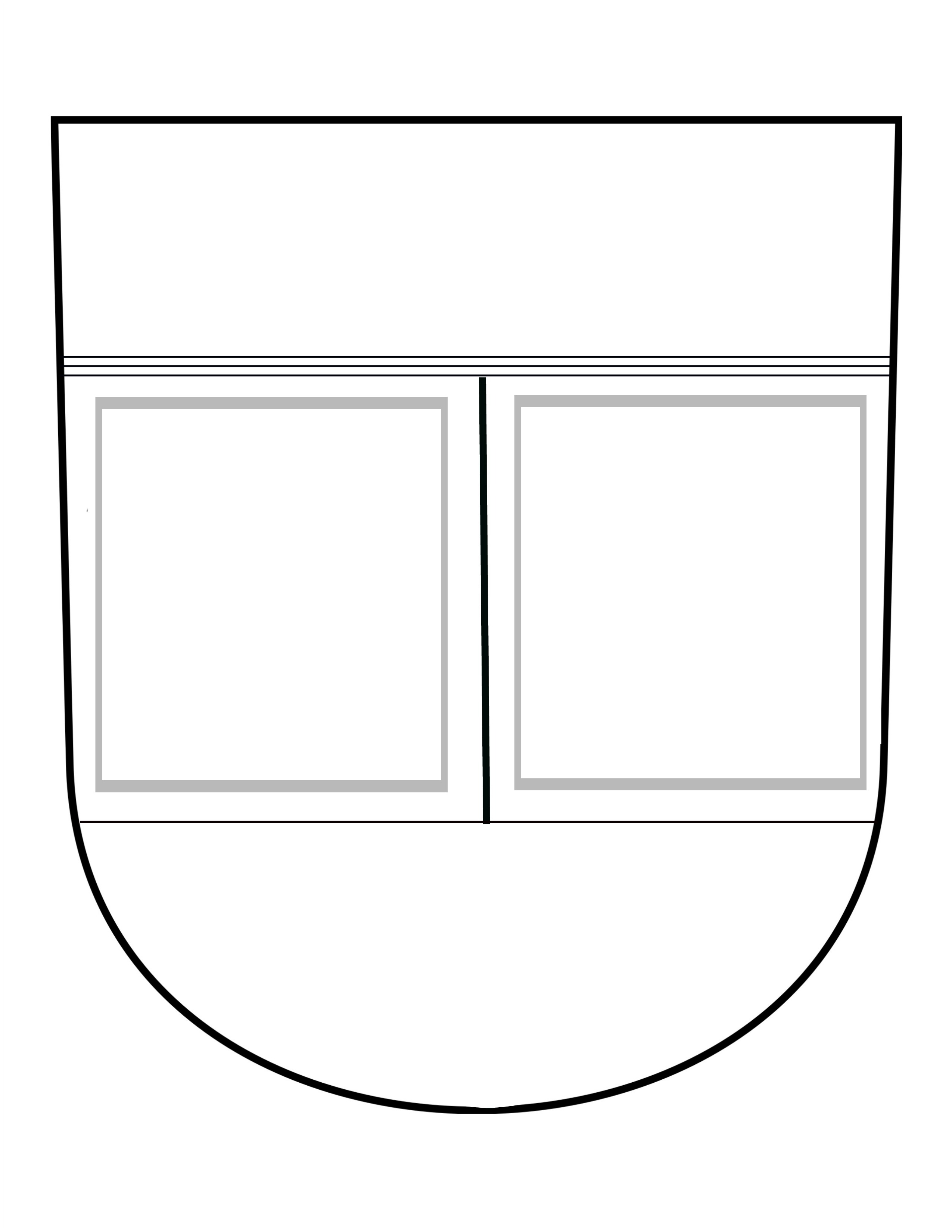
Each part of the coat of arms actually has a name. The top third is called the “field” and the bottom two-thirds is called the “escutcheon”, which is actually a small shield within the larger shield.

Everything on a coat of arms is significant and meaningful. The colors, symbols, choice of animals, patterns, and designs can all denote something different.

The design of a coat of arms can vary greatly, according to family or country. For example, this is the coat of arms of the country of Botswana.

Coat of arms of Botswana

Now compare that one to this one that belongs to the Duke of Westminster.

Coat of Arms of the Duke of Westminster without Order of Garter

There’s a lot going on there, right?

For our coat of arms, we went with a much, much simpler design, but it incorporates some of the significant colors, symbols, and patterns we read about.

To do the activity yourself, you’ll need the following:

  • Printer paper
  • Cardstock
  • Scissors
  • Glue
  • Blank coat of arms printable
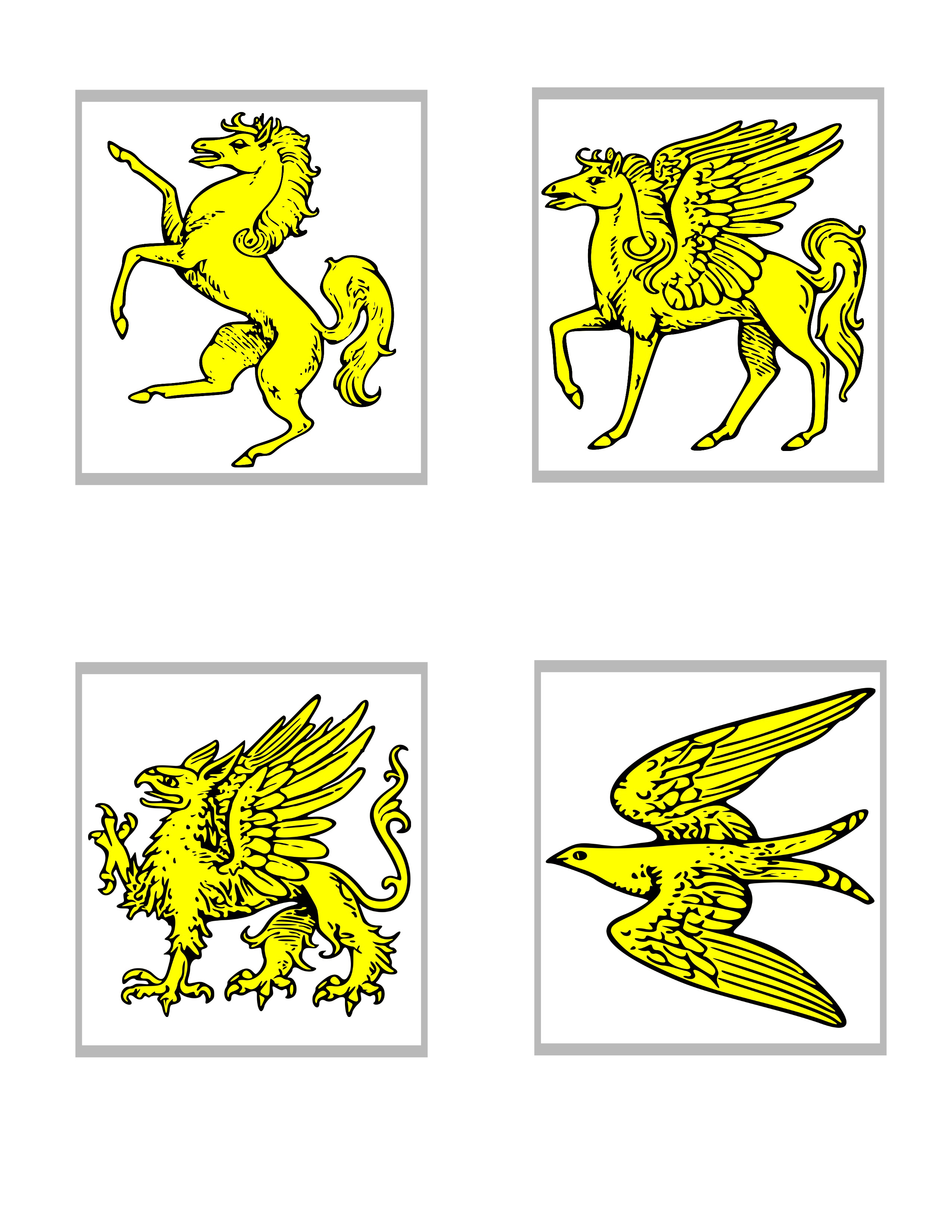
  • Coat of arms animal symbols printable
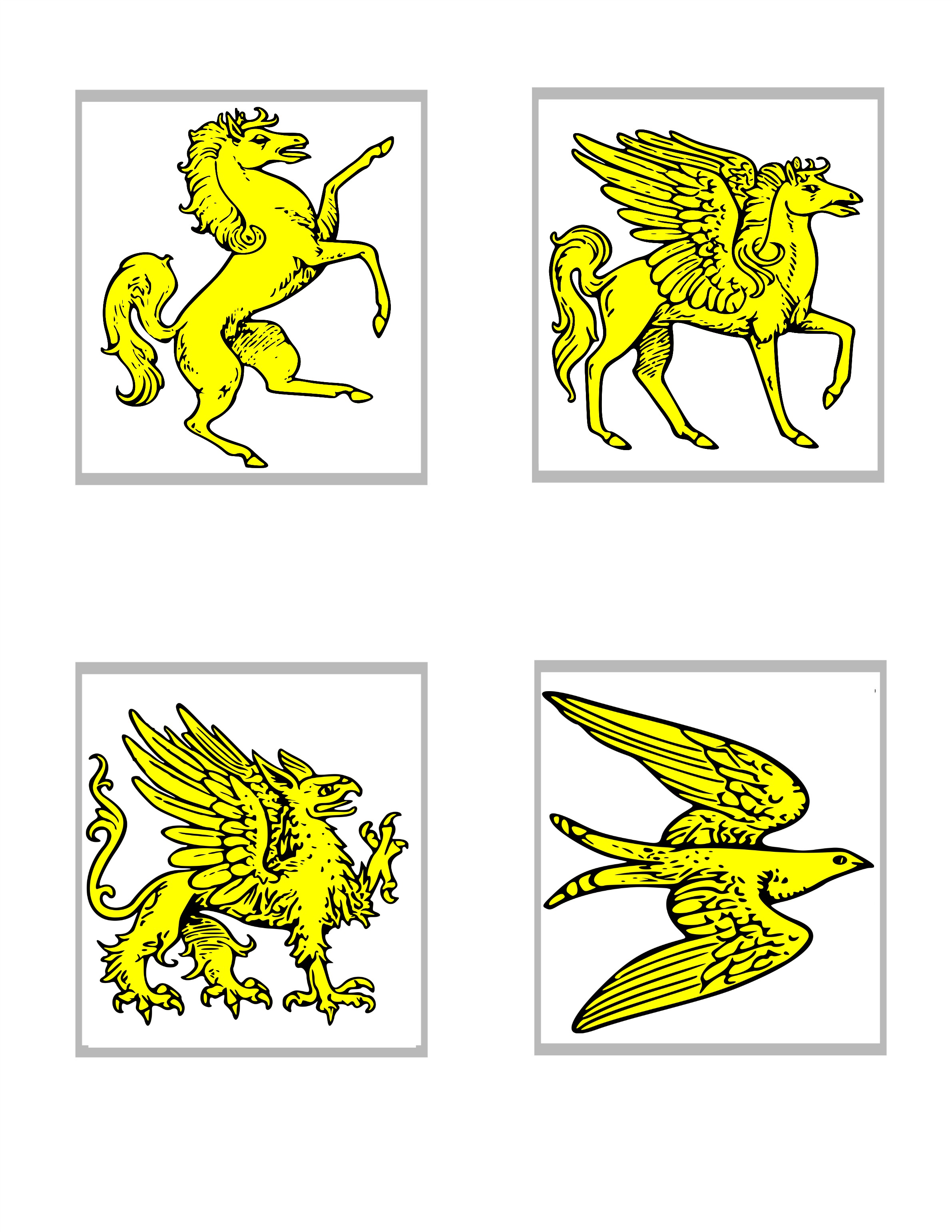
  • Mirror facing coat of arms animal symbols printable
Simple Coat of Arms Activity

Start by printing out the coat of arms and the animal symbols.

Coat of Arms Printable Craft

I didn’t have white cardstock, so I printed ours on a white piece of printer paper and then glued it on the grey cardstock we had. Then we cut it out.

If you have white cardstock, you can skip that step and just print the coat of arms directly on that.

Making a Coat of Arms

Now, it’s time to choose your animal symbols! I only included four in this printable, but there are truly scores of different animals that have been used on coats of arms through the years. And they all have a different meaning.

The animals in the printable mean the following:

  • Griffin – means valor & bravery
  • Pegasus – means poetic genius (as an English major, I had to include that one)
  • Horse – means ready for battle
  • Bird – means peace & affection
Creating a Coat of Arms

Then it was time to choose our coat of arms colors! As we learned, blue means truth & loyalty, so we colored the “field” blue.

Choosing Animals for a Coat of Arms

Then we added our animals.

Choosing Colors for a Coat of Arms

And we surrounded them with orange, which means “worthy ambition & work”. Also because it looked cool.

DIY Coat of Arms Craft

Finally, we learned that furs denoted nobility, so you could add a fur-like pattern to your coat of arms to show that you were of the upper class of society. One of those fur patterns was white with black spots – like a Dalmatian. We went with that.

As I kept looking at it, though, it just didn’t look right. Then it hit me! The animals are supposed to be facing each other!

Finished Coat of Arms Craft

Ahhhh….that’s better! Be sure to print both pages of the animal symbols so that you can choose two animals that will face one another on the coat of arms.

This was so neat to do! We didn’t know that the coat of arms was so full of meaning, so this was a great hands-on lesson to learn about that.

Looking for an easy hands-on middles ages history activity? Your kids will love making their own coat of arms. Scoot by and download the activity at Tina's Dynamic Homeschool Plus!

Check out these other hands-on history projects kids can do!

  • Hands-On History: Make an Egyptian Collar Craft
  • Ancient Rome (Hands-On History): Paint a Jester
  • Free Ancient Egypt Mehen Printable Board Game

Leave a CommentFiled Under: Hands-On Activities, History Based, History Resources Tagged With: hands on history, hands-on, hands-on activities, handson, handsonhomeschooling, history, history resources, medieval homeschool history, middle ages history

7 Unique Ways to Supplement U.S. History for High School

September 30, 2017 | 1 Comment
This post may contain affiliate links. For more information, please see my full disclosure policy.

When I was taking paralegal courses after high school, I had an assignment to read Wills and Deeds from the 1800s at the local courthouse.

Losing track of time was easy as I was absorbed in reading not only legal language, but reading the household property that was bequeathed to family members.

Engaging US History

It was like stepping back in time as I read about the lives of past Americans. It was fascinating and stirred a love of not only the history of law, but of American history.

Remembering that time in my life, I was determined to supplement U.S. history for high school in a creative way.

I’ve rounded up 7 unique ways to supplement U.S. history for high school because engaging ways to learn history for high school can easily be overlooked.

One/ Read old documents.

Planning a trip to the courthouse to have your teen read old documents which are public record is a fun field trip for a teen.

Also, we used primary resources from Jackdaws when we read about Lewis and Clark.

Scanning, studying, and analyzing old documents are a wonderful way to allow a teen not only a chance to step back in time, but to develop critical thinking skills.

Two/ Historical reenactment.

Many areas in the states put on historical reenactments whether it’s the American Civil War or visiting the Plimoth Plantation.

Remembering the past by visiting and participating in historical reenactments is another way of bringing meaning to past events.

Instead of focusing on the terrible woes of war, we tried to focus on people that lived during that time and how they were were affected by the decisions made.

Three/ Watching documentaries or movies.

Using documentaries as a unit study opener is a great way to engage your high school kid.

I’m always looking at ways to connect what we’re learning about to a movie so that it’s more memorable.

Look at this quick list that hopefully will stir you or your teen’s creative juices:

  • Gone With the Wind
  • Lincoln
  • Amistad
  • The Searchers
  • Drums Along the Mohawk
  • The Alamo
  • Davy Crockett
  • Wyatt Earp
  • Far and Away
  • History of Henry Ford

Four/ Visit historical homes or towns.

Visiting a section of town like the French Quarter in New Orleans which is full of history widens your teens’ love of how other cultures influenced America, immigration issues, and architect.

Also, tour famous historical homes like the White House or Monticello.

Some homes are more famous than others, but many towns have a historical home or two preserved.

What better way to learn about Amelia Earhart than to visit her birthplace in Kansas?

Five/ Use American artifacts.

Whether it’s blue jeans or Fiestaware, this is a great site with a free teaching guide and writing activities using artifacts from American culture to teach history.

Six/ Field trips. And not to the Zoo.

Let’s just face it. Field trips at the high school level may seem harder to find. They are, but there are also many opportunities to extend a teen’s learning past a textbook on a field trip.

It may take a bit more creative wit, but the opportunities are there. Unless your teen is planning to be a zookeeper (which is great too) he probably has been to the zoo many times.

Look at these ideas for field trips for a teen that bring history alive:

  • Plan to attend a trial in the local courthouse or a court docket call. Check with the bailiff because he is the person that deals with the public. He may recommend an upcoming trial that would be permissible for your teen to sit in. We did this one time and my boys never forgot it.
  • I planned a trip to the federal money reserve for our teens to learn about the federal government and how money is made.
  • Our local ferry was a great way to learn about the history of the port and about early life on the coast.
  • Living near a major college, we watched showtimes for plays about history and got invited one time by local students.

SEVEN/ Supplement American history through reading about the life of an American.

We love the series of books by Genevieve Foster like George Washington’s World and Abraham Lincoln’s World.

Instead of thinking about the events in American history as isolated from the rest of the world, these books tie in other world events happening simultaneously as key American history events.

Studying U.S. history can be challenging when trying to make it engaging for a teen. Add one or two of these ideas and your teen won’t easily forget some of the key events of U.S. history.

I've rounded up 7 unique ways to supplement U.S. history for high school because engaging ways to learn history for high school can easily be overlooked. Click here to grab these AWESOME ideas!

You may also like:

  • 15 EASY History Ideas for Homeschooled Kids Who Don’t Like School
  • American Revolution and Free Lapbook
  • How to Create a Creditworthy American History Course (& resources)
  • How to Teach History in 14 Lessons (From Daunting to Doable)
  • 14 Fun and (maybe Frugal) Homeschool High School Electives
  • What You Must Know to Teach High School Unit Studies
  • 22 Awesome Homeschool History Field Trips.
  • How to Use a History Spine to Build Your Study of History

Hugs and love ya,

1 CommentFiled Under: Graduate a Homeschooler, Homeschool Teens _ From Teen to Graduation, Teach Homeschool History Tagged With: american history, early American history, history, history resources, homeschoolhistory, teens

  • « Go to Previous Page
  • Page 1
  • Interim pages omitted …
  • Page 20
  • Page 21
  • Page 22
  • Page 23
  • Page 24
  • Interim pages omitted …
  • Page 31
  • Go to Next Page »

Primary Sidebar

Footer

Privacy Policy | About Me | Reviews | Contact | Advertise

Categories

Archives

Tina Robertson is a participant in the Amazon Services LLC Associates Program, an affiliate advertising program designed to provide a means for sites to earn advertising fees by advertising and linking to amazon.com. As an Amazon Associate, I earn from qualifying purchases.

Copyright © 2026 · 5 TNT LLC · Log in · Privacy Policy