• Facebook
  • Pinterest
  • Instagram
  • YouTube
  • LinkedIn
  • Skip to secondary menu
  • Skip to main content
  • Skip to primary sidebar
  • Skip to footer

Tina's Dynamic Homeschool Plus

Activity, Change, Progress

  • HOME
  • How to
    • Preschool
    • Kindergarten
    • Elementary
      • Geronimo Stilton Books
    • Middle School
    • High School
      • Science 
  • Planner
  • Lapbooks
    • Trioramas
    • History Games
    • LEGO
  • Shop
  • GET STARTED NOW!
    • Learning Styles
  • 7 Step Planner
    • Free Student Planner
    • Free Home Binder
  • Unit Studies
    • Creation to Ancients
      • Mesopotamia
    • Middle Ages to Reform
    • Exploring to Revolution
    • World Wars to Today
    • Science
  • Curriculum
    • More Unit Studies
    • Geography
    • Writing PreK to 12th
    • Free Art Curriculum
  • BootCamp
    • Resources
      • Ultimate Unit Study Planner

How To - - -

The Best Bad Homeschooling Advice (That You Should Actually Consider Trying)

October 16, 2015 | 2 Comments
This post may contain affiliate links. For more information, please see my full disclosure policy.

The Best Bad Homeschooling Advice (That You Should Actually Consider) @ Tina's Dynamic Homeschool Plus

Homeschooling advice is not only limited to new homeschoolers; it can come from any well-intentioned person, even a non-homeschooler.

Even if you don’t look like you need it, you’ll still homeschooling advice. You know what I mean.

The Best Bad Homeschooling Advice

After getting some “bad” homeschool advice, I have to admit that I actually needed to follow some of it.

■ Use a boxed curriculum.

I left behind boxed curriculum after I was past being a new homeschooler.

So when another seasoned homeschooler suggested I use a boxed curriculum while I was in the process of moving, I was taken back by the advice.

I never told her, but that day I did just what she suggested because it made sense.

I purchased a boxed curriculum for one semester.

I gave my boys laid out curriculum, packed my boxes and we made a huge move.

I spared myself a lot of anxiety by following that best bad homeschooling advice.

Also, check out my article, How to Use a Boxed Curriculum Without Giving Up Your Homeschool Approach.

■ Get your mom or dad to help you teach a subject or two.

If you have parents that are not supportive of homeschooling, then one of the best ways to get them on your side is by asking them to help you teach a subject or two.

It’s not exactly what you want to hear and especially if your parents are not supportive of your decision to homeschool.

However, grandparents bring a richness of life and a whole wealth of experience that your children deserve.

When the boys were real little, my parents lived on the same wooded acreage as we did.

My boys would run over to my mom’s house every day after school to “narrate” back what they learned. Having a captive audience when I no longer could listen to them helped them to retain information more readily.

If your parent’s health is good, they may be better at teaching a subject or two that you may be weak at.

My mother excelled at math and math has been my weak area always.

Her influence on my sons has been a valuable asset to my homeschooling journey because two out of the three sons are advanced in math. I am grateful.

Did I mention that time away from me was a break for my boys? Check out my article, How Grandparents Can Inspire Your Homeschool Journey.

■ Stop running around so much!

Ouch! That one hurt.

I thought the “good little homeschool mom” kept the roads hot while she took her children to “socialize”.

Slow down, stay at home and homeschool was the best piece of advice I could have received from a seasoned mom when I started my journey.

Of course at the time I had the miffed look thinking that was bad advice because I was going to be sure my children didn’t crawl under a rock somewhere.  Can you just say ugly?

Humbled by what I know now many years into my homeschooling journey, I spared myself a lot of wasted time on the road when we could have stayed home a bit longer.

Too, I have never wanted to be known as a sensitive homeschooler or one who takes offense easily thinking that all homeschooling advice is well- intentioned, but misguided.

Homeschooling is about a whole hosts of difficult choices, so I am glad that I actually tried some of the best bad homeschooling advice I’ve ever had.

  • Homeschool Critics: How Do You Know You’re on Track?
  • Top 5 Approaches New Homeschoolers Need to Know
  • What to Do When You Feel Alone as a Homeschool Mom
  • 100 Ways to Silence the Homeschool Naysayers (Maybe!)

How about you? Have you ever received some best bad homeschooling advice?

Hugs and love ya,
2 CommentsFiled Under: Be an Exceptional Homeschool Teacher, Begin Homeschooling, Homeschool Simply Tagged With: fearless homeschooling, homeschool, homeschool challenges, homeschool crisis, homeschool joy, homeschool joys

Homeschool Unit Study Human Body. Hands-on Activity 4. Making Blood + What Are the Components of Blood Minibook

October 14, 2015 | 7 Comments
This post may contain affiliate links. For more information, please see my full disclosure policy.

No unit study about the homeschool unit study human body is done right without making some blood and learning about the valuable components of it. Also, I have this Human Body Crafts page for more fun ideas.

The human body lapbook was free for a limited time.

Homeschool Unit Study Human Body. Hands-on Making Blood +  What Are the Components of Blood

What is Blood Made of?

Besides, that is the best way to learn about the four basic components of blood.

At the bottom, I shared the video that helped us to kick off this activity and also helped us to pick out the ingredients.

What is blood hands on activity and  blood components minibook for a human body homeschool unit study @ Tina's Dynamic Homeschool Plus

Look at the ingredients we used, again, which we had on hand at the house.

■plastic bottle
■marshmallows (we only the big ones, so we cut up a few of the big ones)
■mini box of chocolate cereal that the boys didn’t like
■raisins
■corn syrup and water
■yellow and red die
■salt

How to Make Blood 1@ Tina's Dynamic Homeschool Plus
How to Make Blood 2 @ Tina's Dynamic Homeschool Plus

So after we gathered all of our supplies and a funnel and bowl or two, we started.

First Tiny poured the corn syrup in and mixed with a bit of water (not too much).

Mostly we used the corn syrup because I wanted it to look more like blood plasma in the beginning.

How to Make Blood 3 @ Tina's Dynamic Homeschool Plus
How To Make Blood 4 @ Tina's Dynamic Homeschool Plus

Homeschool Unit Study Human Body.

So he added yellow dye and some salt to represent the plasma.

We added salt to help him remember that though plasma is mostly made up of water, it also contains proteins, sugar and hormones. So adding the salt was just to help him remember some of the make up of plasma.

How to Make Blood 5 @ Tina's Dynamic Homeschool Plus
How to Make Blood 6 @ Tina's Dynamic Homeschool Plus

Next, we took our chocolate cereal and mixed in some red dye and coated it pretty good.

I liked the fact that the “red blood cells” started to give it color because they make up about 40 to 45% of the color.

Since red blood cells are round and look a little bit like a doughnut, without the hole in the middle, this round cereal was a pretty good imitation.

He started to add in the red dyed cereal to represent the red blood cells (or erythrocytes).

How to Make Blood 7 @ Tina's Dynamic Homeschool Plus
How To Make Blood 8 @ Tina's Dynamic Homeschool Plus

Next came a bite or two of marshmallows or rather he added in some of the white marshmallows to represent the white blood cells (or leukocytes), but not too many of them.

Since I had raisins, we added a few of them to represent blood platelets (or thrombocytes).

How to Make Blood 9 @ Tina's Dynamic Homeschool Plus
How To Make Blood 10 @ Tina's Dynamic Homeschool Plus

We ended up with something nice and gross that he liked, but it sure helped him to remember the 4 basic components of blood.

Homeschool Unit Study Human Body. Hands-on Making Blood +  What Are the Components of Blood

Also, here are some free resources about blood:

  • Middle School Lesson Plan. 3 page .pdf How does the Cardiovascular system work? Actually lessons for K to 6th.
  • Another hands-on activity. Blood Cell basics for younger grades.
  • How Much Blood Do You Have? 20 page .pdf for middle and high school
  • Cool wheel template 7 page .pdf template wheel for middle and high school teaching blood type.
  • What is Blood? You Tube Really helpful to us when deciding how to color our blood, meaning we started with yellow first.
How to Make Blood 11 @ Tina's Dynamic Homeschool Plus
What Are the Components of Blood

More Human Body Crafts

  • Simple and Easy Circulatory System Hands-on Activity for Kids
  • How to Turn a Pizza Into a Fun Edible Human Cell Model
  • How To Make A Fun Bones Of The Hand Labeled X-Ray Craft
  • 7 Human Skull Facts and Cool Human Skull Anatomy Activity
  • How to Make a Fun Hands-on Playdough Brain Activity
  • Major Organs of The Human Body Labeled Fun Felt Anatomy Activity
  • Fun Resources and Books About The Human Body For Preschoolers
  • 8 Eye Facts & Human Body Activities Middle School & Fun Eye Model
  • 12 Human Body Games For Middle School & High School
  • Craft a Fun Hand Straw Model to Explore Human Anatomy Muscles & Tendons
  • How to Make a Human DIY Heart Model Easy Craft for Kids
  • 8 Facts About the Respiratory System & Fun Lung Craft for Kids
  • 7 Human Body Facts and Kids Human Body T-Shirt Project
  • Fun Edible Spine
  • Making Blood + What Are the Components of Blood
  • DIY Heart Pump
  • Kids Stethoscope Activity
  • Build An Edible DNA Model
  • Edible Skin
  • Rigid versus Flexible Bone Activity.
  • Pregnancy Belly Female Study of Human Anatomy Kids Fun Craft
Homeschool Unit Study Human Body. Hands-on Making Blood +  What Are the Components of Blood

  • Dynamic and Fun Human Body Lapbook for Multiple Ages

    Dynamic and Fun Human Body Lapbook for Multiple Ages

    $5.00
    Add to cart

Grab all of hands-on activities below.

What is blood hands on activity and free blood components minibook for a human body homeschool unit study @ Tina's Dynamic Homeschool Plus featured
Making Blood + Free What Are the Components of Blood Minibook
Homeschool Unit Study Human Body. Hands-on Activity 5. Edible Skin + Skin and Major Body Systems Minibook @ Tina's Dynamic Homeschool Plus Featured
https://www.tinasdynamichomeschoolplus.com/homeschool-unit-study-human-body-5/
Mega List Free Resources for Human Body Homeschool Unit Study @ Tina's Dynamic Homeschool Plus featured
https://www.tinasdynamichomeschoolplus.com/human-body-homeschool-unit-study/
Body Part Labeling and Human Skeleton Quiz Free Minibooks - Free Human Body Unit Study @ Tina's Dynamic Homeschool Plus FEATURED
https://www.tinasdynamichomeschoolplus.com/body-part-labeling-and-skeleton-quiz-free-minibooks/
Human Body Unit Study. Rigid versus Flexible Bones Hands-on Activity @ Tina's Dynamic Homeschool Plus featured
https://www.tinasdynamichomeschoolplus.com/homeschool-unit-study-human-body-3/
Human body unit study DIY Heart Pump @ Tina's Dynamic Homeschool Plus featured
https://www.tinasdynamichomeschoolplus.com/homeschool-unit-study-human-body-2/
20 Human Body Books for Middle and High School Homeschooled Kids @ Tina's Dynamic Homeschool Plus featured
https://www.tinasdynamichomeschoolplus.com/human-body-books-for-middle-and-high-school-homeschooled-kids/
Human body unit study DIY Stethoscope. Hands-on Learning @ Tina's Dynamic Homeschool Plus featured
https://www.tinasdynamichomeschoolplus.com/homeschool-unit-study-human-body/
Free Human Body Lapbook and Unit Study @ Tina's Dynamic Homeschool Plus featured
https://www.tinasdynamichomeschoolplus.com/free-human-body-lapbook-and-unit-study/

Hope you like this as much as we enjoyed learning about it today.
Hugs and love ya,

7 CommentsFiled Under: Hands-On Activities, Lapbook, Science, Science Based Tagged With: hands-on, hands-on activities, handson, handsonhomeschooling, homeschoolscience, human body, jp, life science, science

What Does It Mean To Be Family Focused Instead of Curriculum Driven When Homeschooling?

October 13, 2015 | 11 Comments
This post may contain affiliate links. For more information, please see my full disclosure policy.

What it means to be family focused instead of curriculum driven when homeschoolling @ Tina's Dynamic Homeschool Plus

I failed too. When I struggled with homeschooling it was because I hyper focused on breezing through the curriculum instead of focusing on my family.

Family Focused Instead of Curriculum Driven

I just knew that if I finished a lesson, a book or an assignment, then my children were “properly taught.”

When I completed a curriculum, I felt we were making progress and learning.

That is a false sense of accomplishment.

Public school is curriculum focused. What makes homeschoolers different?

Let me make clear that I am not advocating unfinished lesson plans or half-hearted days of teaching.

What I am advocating is that at times during our journey it can take one or two days to get a point.

At one point in my journey,  it took one of my sons a year and half to learn one level of math.

Am I to feel that if my child completed 5 lessons in one day or one book in two years that I wasted ANY of my time?

Family focused goals don’t keep pace to the time table in a curriculum.

Switching from a Public School Mindset to Family Focused Goals. Big Difference.

You probably have heard before that curriculum is a tool. It’s true. But what does it mean exactly?

■ Well a tool can serve a very useful purpose.

A paintbrush, a pen, a drill, a saw, a hoe, a shovel, a hammer have all been used to create the most exquisite pieces of art like the Mona Lisa, beautiful poetry or the most breathtaking pieces of landscape or architecture.

■ What was more important, the tool or the skilled craftsman?

It was the attitude, patience, devotion and skill of the craftsman to shape the masterpiece, not the tool.

When we realize that curriculum doesn’t teach anything, but our attitude and time spent with children in productive learning does, then we are TRUE TEACHERS.

We are then not curriculum driven but family driven.

We are goal oriented, not lesson oriented.

Curriculum is a must-have tool and we have to have it.

For example, if three teacher’s manuals make you feel more equipped to teach and you glean from each one what you need, then GET ALL THREE. Don’t worry about what anybody else thinks.

However, don’t purchase them because you are afraid.

You have been equipped with what you need to do this assigned work.

Focus on improving yourself as a teacher, your skill, your devotion and then you will have a true masterpiece – YOUR CHILDREN!

Hugs from me to you today,

Also read:

6 Things I Won’t Regret After Homeschooling 16+ Years
Second Chance Homeschooling – We Can Have Do-Overs

11 CommentsFiled Under: Choose Curriculum

How to Write a Simple But Effective Homeschool Lesson Plan

October 7, 2015 | 4 Comments
This post may contain affiliate links. For more information, please see my full disclosure policy.

The skill of how to write a simple but effective homeschool lesson plan is one that you will need your whole homeschool journey. Also, look at my page The Dynamics of How to Homeschool Easily and Smarter.

Too, the advantages of learning how to plan a well thought out and organized lesson can mean the difference between a mediocre home educator and one that soars.

Here is the first secret. Beginning lesson planning start with the basic understanding that lesson planning is part journaling at the end of the day. I will explain more on that in a minute.

Lesson planning for the beginner homeschooler has two components.

One part is journaling (at the end of the day) and one part prior (before your day begins) lesson planning.

How to Write a Simple But Effective Homeschool Lesson Plan @ Tina's Dynamic Homeschool Plus

When I learned to lesson plan, I realized I was doing the same thing over and over, which was documenting what we had accomplished for the day and erasing what I had planned for the day.

Basic But Effective Homeschool Lesson Plans

The two concepts were not the same in the beginning.

Like most inexperienced homeschoolers, I had over planned.

It wasn’t a realistic view of what my kids could do.

I learned that if I wanted accurate lesson plans for my children’s ages, I had to have a realistic view of what they could and could not do. That meant jotting down what we did for the day as a way to gauge what was realistic.

It’s not the way professional teachers learn for sure, but then again I wasn’t a professional teacher.

However, it is a creative and extremely beneficial way to learn how to lesson plan.

By jotting down what we did each day, I could then start planning similar activities for the same amount of time.

It was a great way to start off lesson planning because then my lesson plans fit my children’s ability.

Also, look at my video How to Homeschool Lesson Plan EZ.

Too, lesson plans are just visual presentations.

There is no right or wrong on lesson planning. There is just right for your children.

Lesson Plans Equal Visual Mapping

A mom that can visualize where she is going with a subject will get better use with her time when her goals are met instead of the goals not being clear.

Write down those lesson plans.

Look at these parts to the basics of lesson planning that helped me to plan something I wanted to cover for the day.

  • 1. Subject – Start with the subject or topic that your lesson plan will be about.
  • 2. Age/Grade Level – Are you writing this for all your children or designed for one child in mind?
  • 3. Description/Explanation – This is where you describe the purpose of your lesson plan. If you are clear in your mind about what you are accomplishing, your lesson plan will be of great value because you hit your target.
  • 4. Process/Plan – This part is the actual detailed lesson plan of how you will accomplish what you want your children to do. If you don’t know and it’s not clear to you, how will your children know?
  • 5. Supplies Needed – This is your list of supplies and hands on items you will need for any projects.
  • 6. Assessment – Here I write if I felt like my children learned what I intended for them to or I describe in this section how I could have done something different and I also explain what they liked or didn’t like.

If you’re a new homeschooler, look at my book below.

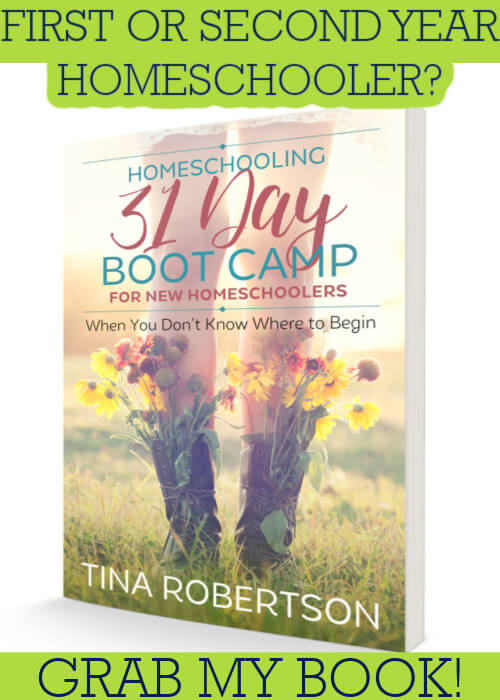
Grab My Book on How to Homeschool

Homeschooling 31 Day Boot Camp for New Homeschoolers is a real eye-opener on homeschooling. It will alleviate a lot of the anxieties about getting started homeschooling.

Reading each chapter’s highlights will give you encouragement, knowledge, guidance, and peace of mind to homeschool with confidence. The best part is that you’ll be educating the person who loves your kids the most in this world--YOU! Armed with the knowledge to make better choices in curriculum will empower you to continue the path of home education. Unlike many books based on one family’s experience, Homeschooling 31 Day Boot Camp for New Homeschoolers is also based on Tina’s many years of mentoring hundreds and hundreds of new homeschoolers at live workshops.When you don’t know where to begin Homeschooling 31 Day Boot Camp for New Homeschoolers equips you to successfully homeschool your children.

Read More

How to Easily Lesson Plan

All of the above serves as a plan to look back at on when you study another subject.

It gives you a glimpse into what your children liked and did not like.

Lesson plans for us as homeschoolers do not have to be so detailed as to overwhelm us.

Yes it can get time consuming and that may appear to be a disadvantage.

However, the time saved in preparing a lesson plan that does not need a lot of extra work or review is of immense value. Your time is actually freed up to explore other things about that subject or topic.

Don’t be intimidated by lesson planning. It is just visual mapping and can be of great help in not being tied to boxed curriculum.

I love this quote.

“You will never change your life until you change something you do daily. The secret of your success is found in your daily routine.”

~ John C. Maxwell~

You’ll love these other tips:

  • 3 Risks of Not Tracking Your Homeschool Lessons (Even If They’re Laid-Out) 
  • 4 PRE-Homeschool Year Planning Pages (and tips to use them)

Hugs and love ya,

4 CommentsFiled Under: Lesson Plan Tagged With: lessonplanning

6 Things I Won’t Regret After Homeschooling 16+ Years

October 5, 2015 | 7 Comments
This post may contain affiliate links. For more information, please see my full disclosure policy.

6 Things I WON'T Regret After 16+ Years of Homeschooling. Don't give up because in the end it's all worth it @ Tina's Dynamic Homeschool Plus

If this post, 6 things I won’t regret after homeschooling for 16+ years helps you to make even one tiny step toward homeschool progress today, then it’s well worth it.

Each day can seem to make unplanned demands on our time.

And some days it’s difficult to say the least to decide when to let things go like the house or to not school for the day.

Homeschooling has never disappointed me though I have been disappointed in my own attempts to homeschool at one time or another.

6 Things I Won’t Regret After Homeschooling 16+ Years

Here is what I won’t regret when I faced giants though not always feeling so brave and not always having it together each day.

■ I don’t regret letting go of the thinking that homeschool was something we did on the side and that it was a burden that I added to my day.

For the first five years or so of homeschooling, I really had to fight to carve out our time for homeschool.

Some days I just didn’t feel like the homeschool routine. I had to give myself permission to feel weak at times.

It’s not that we had so much going on all the time, but looking back now what I didn’t realize was that I was building lifelong habits of study. It was hard work.

It was different doing a research project with the kids or even reading to them, but I am talking about enforcing a general start time to each and every day so we could be productive.

It took a lot of energy to form my sons’ habits, but what a payoff I was in store for as they hit middle and high school grades.

My kids were and are the ones now getting off their devices, or cleaning up their messes in the morning so they can start school at 9:00 a.m.

Did I mention, I just follow along now as the boys get our day started?

■ Call me Bible thumping or weird, but I don’t regret one minute of all the time we spent with just fellow Christian homeschoolers at field trips and in co-ops.

Our field trips and co-ops were a time to share the highs and lows about homeschooling with others that were not going to judge me.

And no, I didn’t want to vent to somebody who just thinks that they know what I am talking about when it comes to living the homeschool lifestyle.

■I don’t regret not immersing my boys into association with those who went to public school.

My oldest two boys are confident, strong and determined young men now. And capable of making decisions apart from me.

I didn’t deliberately keep them apart from public schooled kids, it just happened naturally.

Too, I don’t want my sons judging other people for choices they make. Don’t we have enough of that in the world? Public school was just not for us.

However, as you homeschool longer, you appreciate too your schedule is not in sync with the schedule of public school.

Through the many years, I have heard new homeschoolers say it’s important for their children to keep their friends from school.

It really is hard to do that and a lot of it depends on how long your kids went to public school.

As homeschool families, we are not really being off-ish. We just live a completely different life and it’s not running parallel to public school.

For my boys, it wasn’t necessary that they huddle in the evening with the neighbor kids to hang out.

We already went to field trips or co-ops during the day. Evening time was naturally spent with Dad when he got back from work.

■I don’t regret exposing my sons to my vulnerabilities as the teacher.

My boys are not robots of me and neither do they have an overly inflated view of me or my teaching.

I want you to know this because, sad to say, some homeschool parents aren’t homeschooling because it’s the best thing for their children.

Instead of keeping what is best for their children as the foundation of their homeschool, homeschooling can turn into a prove-that-I can-quest.

The mindset what-can-I-do-to-top-your-teaching-method can invade the body of a homeschool mom and she can turn into somebody that she doesn’t even know herself.

Homeschooling becomes a competition instead of a course. Ugly.

The child does get left behind (pardon the cliche) because we can set out to prove that the method we feel is the best is the best.

I learned early on that what worked for me and what worked for my sons were completely different. Look at my article, 5 Signs That You Need to Switch Your Homeschool Approach.

Jumping head first into a teaching style that was opposite of the way I thought I should teach, I showed my boys that homeschooling was about them.

Exposing the Vulnerable Side to Homeschooling

They appreciated that I too struggled and it made me a much more sympathetic teacher with them when they struggled.

■ I’ll never regret using a boxed curriculum when I needed to.

Through the years, I have read many pros and cons about boxed curriculum.

Boxed curriculum can get a bum rap because when it’s first used some homeschoolers don’t use it like they need for their family.

Teaching a child is not an exact science for each child and the boxed curriculum doesn’t really teach anything. You learn that you are homeschooling a child.

However, with the many ups and downs in homeschooling, it has been a breath of fresh air to use laid out curriculum and pick and choose which assignments we will do, which ones we will skip and which ones we will tweak.

By the way, that is how you used a boxed curriculum.

I have no regrets in using all that is available to us as homeschoolers.

■And I will never, never regret all the teachable moments we have had so far together while letting the housework and laundry go.

When I shared this poem below each year at my workshop, I could hardly finish reading it because I couldn’t get through the words without tears or a cracking voice.

It’s hard for me to share it with you today because it reminds me of how fast our journey has gone by.

Homeschool Survivor or Champion?

It has come true in my case because I no longer have babies.

So I want to encourage you to remember that you don’t have long to homeschool. And in the end it is about having no regrets.

Babies Don’t Keep

Mother, oh Mother, come shake out your cloth
empty the dustpan, poison the moth,
hang out the washing and butter the bread,
sew on a button and make up a bed.
Where is the mother whose house is so shocking?
She’s up in the nursery, blissfully rocking.

Oh, I’ve grown shiftless as Little Boy Blue
(lullaby, rockaby, lullaby loo).
Dishes are waiting and bills are past due
(pat-a-cake, darling, and peek, peekaboo).
The shopping’s not done and there’s nothing for stew
and out in the yard there’s a hullabaloo
but I’m playing Kanga and this is my Roo.
Look! Aren’t her eyes the most wonderful hue?
(lullaby, rockaby, lullaby loo).

The cleaning and scrubbing will wait till tomorrow,
for children grow up, as I’ve learned to my sorrow.
So quiet down, cobwebs. Dust go to sleep.
I’m rocking my baby and babies don’t keep.

What will you not regret at the end of your journey? (And yes, I do have tears when I read that poem each year.)

Grab some more go juice below!

  • Wipe Out Self-Doubt: 13 Ways to Show Homeschool Progress (And How I Know My Sons Got It)
  • How to Go From a Boring Homeschool Teacher to Creative Thinker (Boring to BAM)
  • 5 Top Mistakes of New or Struggling Homeschoolers

Hugs and you know I love ya,

7 CommentsFiled Under: Be an Exceptional Homeschool Teacher, Begin Homeschooling, Gauge Homeschool Progress, Homeschool Simply, Homeschool When Nobody Wants To Tagged With: fearless homeschooling, homeschool challenges, homeschool joy, homeschool joys, homeschool lifestyle, new homeschool year, new homeschooler

  • « Go to Previous Page
  • Page 1
  • Interim pages omitted …
  • Page 85
  • Page 86
  • Page 87
  • Page 88
  • Page 89
  • Interim pages omitted …
  • Page 128
  • Go to Next Page »

Primary Sidebar

Footer

Privacy Policy | About Me | Reviews | Contact | Advertise

Categories

Archives

Tina Robertson is a participant in the Amazon Services LLC Associates Program, an affiliate advertising program designed to provide a means for sites to earn advertising fees by advertising and linking to amazon.com. As an Amazon Associate, I earn from qualifying purchases.

Copyright © 2026 · 5 TNT LLC · Log in · Privacy Policy