• Facebook
  • Pinterest
  • Instagram
  • YouTube
  • LinkedIn
  • Skip to secondary menu
  • Skip to main content
  • Skip to primary sidebar
  • Skip to footer

Tina's Dynamic Homeschool Plus

Activity, Change, Progress

  • HOME
  • How to
    • Preschool
    • Kindergarten
    • Elementary
    • Middle School
    • High School
      • Science 
  • Planner
  • Lapbooks
    • Trioramas
    • History Games
    • LEGO
  • Shop
  • GET STARTED NOW!
    • Learning Styles
  • 7 Step Planner
    • DIY Best Student Planner
    • Free & Easy DIY Home Management Binder
  • Unit Studies
    • Creation to Ancients
    • Middle Ages to Reform
    • Exploring to Revolution
    • World Wars to Today
    • Science
    • Free Art Curriculum Grades 1 – 8
  • Curriculum
    • More Unit Studies
    • Geography
    • Writing PreK to 12th
    • Geronimo Stilton
  • BootCamp
    • Resources
      • Dynamic Subscriber Freebies
      • Exclusive Subscribers Library
      • Ultimate Unit Study Planner

History Based

Hands-On History: Make a Coat of Arms Activity (Middle Ages History)

October 1, 2017 | Leave a Comment
This post may contain affiliate links. For more information, please see my full disclosure policy.

Written by Selena at Look! We’re Learning!

I’m extremely fascinated by the Middle Ages. I know that the reality of that time was far less romantic than novels and films make it seem, but the castles and the jousting tournaments and the costumes are just wonderful to think of.

In those years (and in the years since), royal and noble families have had a coat of arms to show what they’ve accomplished in their history. And, while the coat of arms is often associated with Medieval Europe, it’s actually been used all over the world – from China to Senegal.

To learn more about how these designs were used and passed down through families, we decided to make our own coat of arms! See how you can do the same for a hands-on history lesson!

Hands-On History: Make a Coat of Arms

A coat of arms is a special design made for a distinguished person or family. The design varies, depending on the family’s (or person’s) accomplishments, titles, and positions.

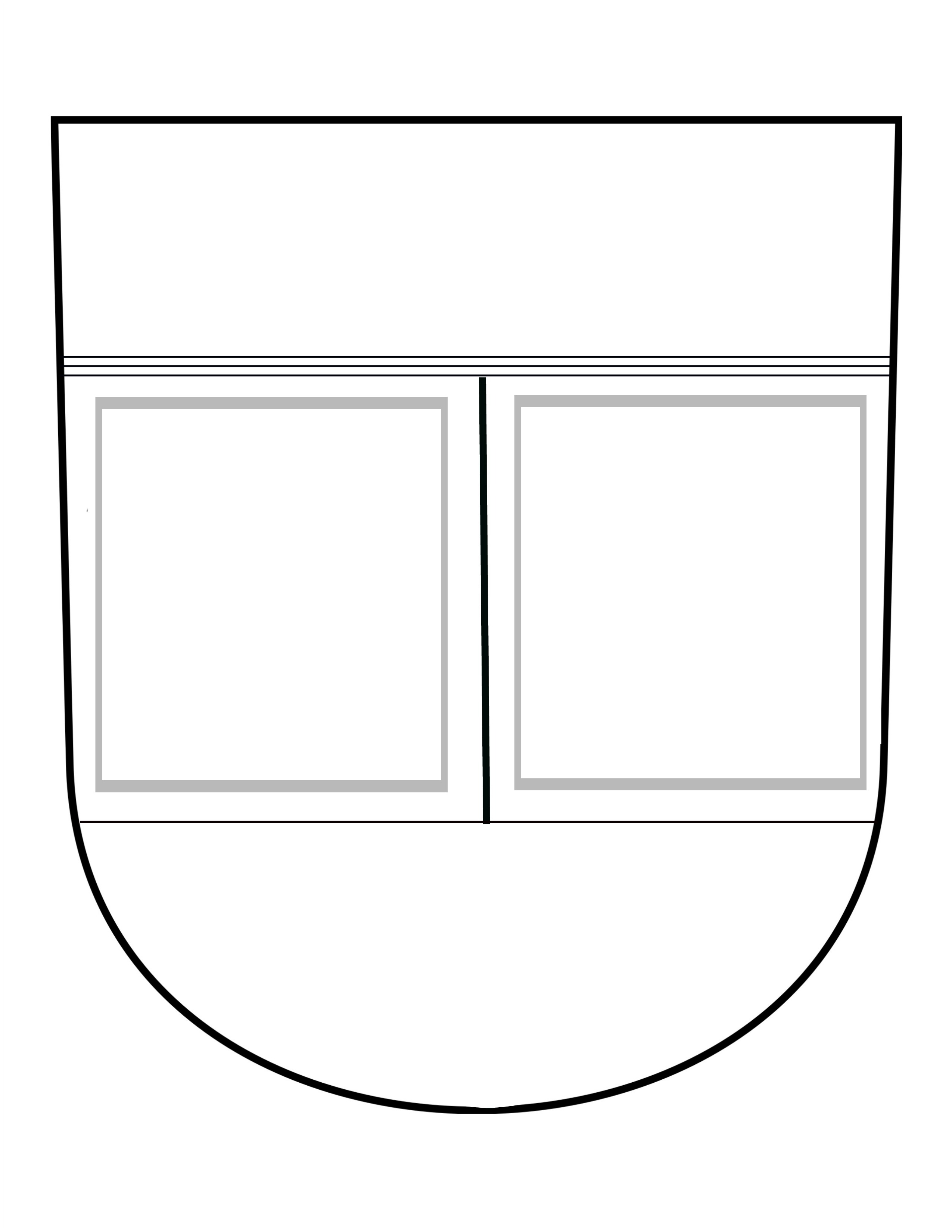
Each part of the coat of arms actually has a name. The top third is called the “field” and the bottom two-thirds is called the “escutcheon”, which is actually a small shield within the larger shield.

Everything on a coat of arms is significant and meaningful. The colors, symbols, choice of animals, patterns, and designs can all denote something different.

The design of a coat of arms can vary greatly, according to family or country. For example, this is the coat of arms of the country of Botswana.

Coat of arms of Botswana

Now compare that one to this one that belongs to the Duke of Westminster.

Coat of Arms of the Duke of Westminster without Order of Garter

There’s a lot going on there, right?

For our coat of arms, we went with a much, much simpler design, but it incorporates some of the significant colors, symbols, and patterns we read about.

To do the activity yourself, you’ll need the following:

  • Printer paper
  • Cardstock
  • Scissors
  • Glue
  • Blank coat of arms printable
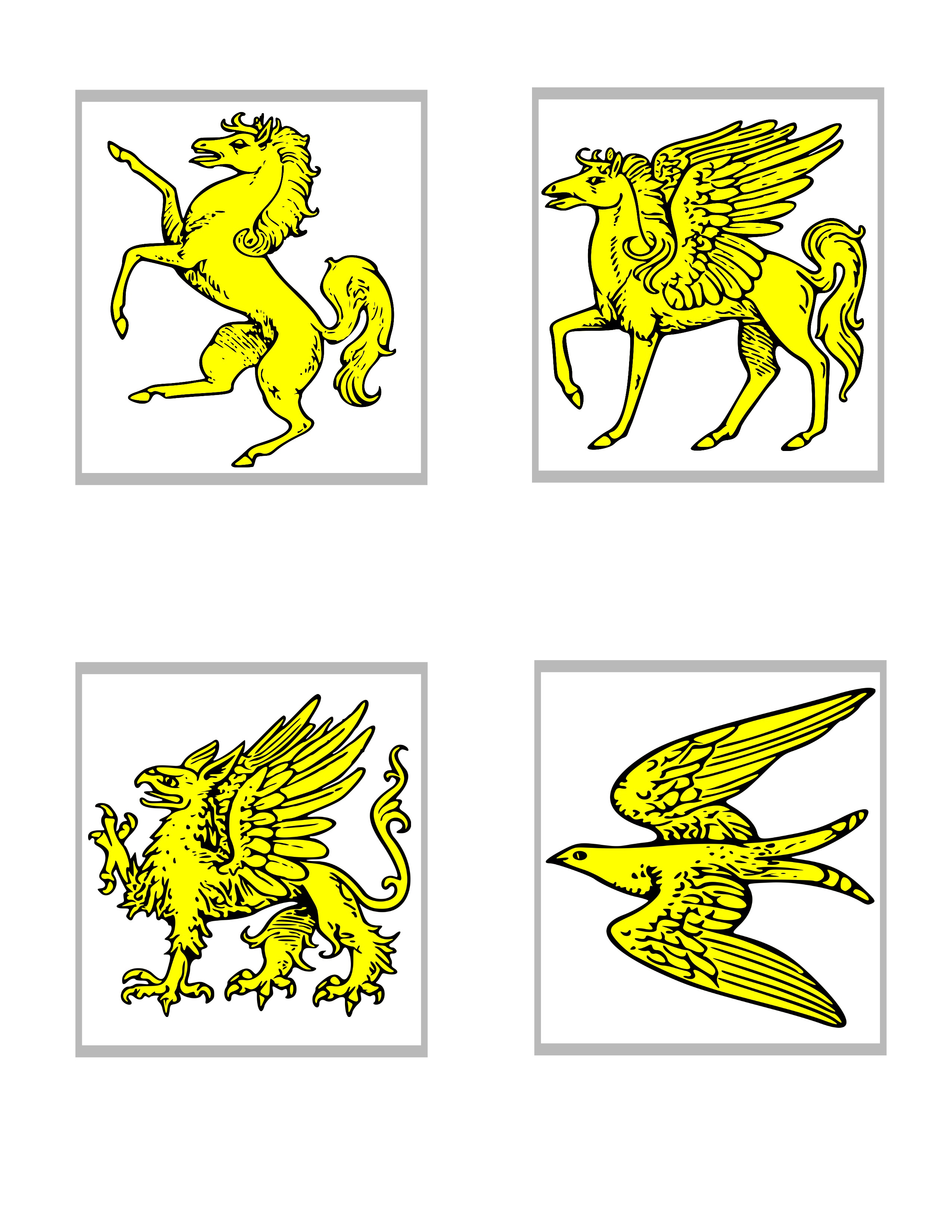
  • Coat of arms animal symbols printable
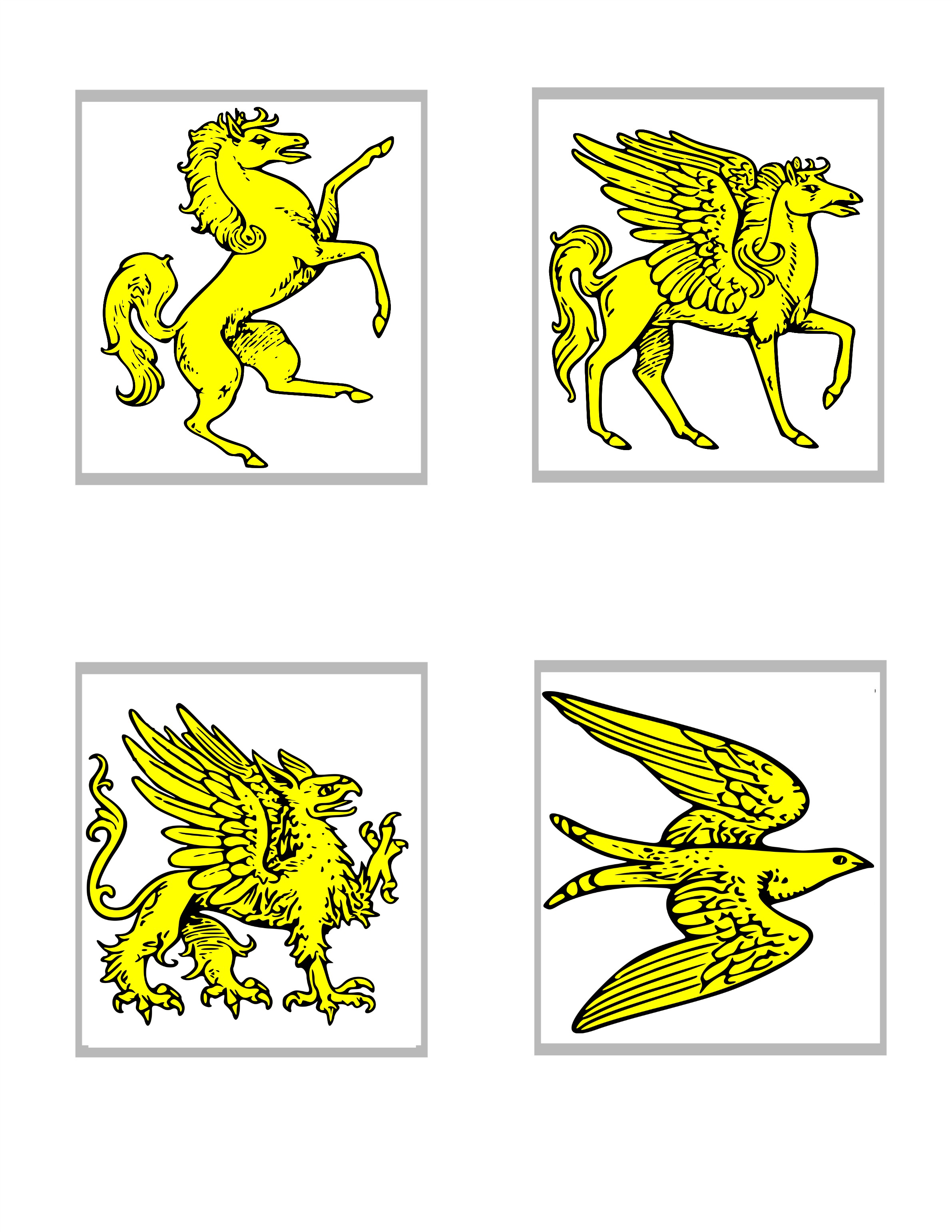
  • Mirror facing coat of arms animal symbols printable
Simple Coat of Arms Activity

Start by printing out the coat of arms and the animal symbols.

Coat of Arms Printable Craft

I didn’t have white cardstock, so I printed ours on a white piece of printer paper and then glued it on the grey cardstock we had. Then we cut it out.

If you have white cardstock, you can skip that step and just print the coat of arms directly on that.

Making a Coat of Arms

Now, it’s time to choose your animal symbols! I only included four in this printable, but there are truly scores of different animals that have been used on coats of arms through the years. And they all have a different meaning.

The animals in the printable mean the following:

  • Griffin – means valor & bravery
  • Pegasus – means poetic genius (as an English major, I had to include that one)
  • Horse – means ready for battle
  • Bird – means peace & affection
Creating a Coat of Arms

Then it was time to choose our coat of arms colors! As we learned, blue means truth & loyalty, so we colored the “field” blue.

Choosing Animals for a Coat of Arms

Then we added our animals.

Choosing Colors for a Coat of Arms

And we surrounded them with orange, which means “worthy ambition & work”. Also because it looked cool.

DIY Coat of Arms Craft

Finally, we learned that furs denoted nobility, so you could add a fur-like pattern to your coat of arms to show that you were of the upper class of society. One of those fur patterns was white with black spots – like a Dalmatian. We went with that.

As I kept looking at it, though, it just didn’t look right. Then it hit me! The animals are supposed to be facing each other!

Finished Coat of Arms Craft

Ahhhh….that’s better! Be sure to print both pages of the animal symbols so that you can choose two animals that will face one another on the coat of arms.

This was so neat to do! We didn’t know that the coat of arms was so full of meaning, so this was a great hands-on lesson to learn about that.

Looking for an easy hands-on middles ages history activity? Your kids will love making their own coat of arms. Scoot by and download the activity at Tina's Dynamic Homeschool Plus!

Check out these other hands-on history projects kids can do!

  • Hands-On History: Make an Egyptian Collar Craft
  • Ancient Rome (Hands-On History): Paint a Jester
  • Free Ancient Egypt Mehen Printable Board Game

Leave a CommentFiled Under: Hands-On Activities, History Based, History Resources Tagged With: hands on history, hands-on, hands-on activities, handson, handsonhomeschooling, history, history resources, medieval homeschool history, middle ages history

6 Unit Study Resources: Mountain Men – Explorers of the West

September 16, 2017 | Leave a Comment
This post may contain affiliate links. For more information, please see my full disclosure policy.

Whether you’re studying about the American Frontier, fur trade or mountain living, you’ll bring history alive through studying the tough life of mountain men.

Today, I rounded up six unit study resources to grab for a mountain men unit study. Besides explorers and fur traders, they were some of America’s first trail blazers.

Whether you're studying about the American Frontier, fur trade or mountain living, you'll bring history alive through studying the tough life of mountain men.

Mountain Men Trailblazers

This 3 page teacher’s guide has vocabulary words like ploo and rendezvous along with teaching skills of self-sufficiency and hardiness. I also like that it incorporates learning about the importance of rivers to mountain men. So, you can add a bit of geography, history, and science.

Next, this super helpful free teacher’s guide and lessons about the beaver is chock full of information.

It has a unit on fur trade, mountain men lifestyle, and legends of the mountain men.

And even though it mentions items in a trunk, it’s really helpful in understanding artifacts and every day items used by mountain men.

Read about the items they used and a few them look like they could be easily made.

This next fun guide talks about the importance of being able to identify animal tracks along with the animal tracks labeled. Click here for Tracking” Down the Secret Code / North American Animal “Who am I”

It has a handwritten letter which is a primary source and a lesson about beavers.

Hands-on History and Geography

More units like the Language of a Trapper, Rendezvous, Mountain Man Tales, and Indian Wives of the Mountain Men are a few of the fun and interesting units in this expansive unit.

This is an interesting read for your middle or high school kid. While it doesn’t have pictures, it’s the diary of Jedediah Strong Smith, a mountain men. It describes the perils he faced each day.

Lastly, this website Mountain Men: Pathfinders of the West has a lot of background information about the fur trade and the ways of the mountain men.

Download them and add to them a unit study about geography or use them for a mini unit study.

Also, you’ll like my posts:

  • 30 Fun Resources for Learning About Daniel Boone
  • Westward Ho! Lapbook {Time period we covered 1803 to 1890}
  • 100 Oregon Trail Homeschool History Resources
Whether you're studying about the American Frontier, fur trade or mountain living, you'll bring history alive through studying the tough life of mountain men. Click here to grab these fun and free 6 resources!

Hugs and love ya,

Leave a CommentFiled Under: Geography, Geography Based, Hands-On Activities, History Based, History Resources Tagged With: explorers, frontier, geography, hands on history, hands-on, hands-on activities, handson, history, history resources, homeschoolgeography, mountain men, unit studies, westward expansion, westwardho

Middle Ages Hands-on History: Make a Codex Activity

September 11, 2017 | 2 Comments
This post may contain affiliate links. For more information, please see my full disclosure policy.

Written by Selena of Look! We’re Learning!

I am a huge bookworm. HUGE. If I was left alone on a desert island with a choice between food or books, I’d have to make myself choose the food. That’s just how much I love to read.

As we started studying the Middle Ages, we learned a lot about the beginning of the publishing industry, to which what we owe our modern-day books. It turns out that present-day paper books began with the invention of the codex, the first truly portable written document.

After finding out how codices were made in the Middle Ages, we decided to make one of our own!

Middle Ages History: Make a Codex Activity

The codex was actually invented during the Roman Empire, centuries before the Middle Ages began. Prior to its creation, most important documents, such as literature, speeches, and journals, were kept on scrolls or pieces of parchment.

Since these methods were so bulky, something more convenient was needed, especially for documents that needed to be transported across long distances. Some historians say that Julius Caesar was the first person to develop the idea of a notebook of folded and bound pages, but there is some uncertainty about this.

Either way, the codex (folding pages into small packets and then sewing them into a bound book) quickly became the standard for publishing and distributing literature. In fact, if you look behind the spine of a thick book, you’ll see the individual packets of paper sewn together that make up the book. This is basically a codex in itself.

To make our codex, we decided to focus on a codex from the Middle Ages: The Peterborough Chronicle. This document, which dates back to the 12th century, chronicles the establishment of the British Empire.

Make a Codex Activity Supplies

To make your own codex, you’ll need the following supplies:

  • Pieces of blank unlined paper
  • Yarn needle
  • Seam ripper (or X-Acto knife) *Be sure to use adult supervision when working with sharp objects.*
  • Bulky yarn
  • Ruler
  • Pencil
  • Chisel-point marker
How to Make a Codex with Kids

Begin by folding the pages in half. You’ll want to make several packets of three to four pages. For our codex, we folded six packets of three pages each.

Pricking a Codex Activity

We used a seam ripper to begin punching holes in the first packet. After a few holes, though, we swapped it out for an X-Acto knife, which worked better. If you have an awl, that would probably work even better.

Pricked Codex Pages

We lined up the packets to draw the holes and then punched them in the same spots to make sure the holes would line up for sewing the codex together. Interestingly, when publishers created codices, they also had to make the paper sewing holes by hand. This process was called “pricking”.

Sewing a Codex Activity

Now it’s time to sew the codex together. Thread the yarn through the eye of the yarn needle and insert the needle into the first sewing hole through all the codex packets.

Hands-on Middle Ages History

Sewing a Codex Together

After pulling the needle all the way through, bring the yarn back around and thread the needle through again to secure the first stitch. Then move down to the next pricked hole in the codex.

Stitching a Codex Together

Stitch in this same manner all the way down the side of the codex.

Binding Off a Codex

When you get to the end, pull the yarn back through the last stitch vertically.

Finishing a DIY Codex

Cut the thread to bind off the sewing. Do the same at the top.

Ruling a Codex Page

You’re ready to add writing to your codex now! In the Middle Ages, it was common to line the pages of a codex with ink to make it easier for scribes to write neatly. Just like ruled notebook paper we have today!

Use a ruler and a pencil to draw writing lines on your codex pages. Be sure to leave space for the first letter of the work to be about three lines in length.

Writing On a Codex

Like so. The first page of the Peterborough Chronicle is written in Old English, which looks very different than modern English. Thankfully, the content has been translated. That was the source material for our codex.

Finished Codex Activity

Use a chisel-tip marker to write in your codex and you’re done!

This would be a great extended activity for history! Let the kids find a historical codex and write a paragraph or two from it each day! You could even include pieces from several codices and let the kids discover the kinds of content that would have been considered valuable enough to publish in this manner centuries ago.

As we started studying the Middle Ages, we learned a lot about the beginning of the publishing industry, to which what we owe our modern-day books. Click here to learn how to make this fun codex!

You’ll also love to read about How to Teach History in 14 Lessons (From Daunting to Doable) and Medieval Homeschool History – 4 Surefire Ways to Beat a Boring Study.

Learn more about the Middle Ages with these activities!

  • Medieval History for Homeschool Middle School
  • Christopher Columbus Lapbook Covers
  • Marco Polo Unit Study and Lapbook

2 CommentsFiled Under: Hands-On Activities, History Based, History Resources, My Unit Studies {Free Printables & Hands-on Ideas} Tagged With: hands on history, hands-on, hands-on activities, handson, handsonhomeschooling, history, history resources, homeschoolhistory, medieval homeschool history, middle ages history, renaissance

Day 4. Ancient Greece (Hands-on Science) 3 EASY Activities

July 8, 2017 | 1 Comment
This post may contain affiliate links. For more information, please see my full disclosure policy.

These activities are geared for middle school, but a high school student that has a science aversion would be engaged too. While studying the ancient civilizations, grab these ideas for an Ancient Greece hands-on science unit study. Click here to add these ideas to your unit study!I have a secret I’ve been keeping. You already know my love for living books, unit studies, history, and hands-on activities. But you may not know that we’ve been using Beautiful Feet’s History of Science this year. Besides the excellent literature they cull through so that I don’t have to, we love the easy hands-on science activities.

These activities are geared for middle school, but a high school student that has a science aversion would be engaged too. While studying the ancient civilizations, grab these ideas for an Ancient Greece hands-on science unit study.

We have been learning how far ahead of their time the Greeks really were when it came to science. We loved reading about Archimedes. I had already studied about Archimedes with my first two sons before I had discovered Beautiful Feet literature. So I was really tickled that I have it for Tiny.

Even though it is written for a middle school level, a living book is written like a story and draws in a reader of any age.

To engage your kids, look at these questions to ask and have your kids write in their notebooks.

►Who was Archimedes?
►What elements did the Ancient Greeks believed that made up the universe?
►What do we know today about the elements that make up our universe?
►What is surface tension?

Ancient Greeks and their Perception of Matter

Next, grab these simple things that you probably have lying around your house because these activities are so quick and easy that you want to include all of your kids.

  • tall glass bottle
  • gauze pad
  • rubber band
  • bowl or glass with water
  • steel paper clip
  • dishwashing liquid
  • food dye
  • a couple of droppers
  • milk at room temperature
  • shallow pan

Then move on to each activity.

ONE/ Understand what is surface tension. Then do this simple activity.

Place a steel paper clip in a glass or bowl. (Yes, I can do that.)

Why does it float? Which is more dense, the water or paper clip?

How to Teach Hands-on  Science Through Living Books

TWO/ Why is the gauze leakproof?

Fill a glass bottle with water. We added food coloring so it could be easier to be seen if it spilled.

Add the gauze over the top and secure with a rubber band. Turn it upside and see what happens.

Why won’t water pour out through a gauze enclosed top? It is held inside by the surface tension of the water.

THREE/ How to break surface tension? Understand that certain substances can break down surface tension.

This next one is a great activity to include the little ones because it has an instant ewwww and awwww moment. Grab a shallow glass pan.

Add room temperature milk.

Choose two food color dyes, get two eye droppers and some dishwashing liquid in a small container.

Then use one dropper to add two food coloring choices. You notice it stays in a circle or really doesn’t break the surface.

Then use the second dropper to add dishwashing liquid and you get immediate action. The colors start to swirl and move.

The colors spread around because the stronger surface tension around the edge of the dish pulls the milk and food coloring outward.

Try a few different colors. It really is an engaging activity. You’ll want to try it again and again.

These easy hands-on activities are a simple way to look at how scientist of the past looked at ancient discovery. Also, we have done plenty of lapbooks on Greece and we’ve added some too from Home School in the Woods that we love.

We have a few more things we have been doing with our History of Science and I can’t wait to show you more.

I’m doing an Ancient Civilizations hands-on history series and you’ll want to look at these other ideas:

Day 1. Ancient Egypt Civilization (Hands-on History): Narmer Crown.
Day 2. Ancient Mesopotamia (Hands-on History): Cook Sebetu Rolls.
Day 3. Ancient Rome (Hands-on History): Paint a Jester.

And look at these other ways we’ve used Beautiful Feet literature.

When We Used Beautiful Feet Books as our History Spine, Medieval History for Homeschool Middle School, and Medieval Chemistry and Homeschool History – Fun Hands-On Activity.

Hugs and love ya,


1 CommentFiled Under: Ancient Civilizations, Geography Based, Hands-On Activities, History Based, History Resources Tagged With: geography, hands on history, hands-on activities, handson, handsonhomeschooling, livingbooks, science, sciencecurriculum, unit studies

Ancient Rome (Hands-on History): Paint a Jester

May 18, 2017 | Leave a Comment
This post may contain affiliate links. For more information, please see my full disclosure policy.

Today in our Ancient Rome study we’re going to paint a jester. Also, look at my post Ancient Rome Lapbook for Kids and Fun Hands-on Ideas.

Fools, buffoons, jesters or court jesters were entertainers especially well-known during the Medieval period.

But what we didn’t know was that they had their beginning in several ancient civilizations.

One ancient civilization where they got their start was Rome.

We have been loving our art lessons using and learning about the jester fit into our ancient civilization hands-on series.

Fools, buffoons, jesters or court jesters were entertainers especially well-known during the Medieval period, but what we didn't know was that they had their beginning in several ancient civilizations. One ancient civilization where they got their start was Ancient Rome. Click here to grab some interesting facts and learn how to draw and paint a court jester!

Our hands-on lesson today started with understanding how the word buffoon developed. We use the word somewhat differently today.

Easy Hands-on Homeschool History

The book, The Unexpected Evolution of Language:Discover the Surprising Etymology of Everyday Words states that buffoon derives from a word that means to “puff out the cheeks.”

The word “Buffo” was used in the Roman theatre by those who appeared on the stage with their cheeks blown up. When they received a blow, they would make a great noise causing the audience to laugh.

It was fascinating to learn that Ancient Greeks, Ancient Egypt and Ancient Rome all had various forms of entertainers or the modern day clown.

Too, entertainers of earlier times went well beyond just costumes and masks. There were storytellers, joketellers, jugglers and acrobats.

Also, look at some of these living books about Ancient Rome.

Books About Ancient Rome for Kids

20 Ancient Rome Resources. Books, Pop Up, Coloring & Hands-on Figurines

Whether you're doing a unit study or want to dig deeper about Ancient Rome, you'll love adding a resource or two.

Famous Men of Rome

The Romans were history's great men of action, making the study of Rome ideal for beginners of all ages, but especially for younger students, who are fascinated by the abundant action and drama of Roman history. In addition, an understanding of modern political history is impossible without a thorough understanding of Rome. There are thirty stories covering the history of Rome from its founding under Romulus to the last emperor in the West. Your children will see the rise and fall of a great civilization through the lives of Horatius, Camillus, Caesar, Cicero, Marcus Aurelius, and many other larger-than-life figures. Rome is the model civilization, the mastery of which provides a foundation for all other history study.

Ancient Rome for Kids through the Lives of its Heroes, Emperors, and Philosophers (History for Kids - Story Format)

When I first discovered that my 8-year-old kid believed that the adventures of Odysseus were the actual history of ancient Greece, I panicked and bought him a stack of children's history books. I sat by his side as he started reading about the class structure of Athens and the economic underpinnings of the Greek polis. He yawned. He asked for candy... and then for the Disney Channel...Kids like stories. And when it comes to history, they learn from stories, not from dense paragraphs about the phases of the Bronze age, the location of trade routes, or the injustices of the social order here and there.This book follows the old-fashioned, story-based, traditional route of teaching history - through tales of heroes and kings, with no tribute paid to modern economic and social perspectives. Culture is memes. And that means historical figures, and anecdotes about them. To write this book, I went back to Tacitus, Livy, Suetonius, Cassius Dio, Valerius Maximus, Josephus, Eusebius, Theodoret, and other ancient sources of biographical anecdotes, and extracted from them the stories that will be most memorable to a modern kid

Theras and His Town

Young Theras, born an Athenian, is taken to Sparta by a relative when his father is lost at war. He is forced to live like a Spartan, a brutal life with no pity for those who are not physically perfect and totally obedient to Spartan control. After enduring rigorous training and repeated cruel incidents, he escapes with a Perioikoi boy and heads for his beloved Athens. Here is the story of a hard and dangerous journey with Snedeker's amazing historical accuracy. 

Tools of the Ancient Romans: A Kid's Guide to the History & Science of Life in Ancient Rome (Build It Yourself)

Tools of the Ancient Greeks: A Kid’s Guide to the History and Science of Life in Ancient Greece explores the scientific discoveries, athletic innovations, engineering marvels, and innovative ideas created more than two thousand years ago. Through biographical sidebars, interesting facts, fascinating anecdotes, and fifteen hands-on activities, readers will learn how Greek innovations and ideas have shaped world history and our own world view.

Detectives in Togas

In these two delightful history-mysteries, seven boys in Ancient Rome solve strange crimes . . . thanks to some help from their cranky teacher, a little bit of logic, and a lot of amusing misadventure.

The Thrifty Guide to Ancient Rome: A Handbook for Time Travelers (The Thrifty Guides)

The Thrifty Guide to Ancient Rome contains information vital to the sensible time traveler:   • Where can I find a decent hotel room in ancient Rome for under five sesterces a day? Is horse parking included?   • What do I do if I’m attacked by barbarians?   • What are my legal options if I’m fed to the lions at the Colosseum? All this is answered and more. There is handy advice on finding the best picnicking spots to watch Julius Caesar’s assassination at the Roman Forum in 44 BC, as well as helpful real estate tips to profit from the great Roman fire of AD 64. There are even useful recommendations on which famous historical figures to meet for lunch, and a few nifty pointers on how to avoid being poisoned, beheaded, or torn apart by an angry mob.

Time Traveler

Takes readers back in time to illustrate the exciting happenings of daily life

The Bronze Bow: A Newbery Award Winner

Daniel bar Jamin will stop at nothing to seek revenge for his father's death at the hands of the Roman Empire.After Daniel bar Jamin's father is crucified by the Roman Empire, Daniel wants nothing more than to rid his land of Israel of Roman control once and for all. Yet when David meets Jesus of Nazareth, a traveling carpenter with a gentle message of love and forgiveness, David starts to realize that the hate festering in his heart might be his true enemy after all.

Eyewitness Ancient Rome: Discover One of History's Greatest Civilizations

From Roman emperors and gods and goddesses to soldiers and gladiators, step into the exciting world of ancient Rome.Who were Rome's most famous emperors? What was everyday life like for a soldier in the Roman army? How did the citizens of ancient Rome live? Did gladiators really fight to the death in the mighty Colosseum? Find out the answers to all these questions, and many more, in Eyewitness: Ancient Rome.

SuperToob: Ancient Rome

Use these fun figurines for art study, for a sensory bin for younger kids or for art inspiration.

Life in Ancient Rome Coloring Book (Dover Ancient History Coloring Books)

At the peak of its power, the Roman Empire stretched thousands of miles in all directions: north to what today is England, westward to Spain, to Armenia in the east, and Egypt in the south. The growth, development, and cultural achievements of that magnificent civilization are brought to life by the artist John Green in this exciting and fact-filled coloring book.

The Romans Pop-Up: Pop-up Book to Make Yourself

There are 6 scenes to make in this book - combining the pleasure of seeing them pop up with interesting information and ideas. There are a number of mini popups as well. Close the book and they fold away. Open it and they popup again. These vivid, colorful three-dimensional scenes help to bring Ancient Civilisations to life in a way which no other kind of book can. Scenes: The City of Rome, The Forum, The Roman House, The Army of Rome, Entertainment, Ostia - the Port of Rome.

Attack at the Arena

Patrick and Beth learn that Mr. Whittaker’s fancy ring can be seen inside the Imagination Station but not outside of the machine. A mysterious letter leads the cousins to fifth-century Rome in search of a special cup that belongs to a monk. If found, the cup could keep the mysterious Albert out of prison.At the Roman Colosseum, Emperor Honorius is hosting a gladiator battle in celebration of a war victory. Beth attends the event as the emperor’s slave; Patrick attends as a monk’s apprentice but is taken prisoner and sent to fight in the arena. During their adventure, the cousins meet Telemachus (a true historical figure), a monk who believes that fighting is wrong. Telemachus is willing to risk everything―even his life―to stop the killing. When the cousins return with the cup, they find that a third letter has been sent with more information about Albert’s fate.

Growing Up In Ancient Rome

Describes daily life in ancient Rome, discussing family life, entertainment, schools, religion, and other aspects.

The Story of the Romans: A History of Ancient Rome for Young Readers - its Legends, Military and Culture as a Republic and Empire

Who Were the Romans? (Starting Point History)

This series consists of simple illustrated guides to answer children's questions about history and invite comparisons with life today. This particular title deals with the Romans.

In the Daily Life of the Ancient Romans (Gods & Goddesses Of...)

This exciting new series explores ancient life by examining the traditions and religious beliefs of each culture. Through photographs, illustrations, and cut-away, detailed diagrams, each book considers the way religious beliefs affected everything from food, drink, and entertainment to rituals surrounding birth and death

Science in Ancient Rome (Science of the Past)

Describes how the Romans put to use and expanded the scientific achievements of earlier civilizations.

Roman Empire: Rise & The Fall. Explore The History, Mythology, Legends, Epic Battles & Lives Of The Emperors, Legions, Heroes, Gladiators & More

The Roman Empire may have fallen thousands of years ago, but the lessons and the legacy left behind lives on to this day

From a tiny settlement on the banks of the Tiber River, Rome grew into a colossal, unstoppable force. At its peak, The Empire dominated the world from Europe, West Asia, North Africa, and many more territories.

Never again would the world see such an influential power.

In this epic narrative, History Brought Alive presents an intriguing dive into Roman History, Legends, Facts, Myths and much more. Covering thousands of years the study of Roman history is vast and complex. Much like the Ancient Romans themselves, in order to study them, we need to follow structure and have an open mind.

See Inside Ancient Rome

Visit the world of ancient Rome, from bustling streets and the busy port to steaming baths and gruesome games. This book reveals how the Romans really lived.

More Ancient Rome Activities for Kids

  • How to Make a Roman Costume With Kids
  • Rome Fun Mosaic is a wonderful way to depict the profile of a Roman Soldier.
  • How to Make an Easy Roman Helmet & Shield & A Set of Printable Wings
  • (Colosseum Craft)
  • How to Make an Ancient Rome-Inspired DIY Clown Collar No Sew.

True, some of the forerunners of modern day clowns and jesters are grim looking.

I don’t know how some things in history can from grin to grim. But history has a way of twisting the beginning of things.

Jesters sometimes reminds me of the nightmares of my childhood.

But once we started reading how faces painted early on were because of poor stage lighting, it made more sense to us.

Look at some of these other fascinating links about clowns, buffoons and jesters. The History and Psychology of Clowns Being Scary and History of Clowns.

Also, you’ll love the hands-on history ideas we love at Home School in the Woods.

Leave a CommentFiled Under: Ancient Civilizations, Hands-On Activities, History Based, History Resources, My Unit Studies {Free Printables & Hands-on Ideas} Tagged With: ancient civilizations, Ancient Rome, art, hands on history, hands-on, hands-on activities, handsonhomeschooling, history resources, historycostumes, homeschoolhistory

  • « Go to Previous Page
  • Page 1
  • Interim pages omitted …
  • Page 7
  • Page 8
  • Page 9
  • Page 10
  • Page 11
  • Interim pages omitted …
  • Page 23
  • Go to Next Page »

Primary Sidebar

Footer

Privacy Policy | About Me | Reviews | Contact | Advertise

Categories

Archives

Tina Robertson is a participant in the Amazon Services LLC Associates Program, an affiliate advertising program designed to provide a means for sites to earn advertising fees by advertising and linking to amazon.com. As an Amazon Associate, I earn from qualifying purchases.

Copyright © 2026 · 5 TNT LLC · Log in · Privacy Policy